
While unloading a delivery truck, a forklift tine punctures a 55-gallon drum of an unfamiliar industrial solvent, releasing strong vapors that make nearby workers cough. What should the supervisor order immediately?
Select an answer to reveal the explanation.
Short Explanation
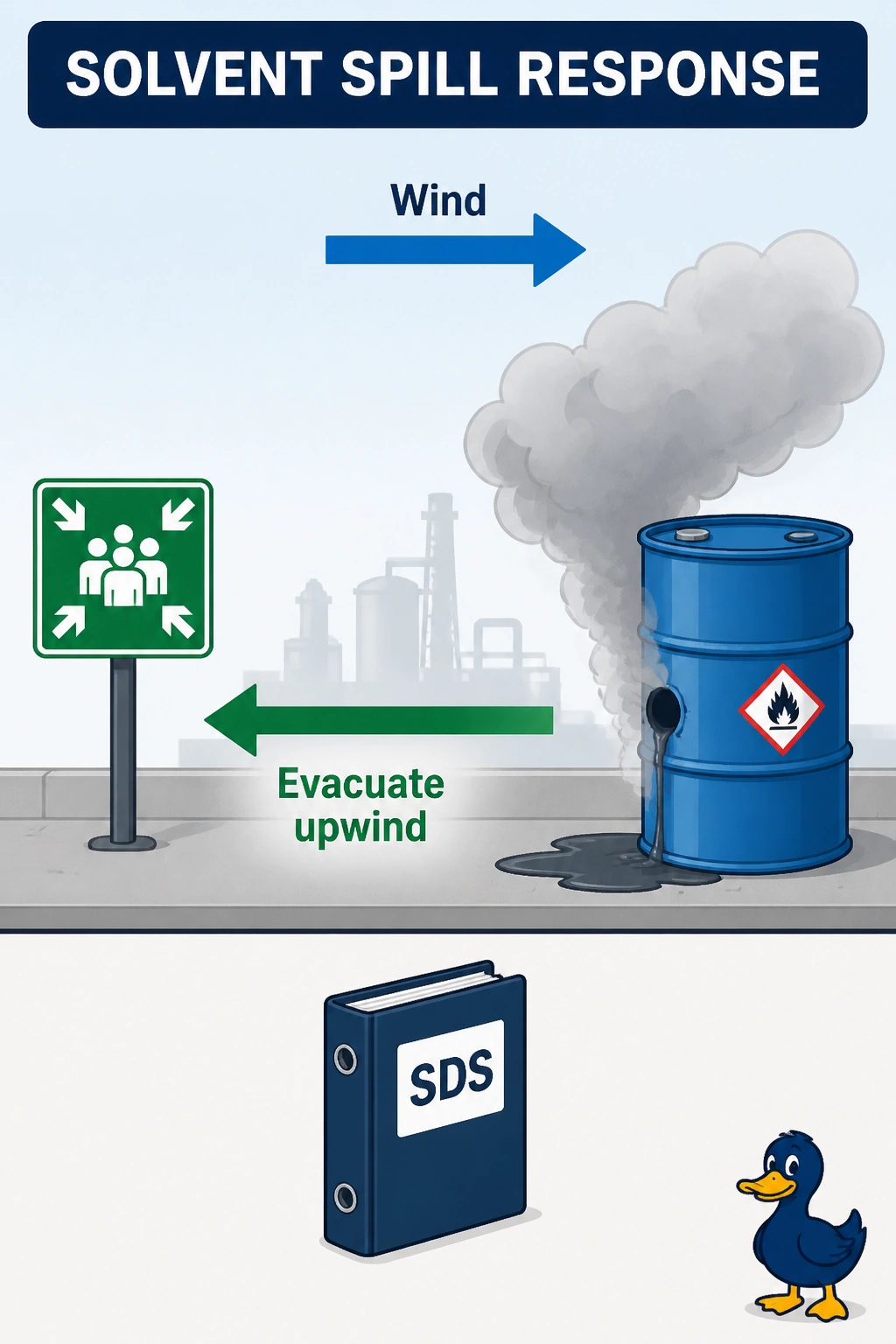
When an unknown chemical drum ruptures and vapors hit the lungs, heroics with a mop or hose only make a bad day worse. The trap is rushing to clean up before you know what you are breathing. Pull your crew upwind and check the SDS first!
Full Explanation
An uncontrolled release of an unfamiliar solvent with acute respiratory symptoms requires immediate life-safety isolation before any cleanup begins. Evacuating upwind, isolating the spill zone, and checking the SDS removes workers from toxic vapor inhalation, keeps unauthorized personnel out of the hazard area, and identifies the exact flammability, PPE, and containment requirements in the Safety Data Sheet. Hosing the spilled solvent down into the nearest storm drain immediately violates environmental regulations, spreads contamination into waterways, and can react dangerously with water. Having the forklift operator mop up the puddle with shop rags first exposes an unprotected worker to concentrated vapors and dermal absorption without knowing the chemical's hazards. Using a standard electric shop vacuum to recover the pooled liquid creates a severe fire or explosion hazard because sparks from a non-rated motor can ignite flammable solvent vapors. As a caveat, only trained, properly equipped hazmat responders—or site personnel trained to the appropriate response level—may enter the hot zone once the chemical is identified. As an operational check, verify headcount at the upwind muster point and confirm the drum label matches the retrieved SDS before calling emergency or spill-response teams.
Prefer to study offline? Printable PDF study book + test engine ($7.50, unofficial). These questions stay free here.