
After an outdoor natural gas odor triggers an evacuation on a school renovation site, the warning horn stops sounding and several subcontractors begin walking back toward the building without direction. What must the site supervisor enforce?
Select an answer to reveal the explanation.
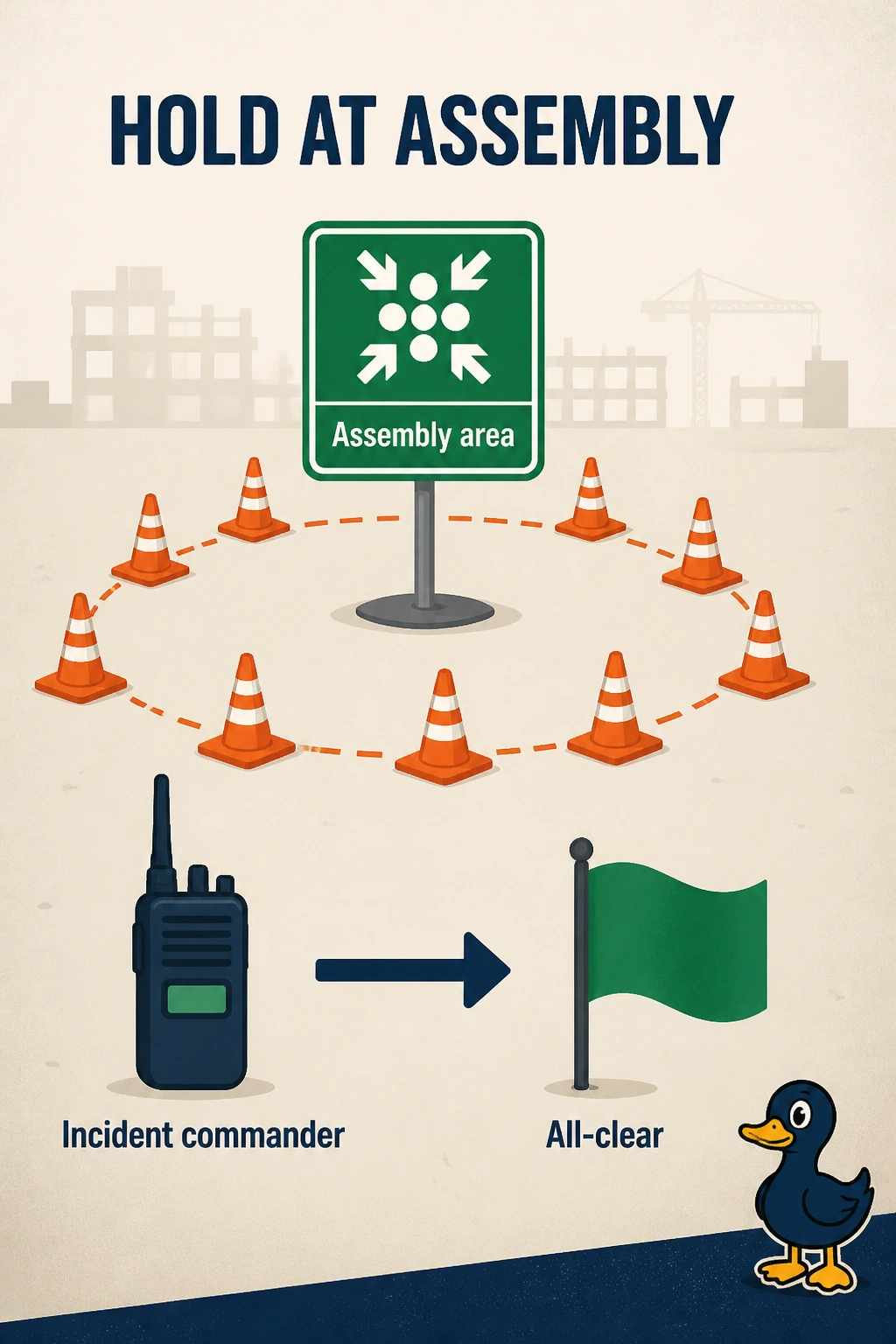
Short Explanation
Silence on the alarm horn does not mean the danger is gone; it often just means someone reset the panel. If you let crews drift back inside for tools or a quick look, a lingering gas pocket can turn a drill or spark into a disaster. Keep everyone at the muster point until the official all-clear.
Full Explanation
Hold the crew at the assembly area until the gas hazard is cleared by the incident commander or the utility. 1926.35 requires accounting after evacuation when an emergency action plan is required. It does not itself state an incident-commander all-clear rule. Choosing to Hold everyone at the assembly area until the incident commander gives the all-clear prevents premature re-entry into potentially explosive or toxic atmospheres and preserves accurate headcounts. Choosing to Allow crews to re-enter once the evacuation horn stops ringing is dangerous because alarms are frequently silenced to allow responder communication before the building is declared safe. Choosing to Send two foremen back inside first to check whether the odor faded exposes untrained supervisors to ignition or asphyxiation hazards without calibrated gas-detection equipment. Choosing to Let crews collect personal tools quickly before returning outside places property ahead of life safety and disrupts accountability at the muster point. As a caveat, crews should also stay clear of access roads so emergency vehicles can stage unimpeded. As an operational check, post a supervisor or guard at primary entrances during every evacuation to prevent early re-entry.
Prefer to study offline? Printable PDF study book + test engine ($7.50, unofficial). These questions stay free here.