
During a cold-weather commercial buildout, a framing foreman sets up a portable fuel-fired space heater inside a poly-enclosed work zone, and the unit sits directly beside loose plastic sheeting and scrap lumber. What must the foreman require before igniting the heater?
Select an answer to reveal the explanation.
Short Explanation
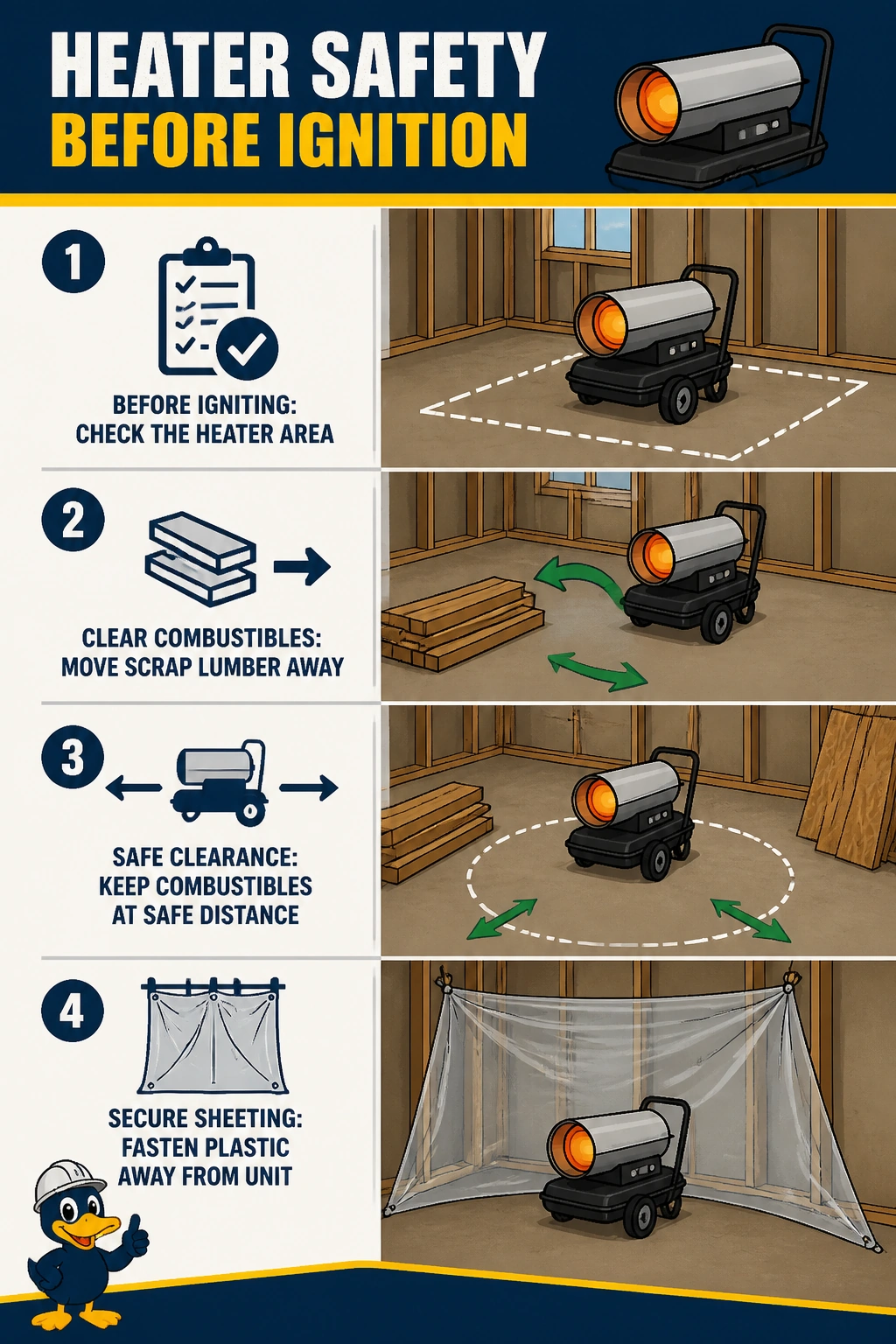
Temporary heaters keep winter concrete and framing moving, but one loose tarp can turn a jobsite enclosure into a fast-moving fire. You might think lowering the flame or setting out sand makes a tight corner safe, but radiant heat and drafts can still ignite nearby materials. Before lighting the burner, maintain clearance from combustibles and secure every sheet away from the unit.
Full Explanation
Under 29 CFR 1926.154, temporary heating devices on construction sites must have proper clearance from combustible materials, and nearby tarpaulins or plastic enclosures must be securely fastened so wind or air currents cannot blow them onto the burner. Maintaining safe clearance from combustibles and securing the sheeting removes fuel from the danger zone and prevents sudden contact ignition. A metal drip pan and bucket of dry sand address minor drips or small floor sparks, not the risk of a major enclosure fire. Operating the heater on its lowest fuel setting still exposes adjacent wood and plastic to continuous radiant heat and open-flame hazards. Cracking a single window at the far end may slightly improve airflow, but scrap lumber remains ignitable fuel directly beside the heater. As an exam caveat, 1926.154 requires sufficient fresh air and at least 10 feet of clearance from combustible coverings, with those coverings securely fastened; it does not require continuous carbon monoxide monitoring. As a practical check, walk the entire perimeter of the heater before ignition to verify clearance, taut tie-downs, and an accessible ABC fire extinguisher.
Prefer to study offline? Printable PDF study book + test engine ($7.50, unofficial). These questions stay free here.