
A mechanical foreman schedules oxy-acetylene torch cutting of steel hangers inside a renovation area where exposed wood joists cannot be relocated. What must the foreman assign before cutting begins?
Select an answer to reveal the explanation.
Short Explanation
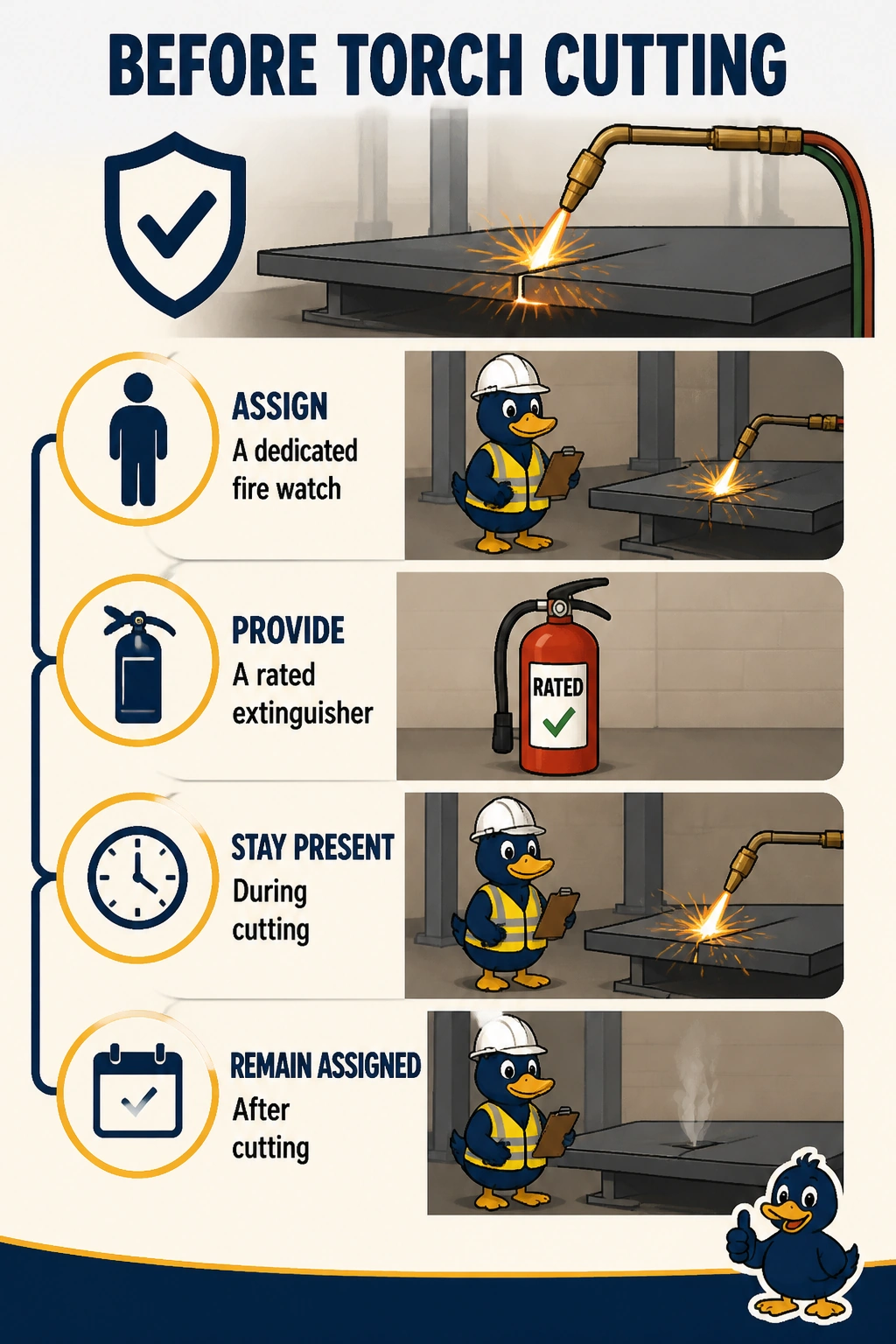
Torch sparks can smolder inside wood framing long after your cutter packs up for the day. Avoid the trap of letting a welder work solo or trust an impaired sprinkler line—assign a dedicated fire watch with an extinguisher during and after cutting.
Full Explanation
Under 29 CFR 1926.352, when welding or cutting occurs near combustible materials that cannot be moved, the foreman must Assign a dedicated fire watch with a rated extinguisher during and after cutting. A trained fire watch keeps continuous eyes on sparks, slag, and hidden cavities while the operator focuses on the torch, and remains on site afterward to catch smoldering embers before they ignite. Choosing to Have the torch operator pause periodically to look for smoke while wearing dark goggles fails because tinted lenses block peripheral vision and an operator cannot monitor sparks falling below or behind joists while cutting. Choosing to Rely on the building's partially drained overhead sprinkler system to control any sparks is dangerous because an impaired fire-protection system cannot be depended on to suppress an active fire. Choosing to Allow solo cutting as long as the operator wears a leather welding jacket and face shield protects only the worker's skin and eyes, leaving the surrounding wood structure completely unguarded. Caveat: fire watch personnel must know how to sound the site alarm and use the assigned extinguisher, not just stand nearby. As an operational check, verify the hot-work permit, clear loose debris, and confirm the extinguisher gauge is in the green before lighting the torch.
Prefer to study offline? Printable PDF study book + test engine ($7.50, unofficial). These questions stay free here.