
During an office renovation, a temporary power distribution panel sparks and ignites wire insulation inside the enclosure while the feeder breaker remains energized. Which fire extinguisher should the electrical foreman use?
Select an answer to reveal the explanation.
Short Explanation
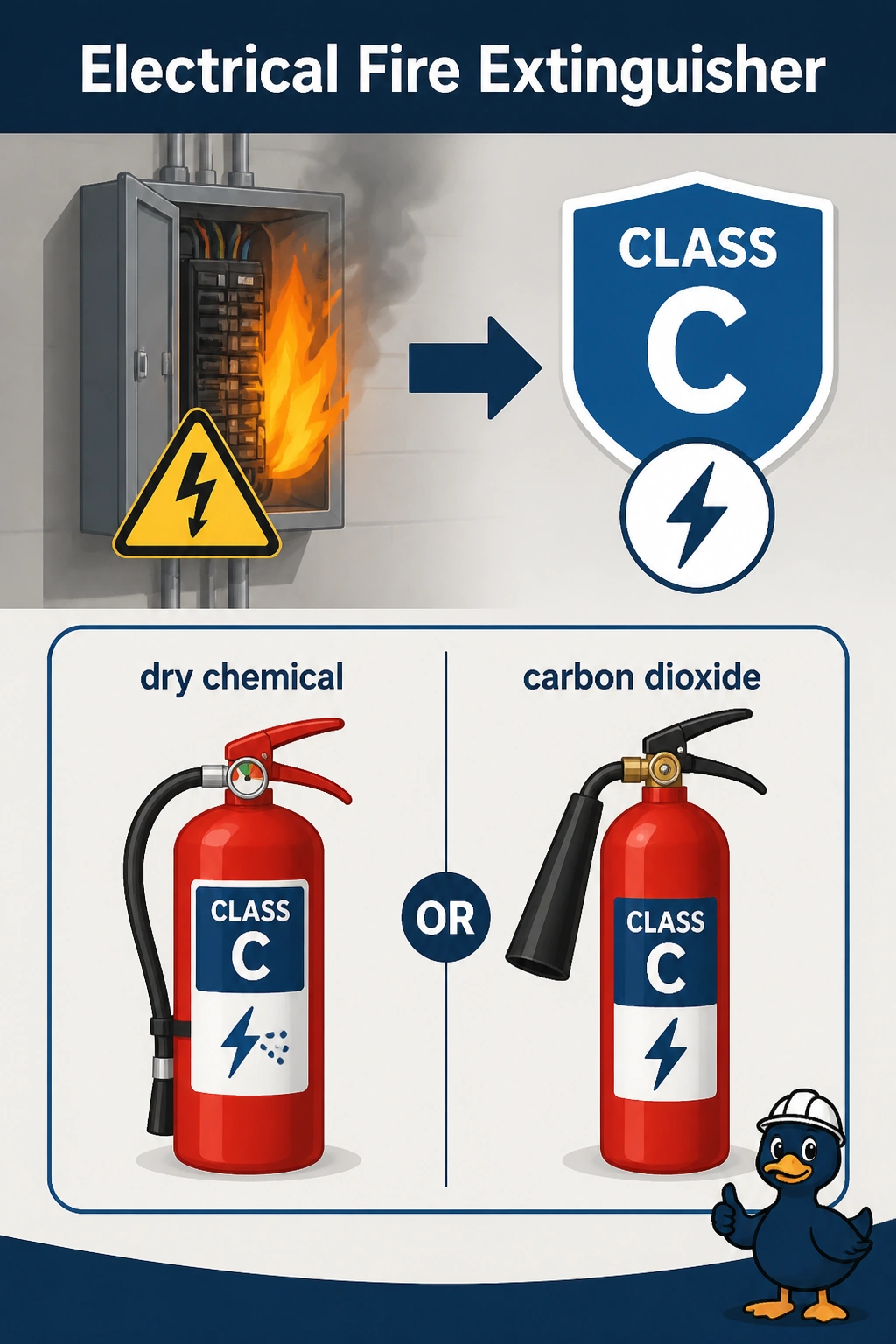
You’re right to focus on the energized feeder: water and foam can conduct electricity and put you at risk of shock. Use a Class C dry chemical or carbon dioxide extinguisher, which is rated for energized electrical fires.
Full Explanation
Energized electrical equipment poses an electrocution hazard if a conductive extinguishing agent contacts live conductors. A Class C rated dry chemical or carbon dioxide extinguisher uses a non-conductive agent intended for energized electrical fires, helping protect you while knocking down the flames. A pressurized water extinguisher may create a conductive path from the live enclosure to the operator, risking severe electric shock. A Class A foam extinguisher is also water-based and unsafe to apply to energized circuits. A Class D dry powder extinguisher is designed for combustible-metal fires, such as magnesium or sodium, not an energized electrical enclosure or ordinary wire-insulation fire. Exam caveat: if you can safely de-energize the upstream breaker, doing so removes the electrical source and helps prevent re-ignition after the agent dissipates. Practical check: during weekly site walks, confirm that Class C extinguishers are mounted near temporary power panels, unobstructed, and fully charged.
Prefer to study offline? Printable PDF study book + test engine ($7.50, unofficial). These questions stay free here.