
A concrete restoration contractor issues tight-fitting half-mask elastomeric respirators to finishers grinding silica-containing mortar joints. Under OSHA's Respiratory Protection standard, how often must the contractor conduct respirator fit testing for these workers?
Select an answer to reveal the explanation.
Short Explanation
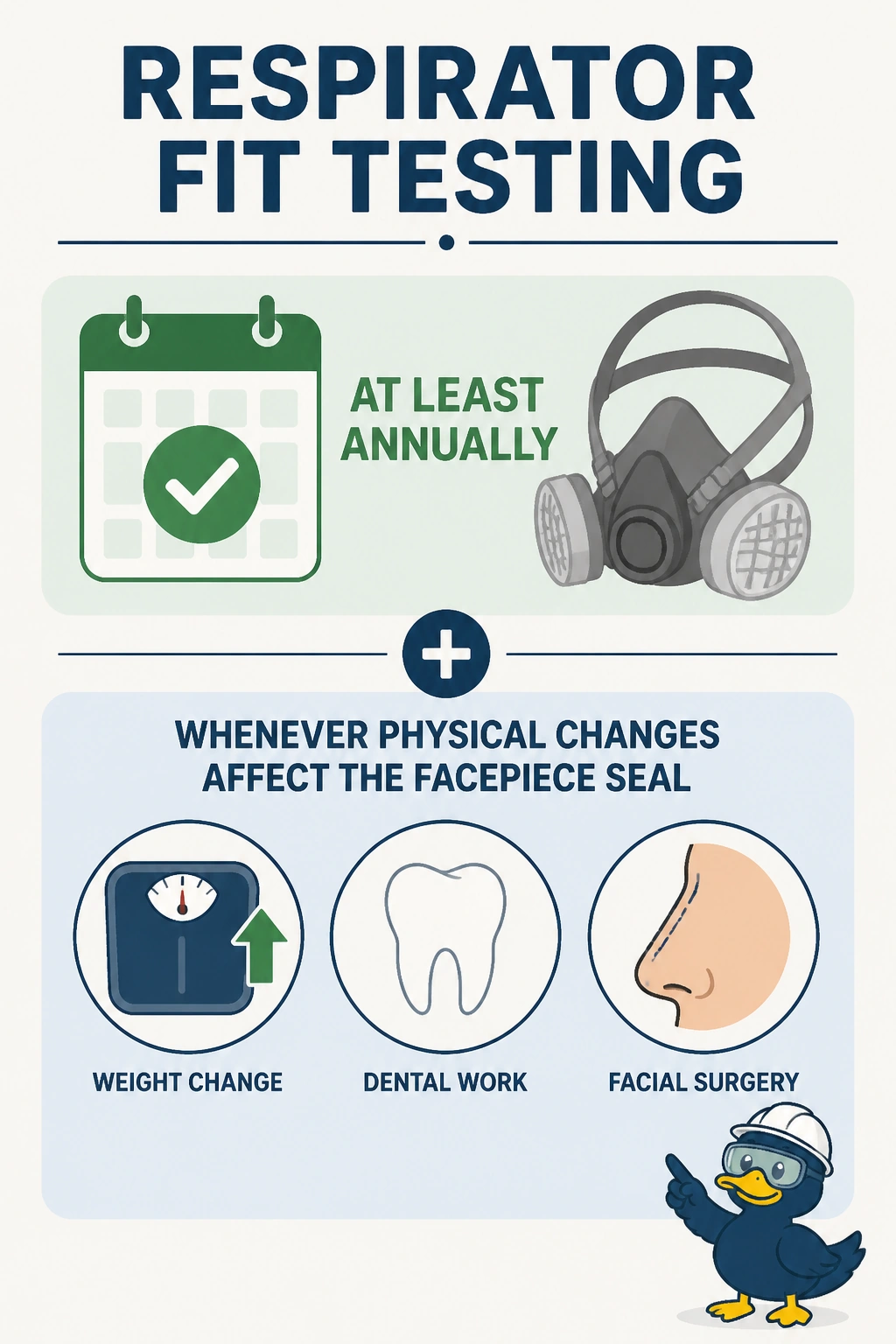
Think of a respirator fit test as an annual inspection rather than a lifetime passport—your face changes, weight shifts, and straps stretch over time. OSHA requires you to conduct fit testing before initial use, at least annually, and whenever a physical change could alter the facepiece seal. The trap is assuming one new-hire test lasts forever or tying re-testing to OSHA's five-year injury log retention cycle.
Full Explanation
Under OSHA 29 CFR 1926.103, which incorporates the general industry respiratory protection rules of 29 CFR 1910.134, employers must fit test every worker required to wear a tight-fitting respirator At least annually and whenever a worker experiences physical changes that affect the facepiece seal. Weight fluctuations, dental work, facial scarring, or changes in respirator make and model can all break the seal and allow hazardous dust or vapors to leak inward, making annual verification essential. Only once at initial hire unless the worker requests a different respirator brand or cartridge type ignores the mandatory annual re-test cycle and overlooks physical changes in the wearer. Every five years to match the retention cycle required for OSHA Form 300 injury and illness logs confuses injury recordkeeping retention rules with respiratory fit-testing intervals. Only after an exposure monitoring sample exceeds the permissible exposure limit by ten times misapplies the assigned protection factor concept rather than following the scheduled fit-test requirement. Caveat: even a current annual fit test cannot protect a worker who grows facial hair along the sealing surface or skips a daily user seal check before entering the work zone. Operational check: maintain a fit-test expiration tracker for all respirator-assigned crews and verify clean-shaven compliance at the start of each shift.
Prefer to study offline? Printable PDF study book + test engine ($7.50, unofficial). These questions stay free here.