
During an internal compliance audit on a commercial hospital build, a safety technician learns that a site superintendent knew perimeter guardrails were missing on the fourth floor for three days but ordered crews to keep working without fall protection to stay on schedule. Under OSHA enforcement classifications, what defines a willful violation in this situation?
Select an answer to reveal the explanation.
Short Explanation
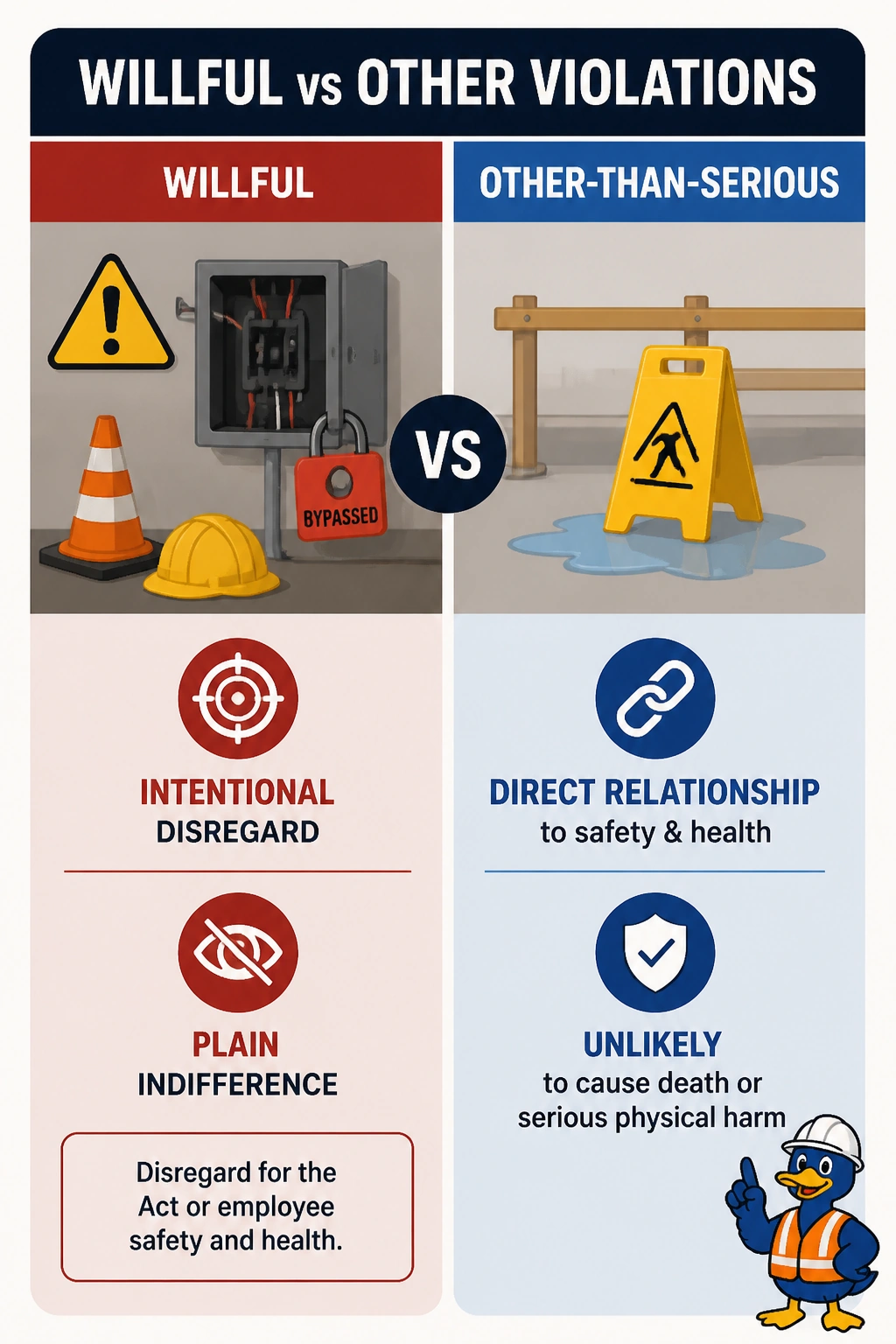
Think of the difference between an honest oversight and driving straight past a flashing railroad gate because you are late. OSHA classifies a violation as willful when management knowingly ignores a rule or shows plain indifference to worker safety. The trap is assuming any severe fall hazard is only a serious violation, when conscious disregard elevates the classification.
Full Explanation
A willful violation is intentional disregard for the requirements of the Act, or plain indifference to employee safety and health. When a supervisor knows that a fall protection standard applies, sees the missing guardrails, and deliberately allows work to continue for schedule reasons, the agency can cite the employer for a willful violation, which carries substantially higher penalties and potential criminal referral if a fatality occurs. By contrast, Substantial probability of death or serious physical harm without employer intent describes a serious violation, where the employer knew or should have known of the hazard through reasonable diligence but did not intentionally flout the rule. A first-time paperwork omission that has no direct impact on worker physical safety typically falls under other-than-serious violations rather than willful misconduct. Failure to abate a previously cited hazard past the established correction deadline is a separate failure-to-abate classification issued after an earlier citation remains uncorrected. Caveat: even if a supervisor claims production pressure came from a client or upper management, that pressure never excuses deliberate noncompliance. Operational check: audit open hazard logs daily and empower any crew member to halt elevated work immediately until missing guardrails are reinstalled and verified.
Prefer to study offline? Printable PDF study book + test engine ($7.50, unofficial). These questions stay free here.