
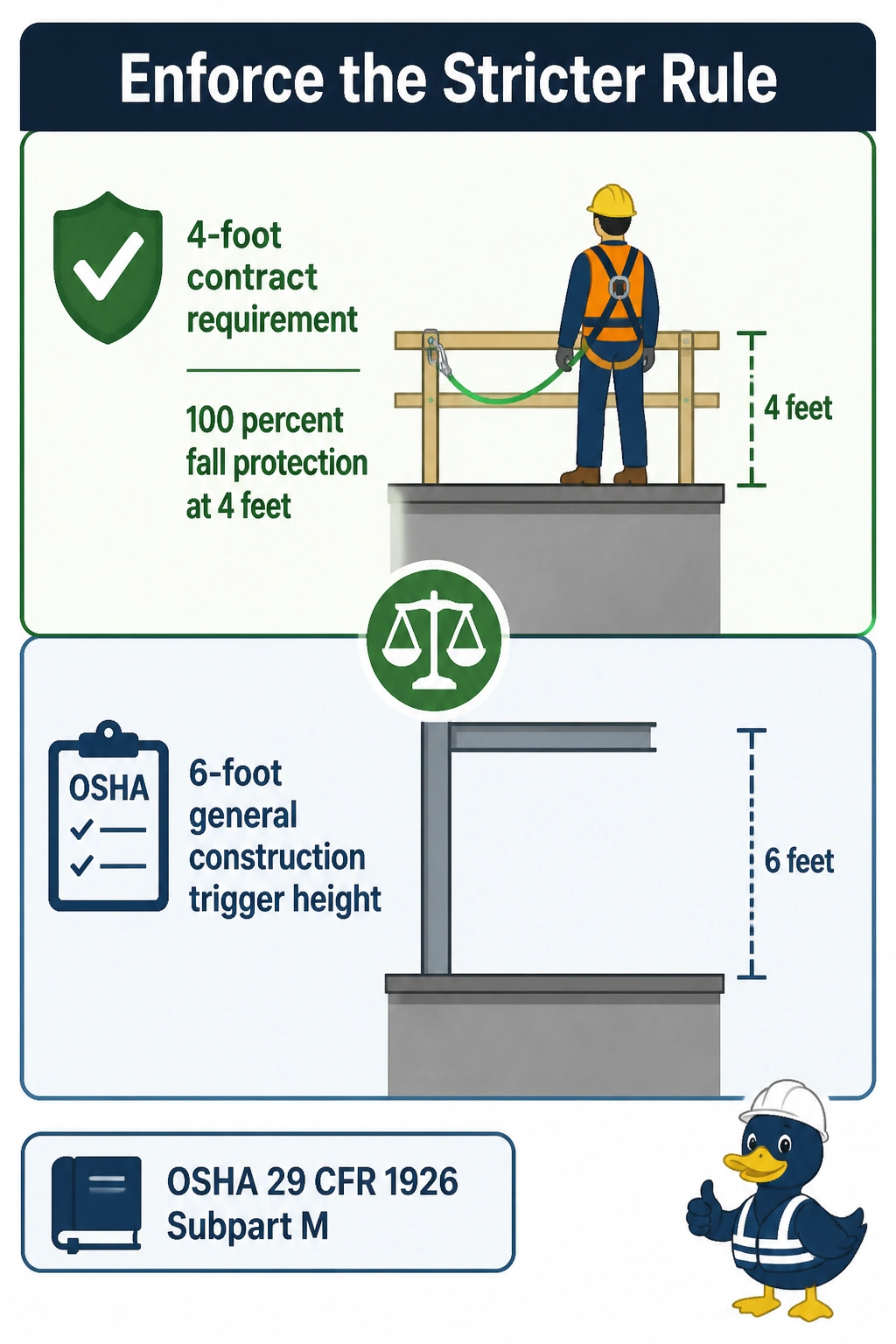
A hospital renovation contract requires 100 percent fall protection at 4 feet, whereas OSHA 29 CFR 1926 Subpart M sets a 6-foot general construction trigger height. Which requirement must the subcontractor enforce on this project?
Select an answer to reveal the explanation.
Short Explanation
OSHA rules are the floor, not the ceiling, when it comes to jobsite safety. The trap is letting a crew default to the 6-foot federal baseline when your project contract demands tighter protection at 4 feet.
Full Explanation
OSHA construction regulations set the minimum legal standard for worker protection, and project owners or general contractors are always permitted to mandate stricter controls. Enforcing the stricter 4-foot contract requirement, because OSHA standards establish minimum baselines rather than maximum limits keeps the subcontractor compliant with both the owner's site-specific safety plan and federal law. Following the 6-foot OSHA rule only, because federal regulations automatically void stricter project contract terms misunderstands regulatory preemption; private contract rules can add protection above OSHA minimums without conflicting with federal law. Leaving it to whichever height the subcontractor's foreman prefers during the morning pre-task briefing creates inconsistent enforcement and exposes workers to breach of contract and removal from site. Inventing an average 5-foot trigger height split between the hospital policy and OSHA Subpart M satisfies neither the contract nor sound safety management. As a caveat, verify during pre-construction reviews whether owner rules also impose stricter requirements for ladders, scaffolding, or hot work permits. For an operational check, include the 4-foot trigger height in the site-specific orientation and audit elevated tasks between 4 and 6 feet.
Prefer to study offline? Printable PDF study book + test engine ($7.50, unofficial). These questions stay free here.