
A general contractor's subcontract includes an indemnification clause stating that the electrical subcontractor assumes full responsibility for its own safety compliance, so the project superintendent stops checking the subcontractor's work areas. Why does this approach fail under safety program and risk management principles?
Select an answer to reveal the explanation.
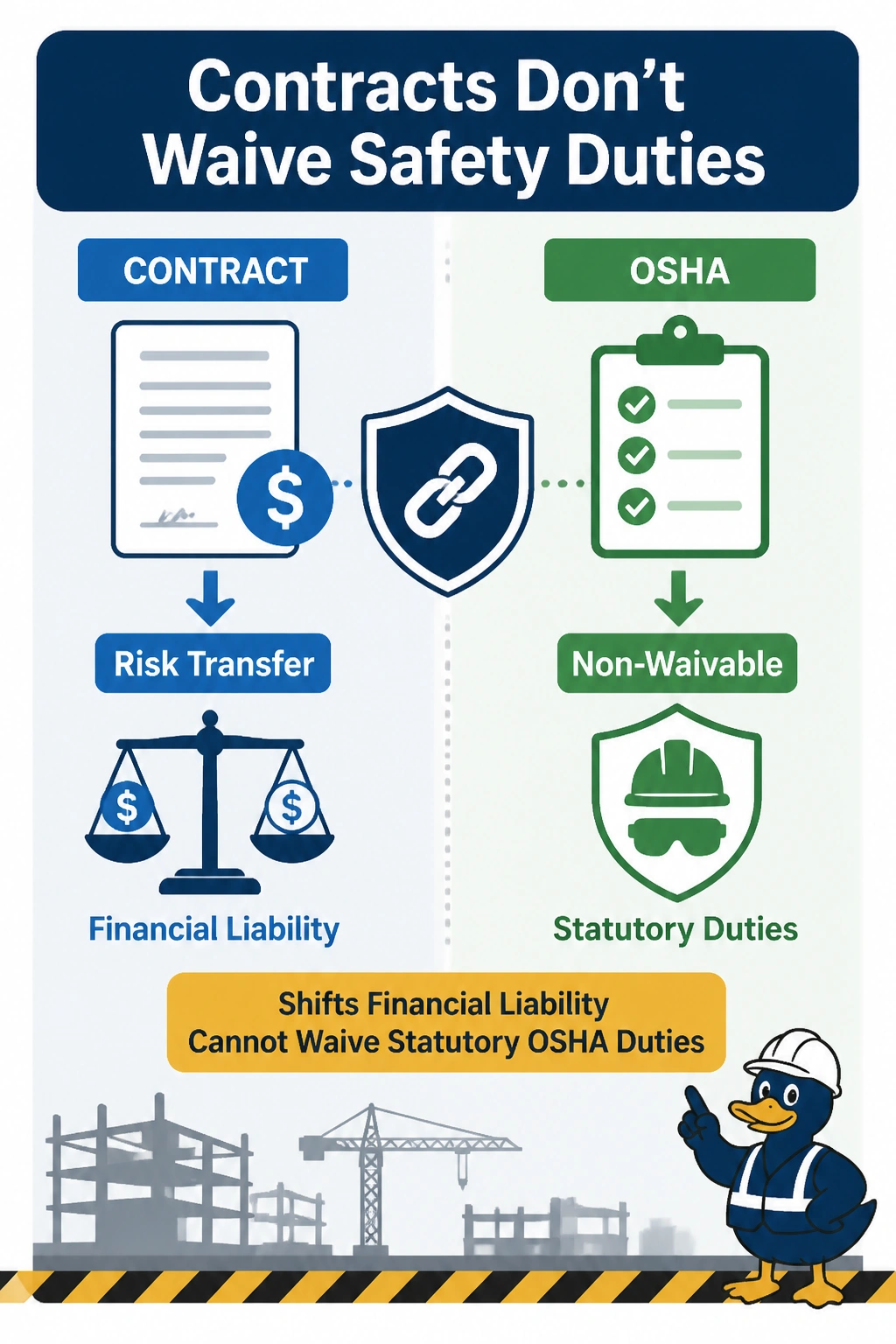
Short Explanation
Signing an indemnification clause is like buying car insurance—it helps pay for a wreck, but it does not let you ignore speed limits. The trap is assuming that shifting financial liability or requiring subcontractor insurance excuses your team from inspecting site hazards. Even with strong contract language, OSHA holds employers accountable for their statutory safety duties.
Full Explanation
In construction risk management, "Contractual risk transfer shifts financial liability but cannot waive statutory OSHA duties" is the core principle. Indemnity clauses allocate financial losses between companies, but workplace safety laws impose non-delegable duties based on site control. Under OSHA's multi-employer policy, a general contractor with site authority can still be cited as a controlling employer if it fails to exercise reasonable care to detect hazards. Claiming that "Indemnification clauses apply only to equipment damage rather than worker injury costs" is inaccurate because indemnity agreements routinely address third-party bodily injury claims. Stating that "Subcontractors cannot be cited by OSHA when working under a general contractor's site plan" is false because each employer remains accountable for its own workers and hazards it creates. Arguing that "Risk transfer eliminates the need for site inspections only when the subcontractor carries insurance" confuses financial coverage with active hazard prevention. Caveat: state anti-indemnity laws often bar shifting liability for a party's own sole negligence. Operational check: audit weekly inspection logs to verify that site supervisors inspect and document all subcontractor work areas.
Prefer to study offline? Printable PDF study book + test engine ($7.50, unofficial). These questions stay free here.