
A large commercial general contractor tracks OSHA-recordable injuries each quarter, yet minor hand lacerations and dropped-tool near-misses keep occurring across different subcontractors. How should the safety technician use internal safety data to prevent a severe injury?
Select an answer to reveal the explanation.
Short Explanation
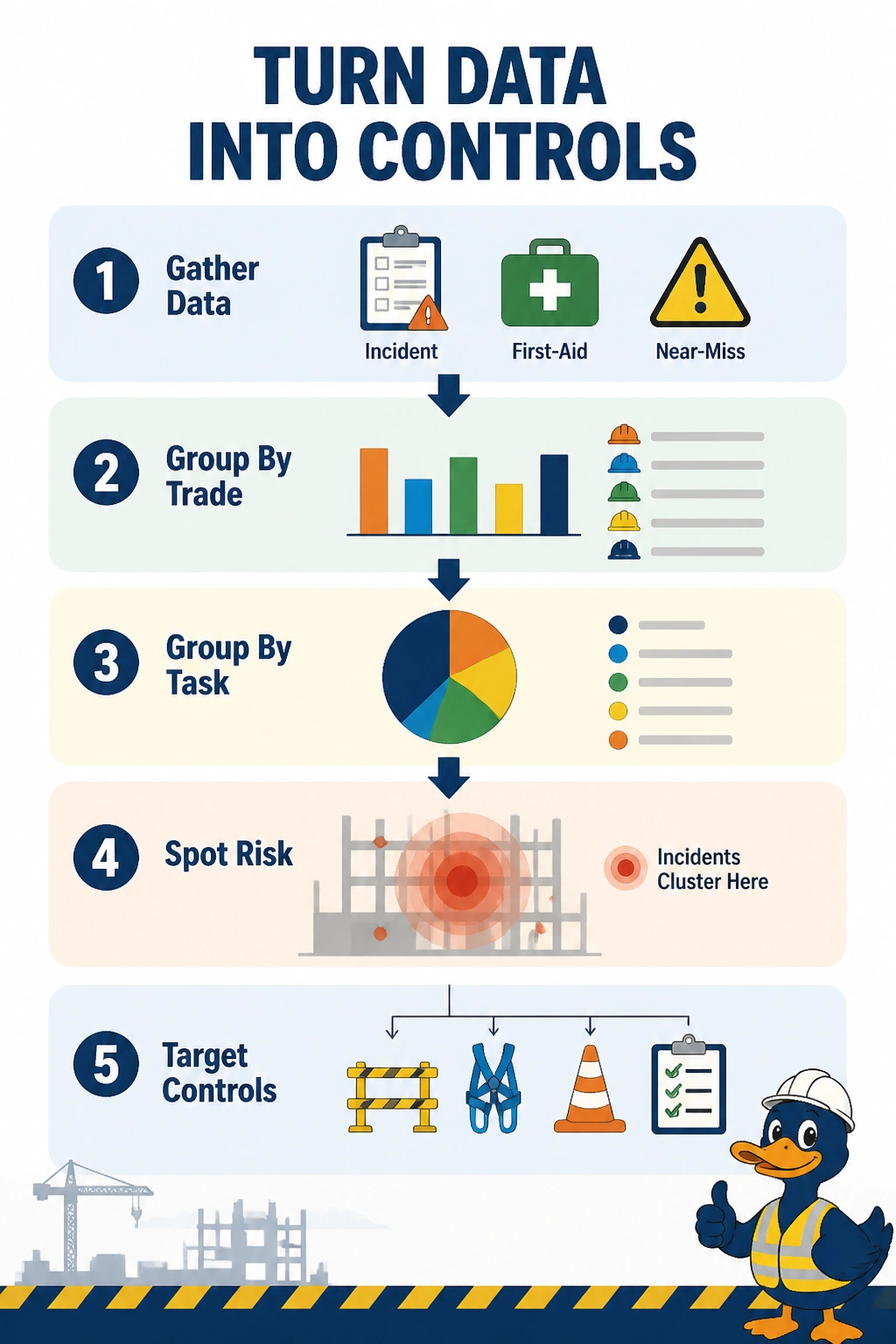
Waiting for a major injury to tell you where the site is bleeding is like steering a truck by looking only in the rearview mirror. You spot trouble early by slicing near-miss and first-aid data by trade and task, avoiding the trap of staring only at high-level totals.
Full Explanation
The most effective program practice is to Analyze incident, first-aid, and near-miss data by trade and task to target controls. Breaking down minor events and close calls by specific craft, work phase, and location reveals recurring exposures—such as utility knife cuts during drywall hanging or unguarded tool tethering during overhead framing—allowing targeted engineering or procedural fixes before a catastrophic event occurs. Choosing to Wait until year-end OSHA 300A certification before reviewing any minor injury patterns sacrifices months of early warning while crews remain exposed to the same hazards. Opting to Focus exclusively on total recordable count without separating craft activities or tasks masks localized trouble spots inside aggregate numbers and ignores valuable leading indicators. Electing to Stop logging minor first-aid events so monthly safety dashboards show fewer total entries hides real workplace risk and destroys data integrity. One caveat is that trend reviews must protect worker privacy and avoid blaming crews who report honestly, or reporting will dry up quickly. As an operational check, review segmented first-aid and near-miss charts during monthly subcontractor safety meetings and assign verified corrective actions to high-frequency task hazards.
Prefer to study offline? Printable PDF study book + test engine ($7.50, unofficial). These questions stay free here.