
A mechanical contractor brings three new specialized pipe-thread sealants and a concrete anchor epoxy onto a commercial jobsite mid-project. Under OSHA's Hazard Communication standard (29 CFR 1910.1200 / 1926.59), what must the contractor update in its written site program?
Select an answer to reveal the explanation.
Short Explanation
Bringing new chemicals onto a jobsite without updating your inventory is like adding unlabeled bottles to a medicine cabinet. You must keep the chemical list and Safety Data Sheets current, because the trap is assuming an initial mobilization binder stays valid all year.
Full Explanation
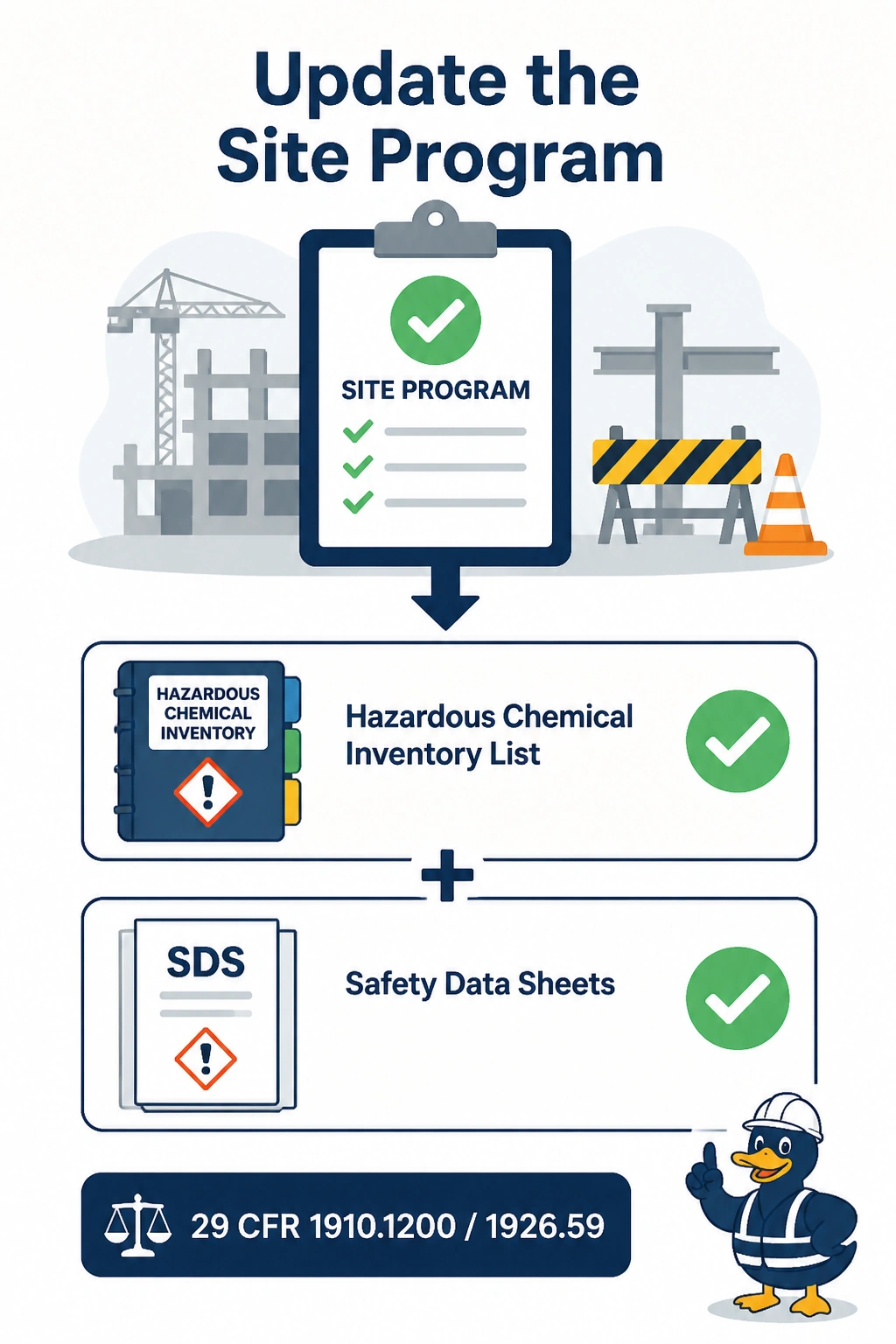
Under 29 CFR 1910.1200, incorporated into construction by 29 CFR 1926.59, the employer must update "The site hazardous chemical inventory list and corresponding Safety Data Sheets" whenever new hazardous chemicals are introduced to the workplace. Keeping the inventory synchronized with product names on container labels allows workers, supervisors, and emergency responders to locate hazard and first-aid details without delay. Updating "Only the annual OSHA Form 300A injury summary posted in the main trailer" tracks past injuries rather than chemical hazards present on site. Modifying "The crane operator's daily pre-shift mechanical and wire-rope inspection logbook" addresses hoisting equipment integrity and has no connection to chemical hazard communication. Revising "The general contractor's subcontractor insurance certificate and bond file" handles commercial liability paperwork rather than employee chemical safety. As a caveat, employers must also ensure workers receive hazard training on any new chemical class before using the product. For an operational check, compare products in the field gang boxes against the written chemical inventory and SDS binder during weekly site inspections.
Prefer to study offline? Printable PDF study book + test engine ($7.50, unofficial). These questions stay free here.