
During the fourth month of a repetitive concrete tilt-up project, experienced crews begin skipping pre-use rig checks because every lift has gone smoothly so far. Which leadership strategy best counters this growing complacency?
Select an answer to reveal the explanation.
Short Explanation
When a job feels like autopilot, your biggest enemy is routine itself. The trap is thinking a harsh memo or fewer checks will fix human habit, when you actually need fresh eyes and shared ownership to snap crews out of complacency.
Full Explanation
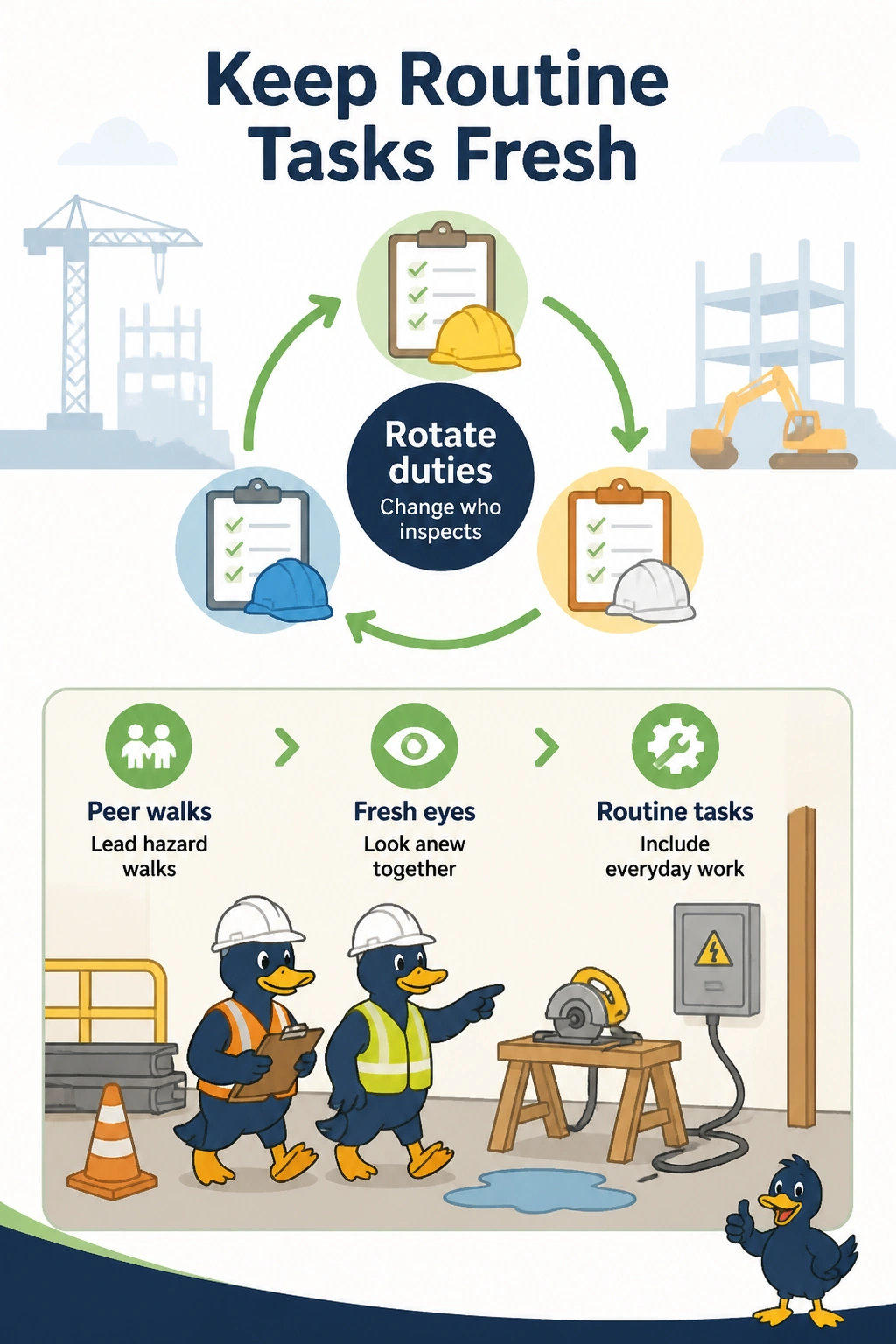
Repetitive construction phases breed familiarity bias, where uneventful shifts lull crews into assuming nothing has changed. Rotating inspection duties and leading fresh-eyes peer hazard walks on routine tasks breaks that autopilot cycle by engaging workers actively, surfacing worn rigging or subtle setup drift, and reinforcing collective accountability without alienating veteran hands. Distributing a formal written memo warning that any skipped pre-use check will result in immediate termination relies purely on fear, which drives shortcuts underground rather than building intrinsic vigilance. Reducing the frequency of pre-use rig inspections to once per week so crews feel less burdened compromises hazard detection and violates daily pre-use inspection expectations for rigging hardware. Replacing all experienced crew leads with newly hired apprentices who have not developed habits strips the site of critical technical judgment and creates new inexperience risks. Note the caveat: rotation only works when every rotating inspector is trained and empowered to tag out defective gear on the spot. As an operational check, review weekly rigging inspection logs to verify different crew members are rotating through pre-lift checks and logging findings.
Prefer to study offline? Printable PDF study book + test engine ($7.50, unofficial). These questions stay free here.