
During a weekly site huddle, a young concrete finisher hesitantly mentions that a pump hose clamp looks worn, and the foreman begins to interrupt with a dismissive remark. How should the safety technician model effective leadership communication?
Select an answer to reveal the explanation.
Short Explanation
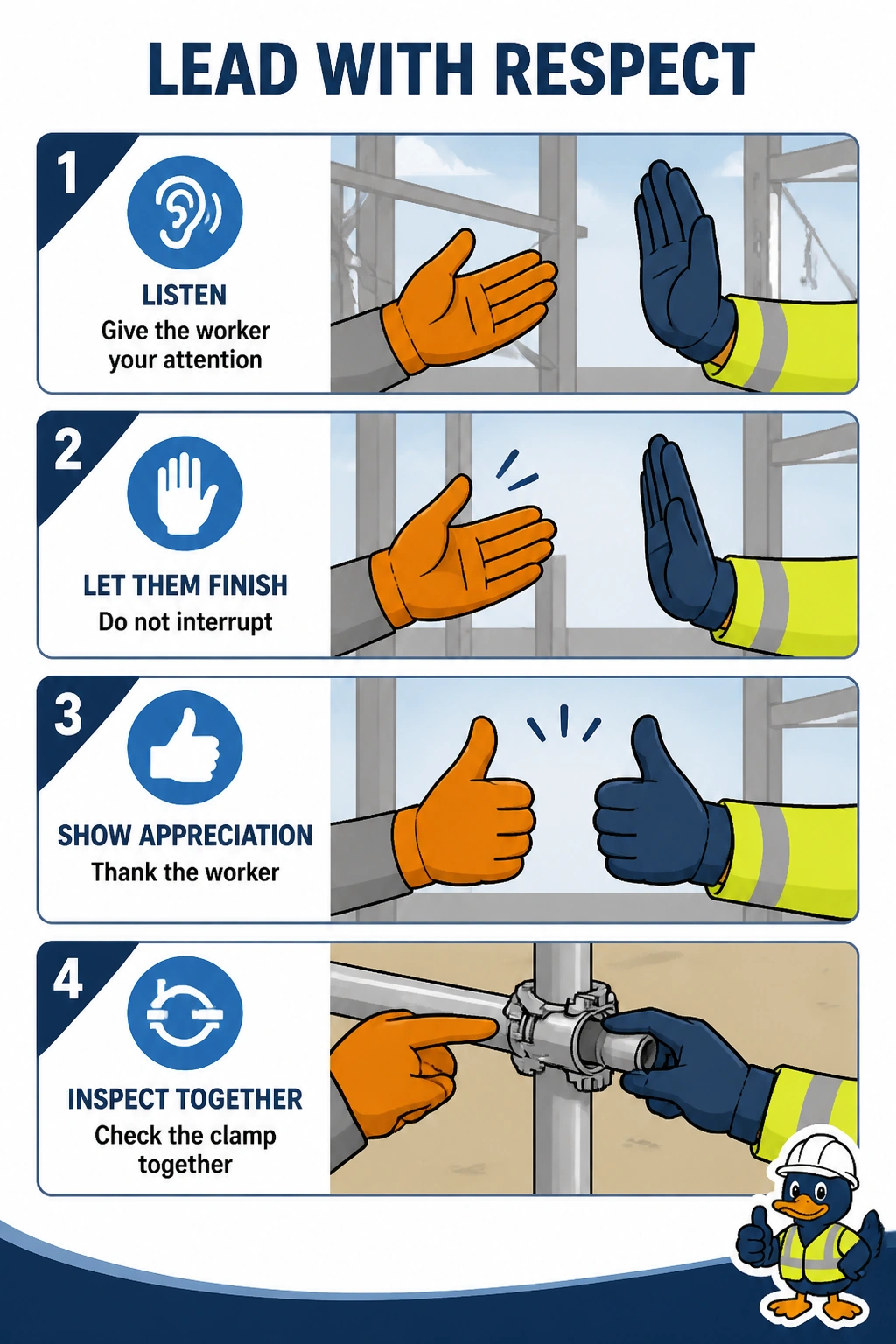
If a crew member gets shut down the first time they speak up, you will never hear the warning before the next failure. You should listen without interrupting, thank the worker, and inspect the clamp together to reinforce psychological safety. The trap is brushing off a junior worker or delaying a high-pressure hose check until after the pour.
Full Explanation
Psychological safety depends on how leaders respond in the exact moment a worker takes a risk to voice a concern. By choosing to Listen without interrupting, thank the worker, and inspect the clamp together, the safety technician validates frontline hazard recognition and models respectful two-way communication for the foreman. Trying to Remind the worker that only certified equipment mechanics should comment on pump hoses discourages future hazard reporting and wastes valuable eyes on the deck. Choosing to Ask the worker to submit a formal written complaint at the main office after the pour turns an urgent physical hazard into a bureaucratic delay while pressurized concrete flows. Deciding to Tell the foreman to finish the pour first and check the hose during the next weekend gambles with a high-pressure hose whip failure that could severely injure the crew. As a caveat, even if the clamp turns out to be serviceable, thanking the worker publicly protects future reporting. As an operational check, follow up at the next huddle to share what the inspection found and reinforce that every crew member's voice matters.
Prefer to study offline? Printable PDF study book + test engine ($7.50, unofficial). These questions stay free here.