
A general contractor posts a large "Days Without a Lost-Time Injury" banner at the main gate, and the safety technician notices workers hesitate to report minor strains because they do not want to reset the counter. Which communication practice should the technician recommend to leadership?
Select an answer to reveal the explanation.
Short Explanation
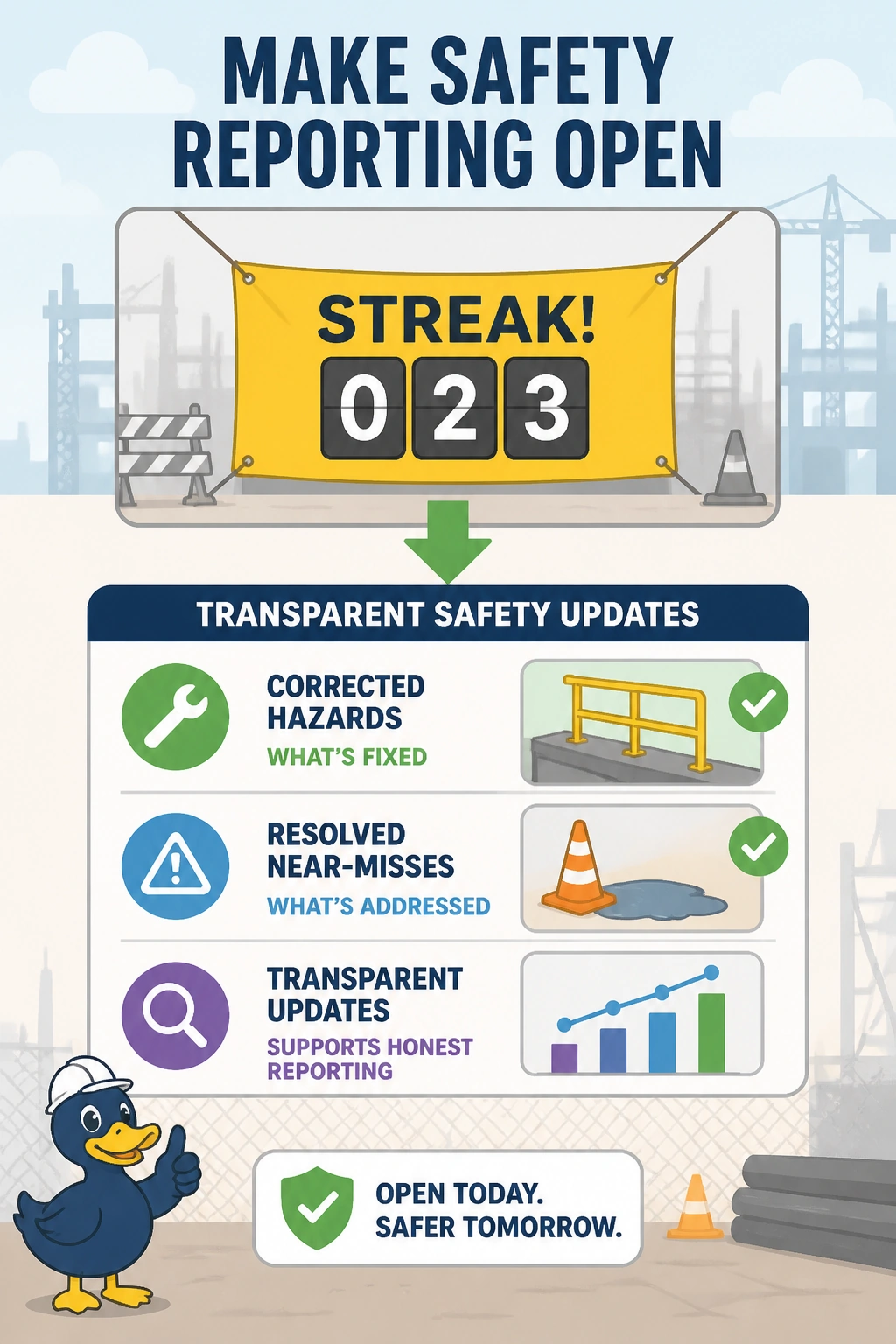
You’re right to notice that an injury-streak banner can make workers hesitate to report minor strains. Build trust by sharing hazards corrected and near-misses resolved; bigger streak prizes, harder-to-reach reporting forms, or withholding safety metrics can discourage useful reporting.
Full Explanation
Public injury-streak counters can create peer pressure that discourages workers from reporting early strains or near-misses, contrary to the spirit of OSHA 29 CFR 1904.35 anti-retaliation principles. Replace the streak banner with transparent updates on hazards corrected and near-misses resolved so crews can see that speaking up leads to workplace improvements. Doubling the monthly cash prize tied to the streak banner intensifies pressure to preserve the counter and may encourage workers to conceal minor injuries rather than report them promptly. Keeping the banner while moving minor injury reporting forms to the corporate office adds friction to reporting and leaves the disincentive intact. Stopping all safety-metric sharing with field crews removes useful feedback that supports engagement in hazard prevention. As an exam caveat, recognition programs should reward proactive participation, such as hazard-hunt completions and training, rather than injury-free streaks. As a practical check, track weekly hazard-report submissions alongside corrective-action closure rates to assess whether workers feel safe reporting early and whether reported issues are being addressed.
Prefer to study offline? Printable PDF study book + test engine ($7.50, unofficial). These questions stay free here.