
A concrete subcontractor promotes three experienced finishers to crew foremen, and within a month the safety technician notices the new supervisors hesitate to correct unsafe scaffolding or coach peers on PPE. What training gap should the technician address first?
Select an answer to reveal the explanation.
Short Explanation
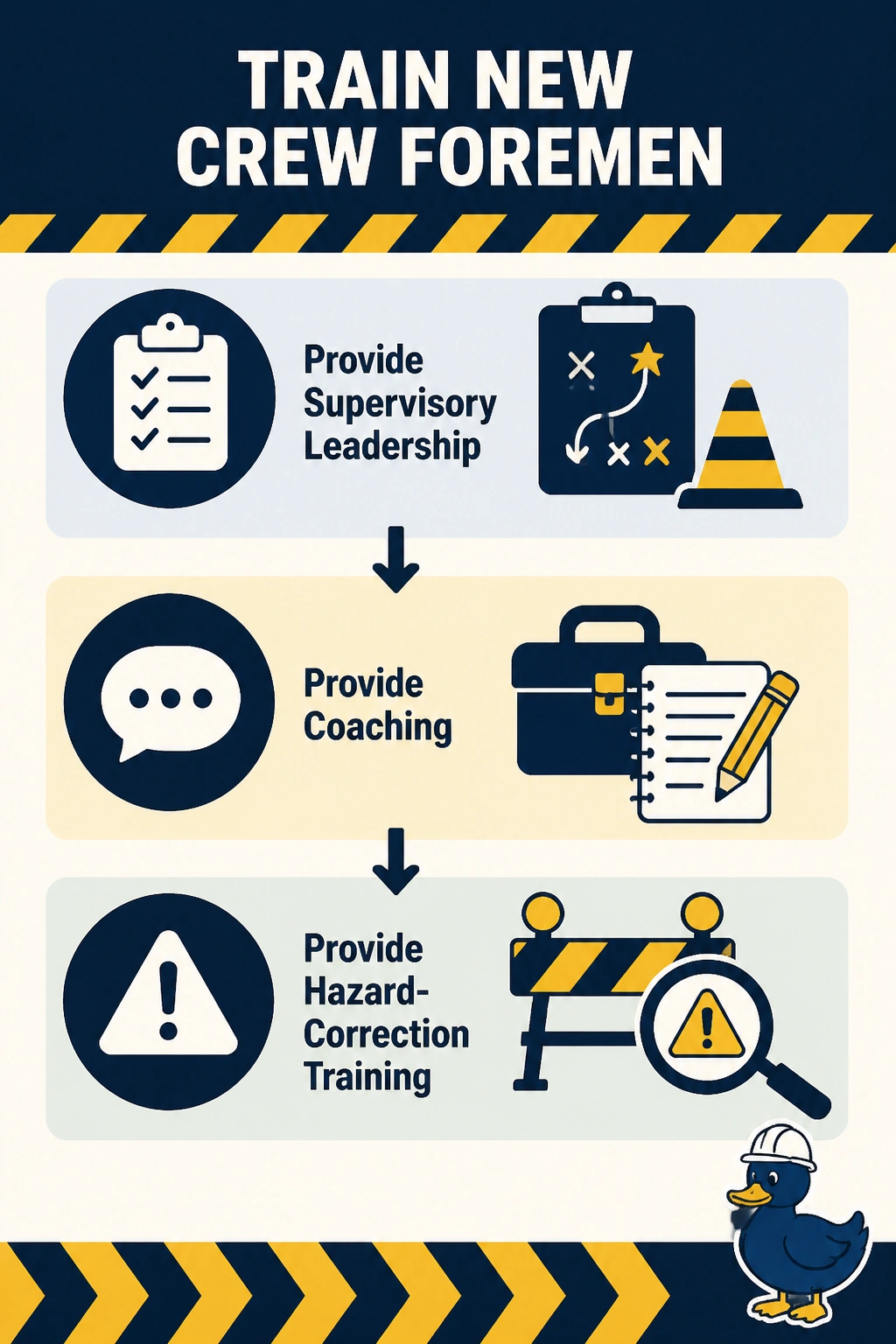
You know that finishing concrete well does not automatically teach you to coach a former peer to tie off or correct a scaffold. Craft mastery is not leadership readiness, and a liability reminder does not build the skills you need. Give your new foremen practical coaching and hazard-correction training.
Full Explanation
Moving from peer craft worker to frontline supervisor requires new interpersonal and decision-making skills, so the training gap to address is supervisory leadership, coaching, and hazard correction. Newly promoted foremen may hesitate to speak up to longtime coworkers unless they practice constructive feedback, conflict resolution, and exercising stop-work authority. A written policy reminding foremen that they are legally liable for citations relies on fear rather than building competence and may lead supervisors to avoid documenting hazards. Reassigning all safety walkthroughs to the safety technician so foremen can focus on pours undermines frontline ownership and suggests safety is separate from daily production. Repeating basic entry-level labor orientation fails to address the gap: these workers already know basic site rules and need management-level skills to enforce standards and mentor crews. Exam caveat: Supervisory training needs visible project-manager support when a new foreman pauses work for a hazard. Practical check: Pair each newly promoted foreman with an experienced mentor for joint pre-task huddles during the first thirty days.
Prefer to study offline? Printable PDF study book + test engine ($7.50, unofficial). These questions stay free here.