
After a forklift clips a doorway frame, a site manager wants to apply the same automatic three-day suspension to every worker involved in any property-damage incident, regardless of circumstances. Why should the safety technician recommend a just culture framework instead?
Select an answer to reveal the explanation.
Short Explanation
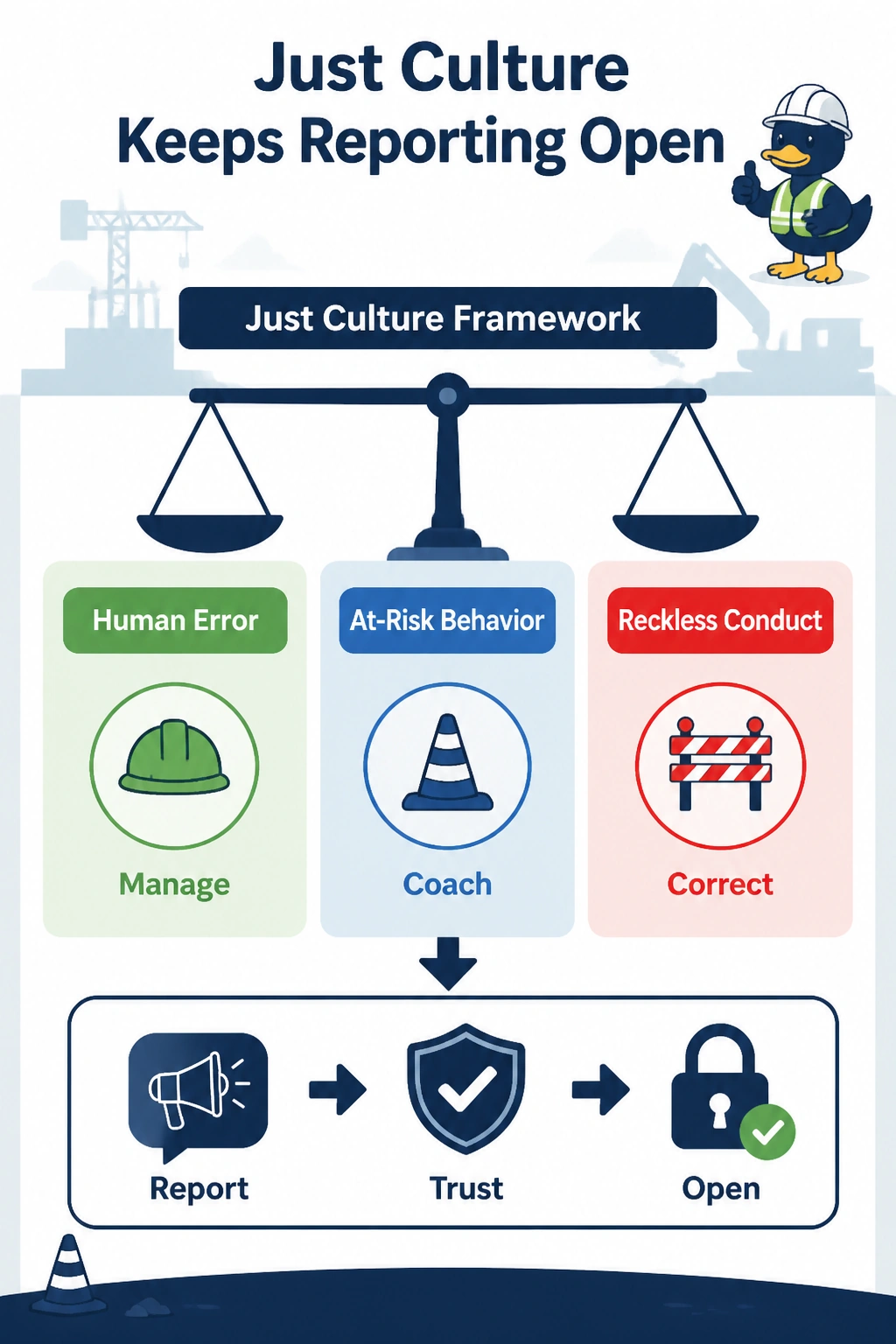
Blanket punishments for every honest mistake teach your crews one lesson fast: hide every close call so you do not get suspended. A just culture keeps accountability fair by distinguishing system-driven slips from reckless choices, so workers keep speaking up.
Full Explanation
A just culture framework improves safety performance because It separates honest error from reckless conduct so reporting stays open. When organizations punish unintentional human errors identically to deliberate rule-breaking, workers conceal near-misses and minor incidents, depriving safety leaders of early warning data while leaving underlying system flaws—such as blind corners or poor lighting—unfixed. Claiming that It eliminates all disciplinary consequences even for intentional safety violations misunderstands just culture, which still holds individuals accountable for reckless disregard or conscious, unjustified risk-taking. Assuming that It shifts incident accountability entirely away from frontline workers to supervisors is false because accountability is shared appropriately across system design, supervision, and individual choices. Believing that It requires waiting for an OSHA citation before issuing any internal coaching confuses internal safety governance with external regulatory enforcement. Caveat: a just culture succeeds only when leaders apply behavioral criteria consistently across both craft workers and supervisors without favoritism. Operational check: review the last ten incident and near-miss outcomes to confirm that corrective actions matched behavioral root causes—coaching and system fixes for human error, and progressive discipline for reckless conduct.
Prefer to study offline? Printable PDF study book + test engine ($7.50, unofficial). These questions stay free here.