
A safety technician is updating an annual excavation safety refresher for veteran utility foremen who have ten or more years of field experience and resist passive slide lectures. Which instructional design approach best aligns with adult learning principles?
Select an answer to reveal the explanation.
Short Explanation
Veteran tradespeople bring decades of hard-earned field knowledge into the trailer, so lecturing at them like schoolkids guarantees tuned-out faces. The trap is confusing strict classroom control with learning, when your best tool is tapping their real jobsite experience to solve practical problems together.
Full Explanation
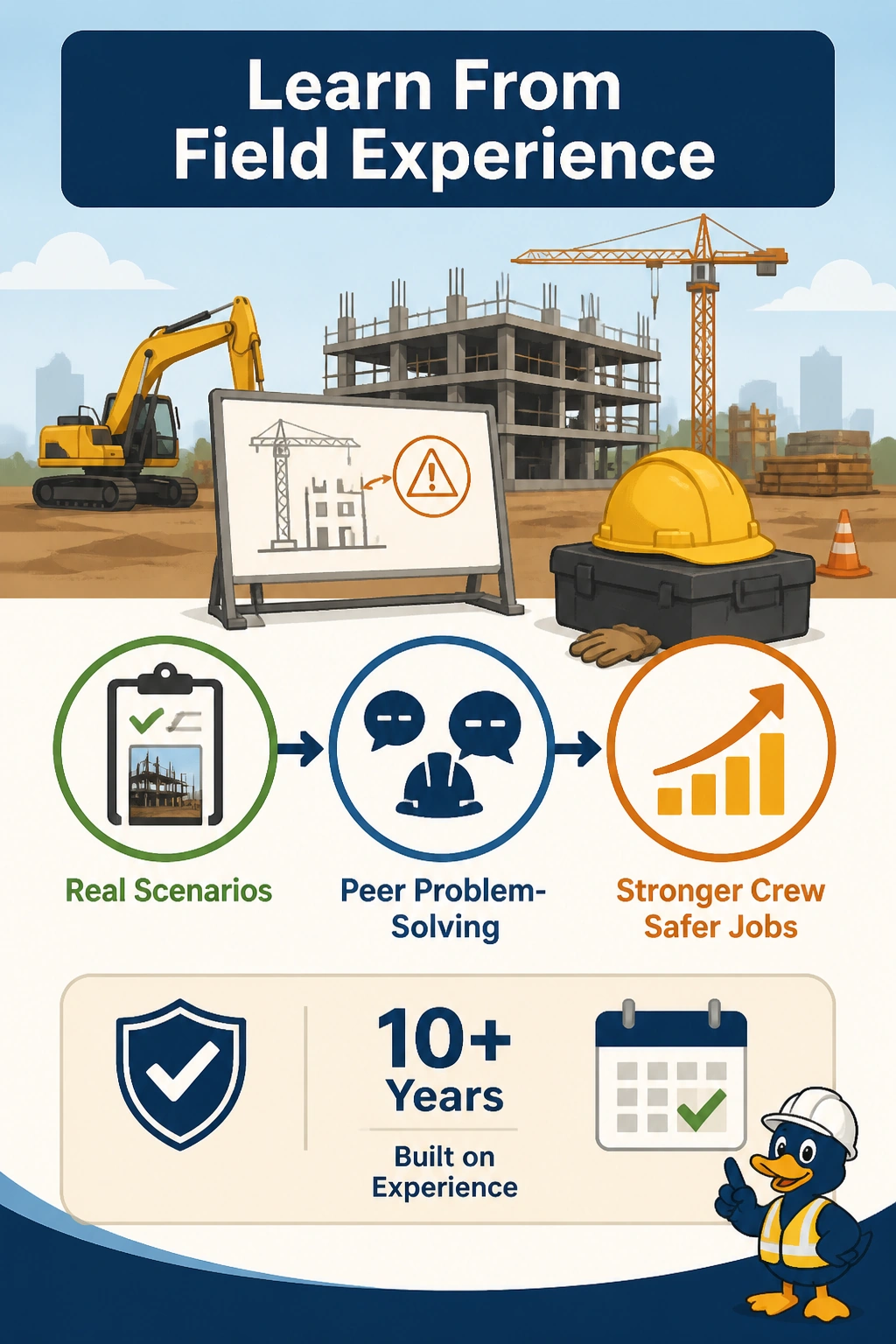
Adult learning theory emphasizes that experienced workers are self-directed, task-oriented, and learn best when new concepts connect directly to problems they face on the job. Choosing to "Use real field scenarios and peer problem-solving that build on the crew's experience" respects veteran knowledge while challenging participants to apply soil classification, shoring limits, and utility-strike prevention to realistic site conditions. "Read verbatim from OSHA regulatory subparts for two hours without pausing for questions" ignores adult attention spans and fails to translate legal text into field decisions. "Require each foreman to pass a closed-book soil-classification exam before being allowed to join the discussion" uses testing as a barrier that silences sharing and creates anxiety instead of guiding collaborative problem-solving. "Eliminate all practical exercises and rely on a silent, self-paced policy handbook review" removes the active dialogue and hands-on verification needed to correct long-standing field shortcuts. As a caveat, adult-centered discussion must still anchor every conclusion to mandatory regulatory minimums so unsafe habits are not validated. For an operational check, close the session by having each foreman walk through a mock trench hazard scenario and explain the corrective steps aloud.
Prefer to study offline? Printable PDF study book + test engine ($7.50, unofficial). These questions stay free here.