
A tunnel boring project runs continuous day and night shifts, and night crews twice energized equipment that day shift workers had partially disassembled. Which communication practice best prevents these shift-change incidents?
Select an answer to reveal the explanation.
Short Explanation
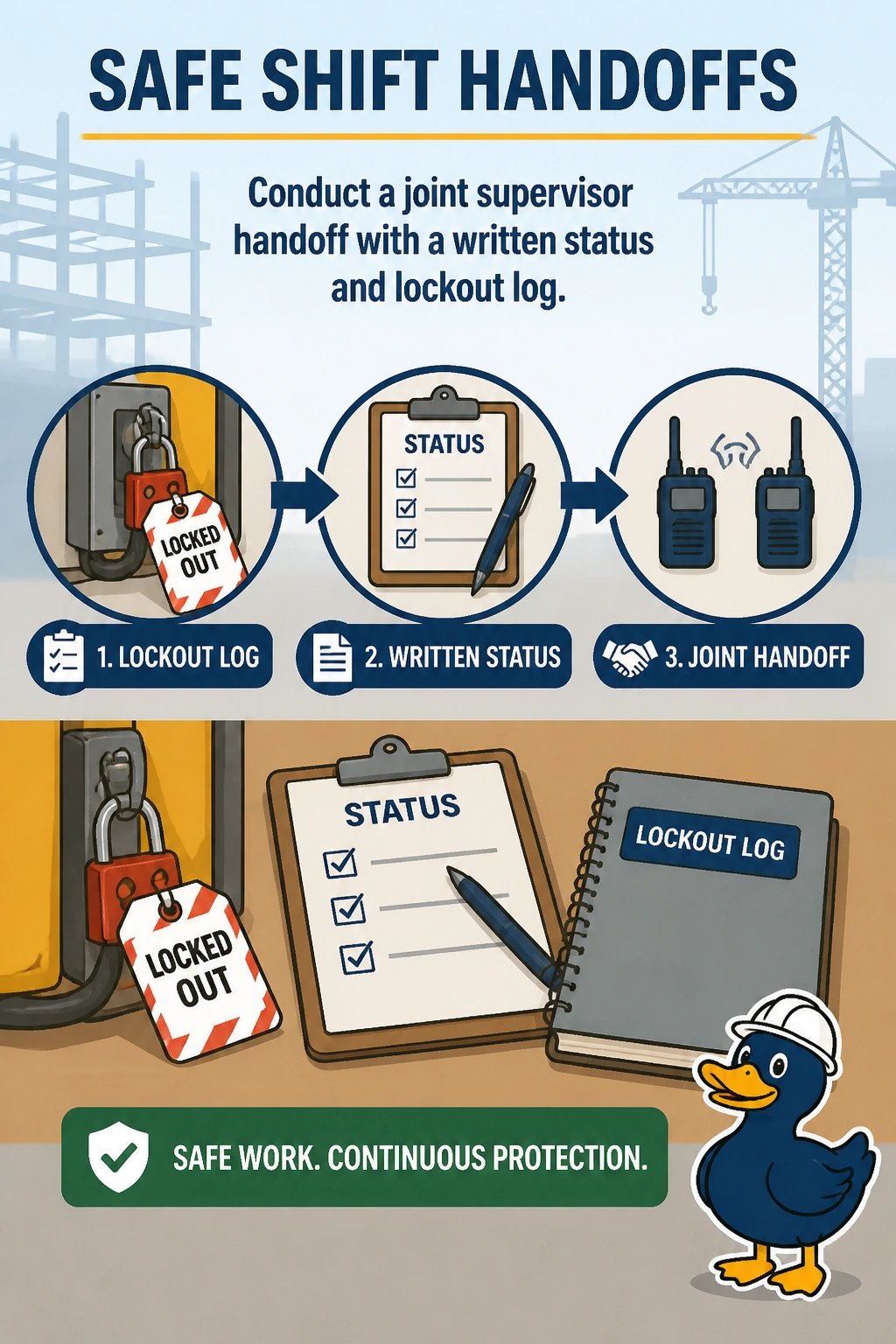
When one crew walks off and another steps in, unfinished work becomes an invisible trap unless the baton is passed cleanly. You prevent shift-change surprises by pairing a face-to-face supervisor handoff with a written status and lockout log. The trap is relying on casual texts or generic posters that miss live equipment states.
Full Explanation
Continuous multi-shift operations require structured turnover communication, making Conducting a joint supervisor handoff with a written status and lockout log the best way to prevent unexpected energization. A brief overlap between outgoing and incoming supervisors pairs two-way verbal questioning with a written record of open permits, active group lockboxes, and partially dismantled equipment so nothing is assumed ready for service. Posting a general reminder about lockout rules near the time clock fails because it provides no specific information about which machines are currently isolated or incomplete. Relying on outgoing workers to text incoming friends if work is unfinished is informal, unverified, and breaks down whenever someone is absent or reassigned. Sending a weekly email summary of open maintenance tickets on Fridays is far too slow for hazards that change every twelve hours. Caveat: shift handoffs must never replace individual personal locks or group lockout transfer procedures, which require incoming workers to apply their own locks before outgoing locks come off. As an operational check, require both outgoing and incoming shift leads to sign the turnover log at the equipment board before the new shift begins.
Prefer to study offline? Printable PDF study book + test engine ($7.50, unofficial). These questions stay free here.