
A large commercial hospital project has high turnover among subcontractor crews and a disconnect between field workers and project management on safety priorities. Which leadership structure best bridges this gap and sustains worker engagement?
Select an answer to reveal the explanation.
Short Explanation
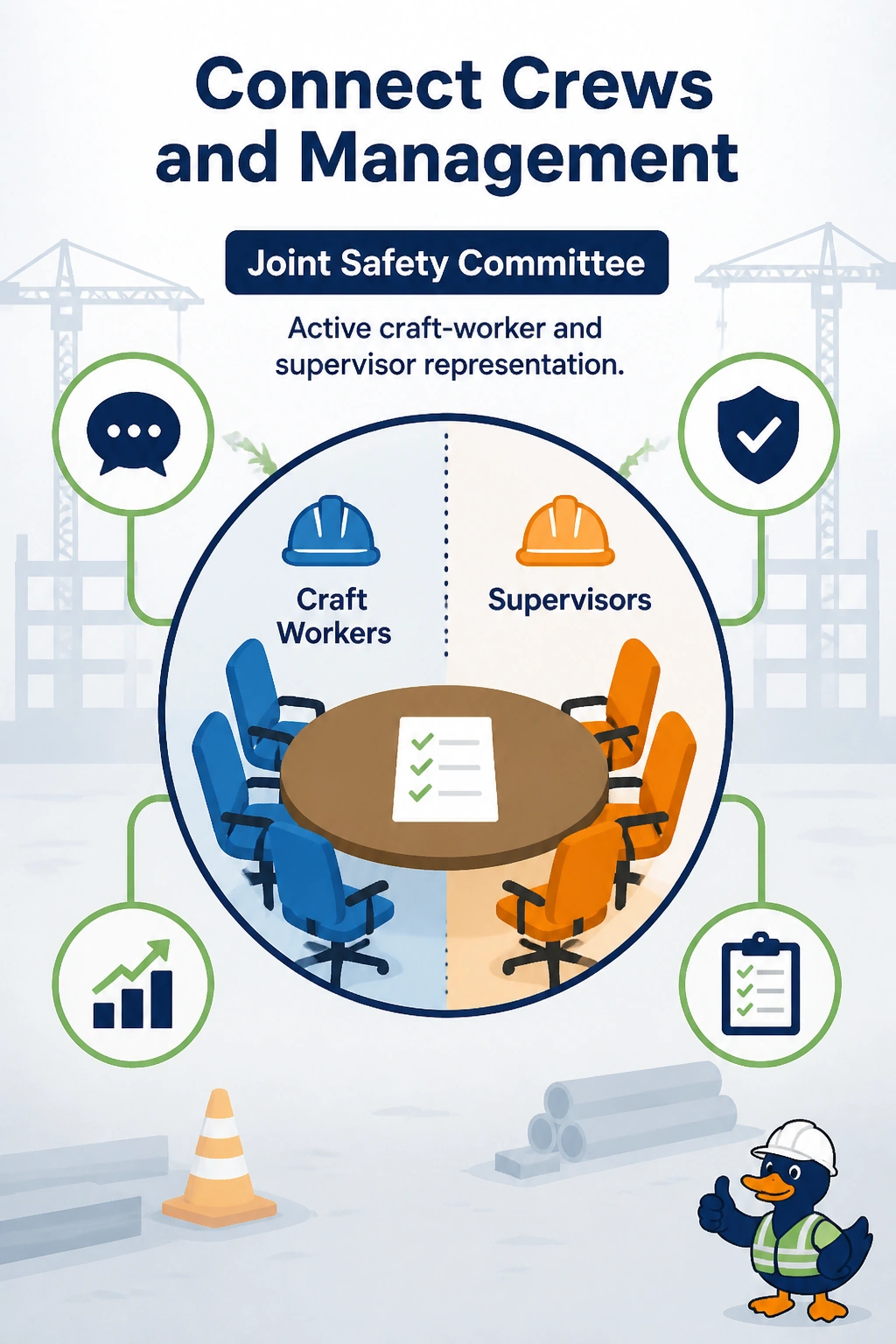
Top-down emails and quarterly suggestion boxes rarely reach the tradespeople facing daily hazards on a fast-moving site. When you build a joint safety committee that puts craft workers and supervisors at the same table, you create real two-way ownership across every subcontractor.
Full Explanation
On a complex, multi-contractor project, the structure that best closes the communication gap is a joint safety committee with active craft-worker and supervisor representation. Bringing frontline tradespeople, foremen, and project leaders together on a regular schedule ensures field hazards are surfaced in real time, corrective actions reflect actual work practices, and rotating crews see that management values their input. Choosing a closed management meeting that emails monthly rule updates fails because one-way directives without worker voice rarely change daily habits among transient subcontractor crews. Choosing an anonymous suggestion box checked once every quarter fails because slow feedback cycles leave hazards unaddressed and signal low urgency to workers. Choosing a bulletin board posting corporate injury statistics only shares lagging numbers without creating a mechanism to solve site-specific problems collaboratively. Note that a joint committee stays effective only when members have paid time to participate and see visible follow-through on the items they raise. As an operational check, rotate craft representatives from active trades into biweekly committee walks, assign owners and due dates to every action item, and post closed fixes at morning huddles.
Prefer to study offline? Printable PDF study book + test engine ($7.50, unofficial). These questions stay free here.