
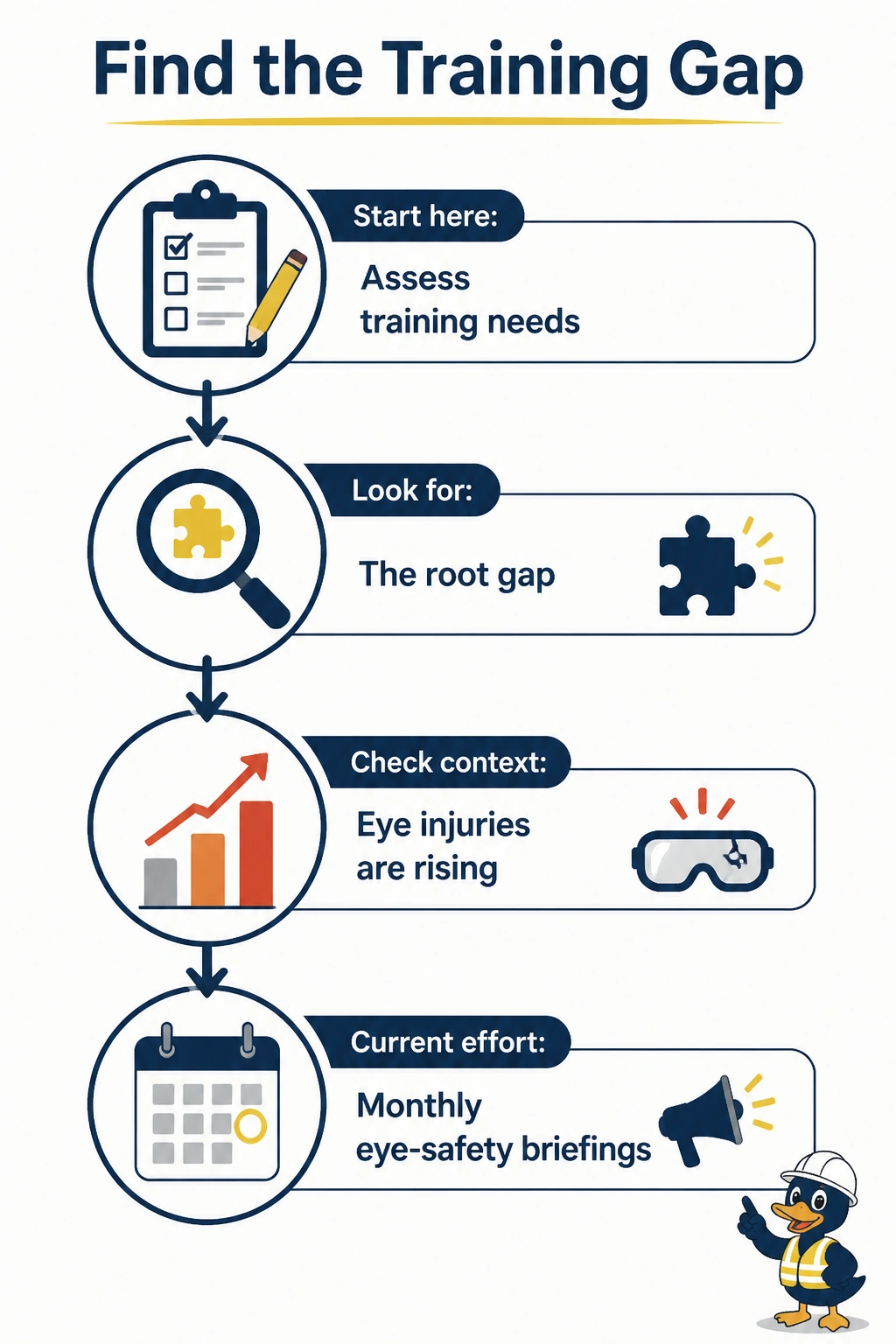
A general contractor sees a spike in eye injuries among concrete finishers despite holding monthly eye-safety briefings. Before building a new training module, what should the safety technician do first?
Select an answer to reveal the explanation.
Short Explanation
Prescribing another class without diagnosing the problem is like painting over a roof leak—it looks busy, but the drip continues. Before writing slides, you should run a needs assessment to learn whether workers lack knowledge or simply lack fog-free eyewear and wash stations. The trap is jumping straight to more lectures or punishment when the barrier is physical.
Full Explanation
To solve recurring eye injuries effectively, the safety technician should first Conduct a training needs assessment to find the root gap. A needs assessment examines task conditions, equipment availability, PPE fit, and worker skill so the technician knows whether the issue is a genuine knowledge deficit or an operational barrier such as scratched goggles, fogging lenses, or missing face shields. Schedule mandatory weekend classroom lectures for all crews wastes time and breeds resentment if workers already know the rules but cannot see through fogged glasses during concrete grinding. Issue written disciplinary warnings for missing eye protection treats a systemic barrier as willful misconduct and drives underreporting without fixing the hazard. Distribute longer printed safety packets with quiz sheets relies on passive reading that fails to verify hands-on behavior or uncover field obstacles like incompatible respirators and safety glasses. Caveat: even when a needs assessment confirms a training gap, instruction must be paired with engineering controls such as wet cutting or local exhaust ventilation. As an operational check, interview affected finishers at the workface and inspect the issued eyewear before drafting any new curriculum.
Prefer to study offline? Printable PDF study book + test engine ($7.50, unofficial). These questions stay free here.