
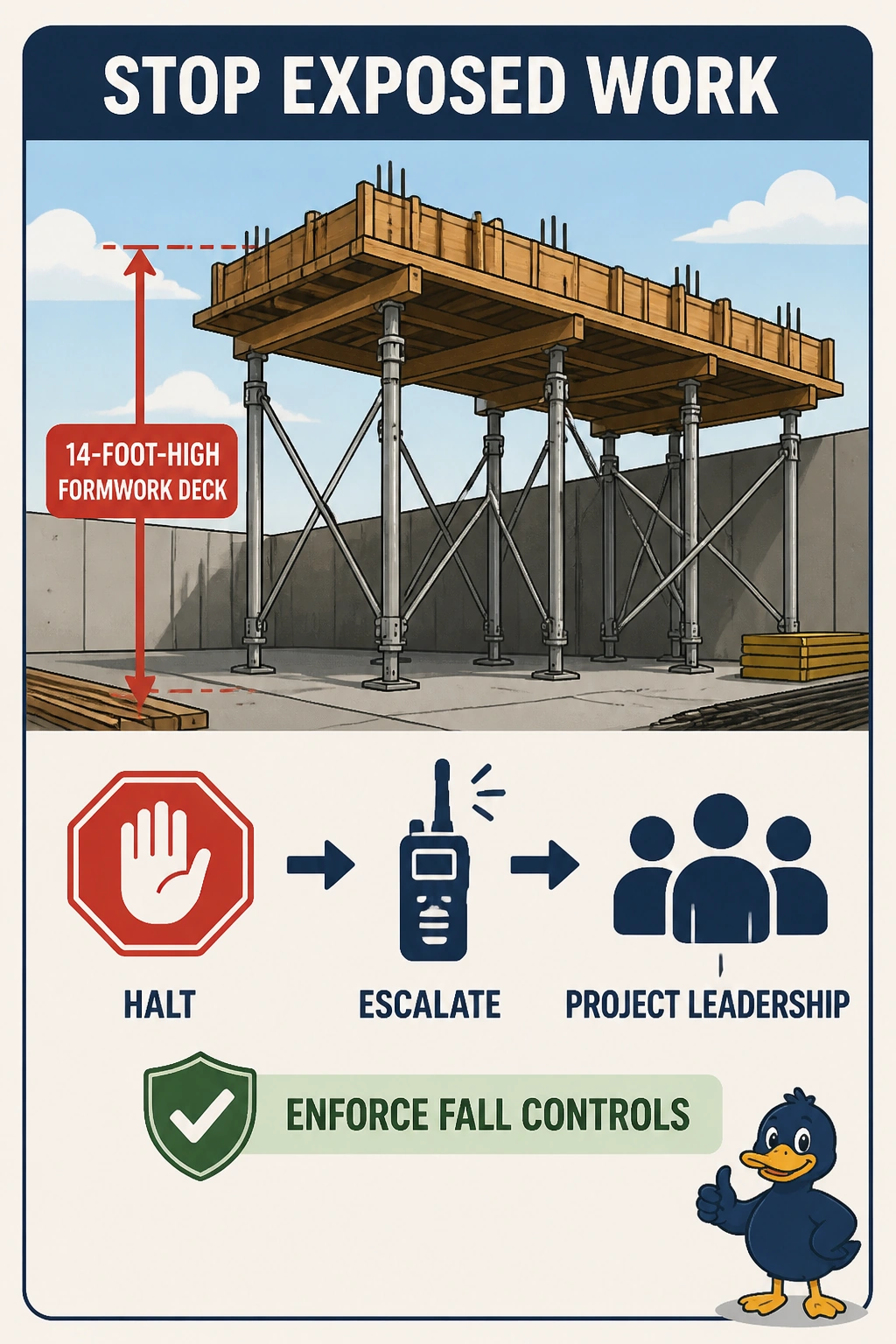
Concrete trucks are lined up at the gate when a superintendent tells the carpentry crew to skip installing perimeter guardrails on a 14-foot-high formwork deck so the pour stays on schedule. How should the safety technician respond?
Select an answer to reveal the explanation.
Short Explanation
Schedule pressure is one of the toughest tests you will face on a jobsite, and backing down at the edge puts lives on the line. The trap is letting a concrete pour override fall protection, when your role requires stopping exposed work until controls are in place.
Full Explanation
Under 29 CFR 1926.501, fall protection is mandatory at 6 feet or more in general construction, and administrative promises never substitute for physical fall controls on an active pour deck. The safety technician must halt the exposed work and escalate to project leadership to enforce fall controls, ensuring guardrails or compliant personal fall arrest systems are installed before workers step onto the elevated edge. Choosing to allow the crew to proceed without guardrails if they promise to watch the edge relies on human vigilance alone and leaves workers unprotected against slips, hose whip, or vibration-induced falls. Choosing to wait until after the concrete pour finishes before mentioning the missing guardrails accepts an imminent fall hazard during the highest-activity phase of the shift. Choosing to quietly leave the deck so the superintendent does not feel undermined by safety abdicates the technician's ethical and professional duty to intervene when serious hazards are present. As a caveat, if the superintendent pushes back, document the hazard, the stop-work directive, and the escalation to the project manager or corporate safety director immediately. As an operational check, hold a brief pre-pour readiness sign-off 30 minutes before concrete trucks arrive so edge protection is verified before the delivery clock starts.
Prefer to study offline? Printable PDF study book + test engine ($7.50, unofficial). These questions stay free here.