
A safety technician wants to build stronger crew engagement during daily site walks instead of having workers scatter whenever a safety vest approaches. Which leadership practice best reinforces ongoing safe work behaviors?
Select an answer to reveal the explanation.
Short Explanation
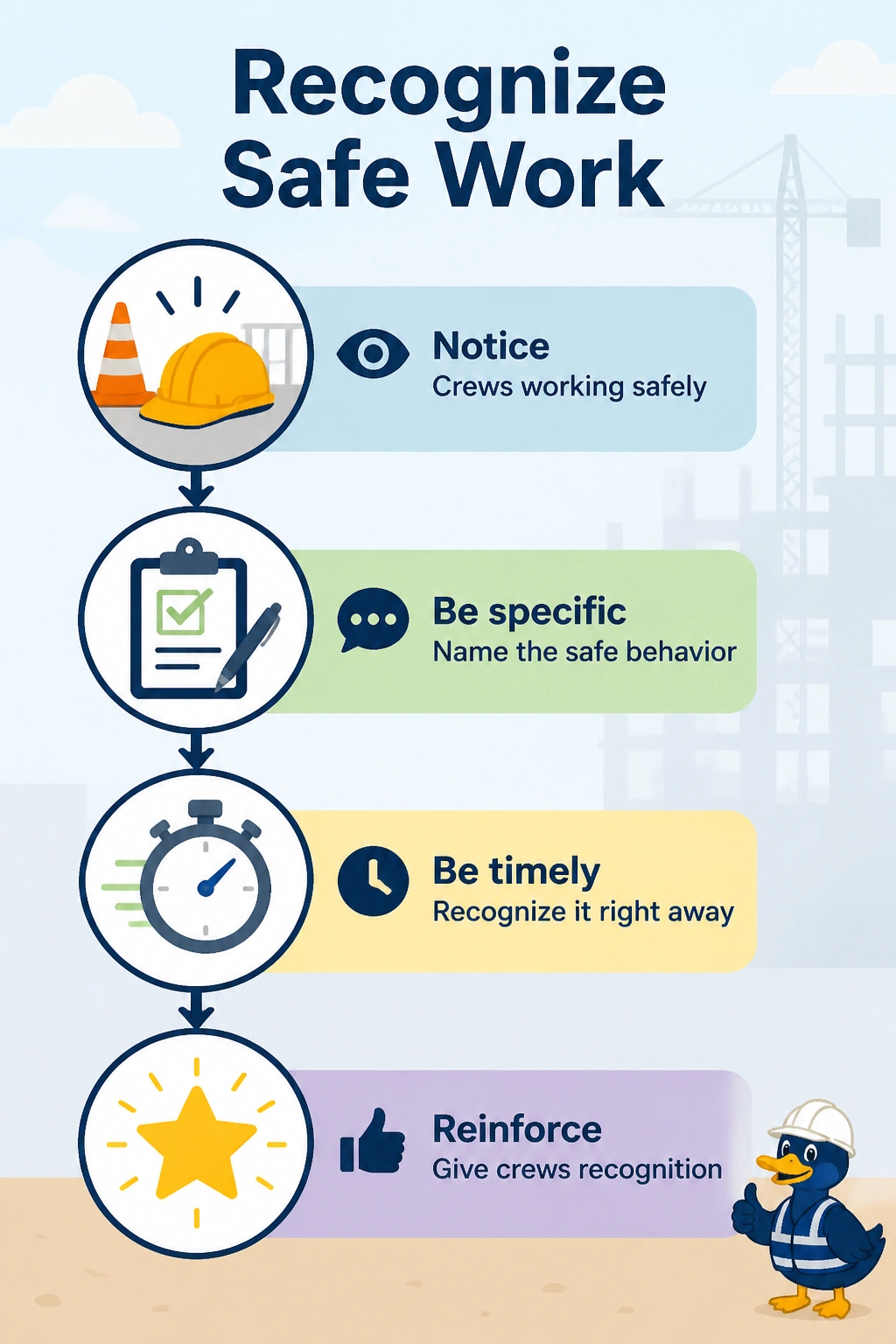
If crews only hear from you when something is wrong, they will treat safety like a speed trap! Pairing hazard correction with specific, timely recognition when you see workers doing things right builds trust and keeps safe habits alive.
Full Explanation
Safety leadership relies on behavioral reinforcement as well as rule enforcement. Give specific, timely recognition when crews work safely is correct because immediate, concrete feedback—such as commending a crew for proper trench shoring or clean housekeeping—strengthens those exact habits and encourages open communication about hazards. Conduct unannounced walks silently and email citations later fails because secretive policing erodes trust and misses the chance to coach or reinforce behavior in real time. Post monthly lists naming workers who received warnings is counterproductive because public shaming breeds resentment and drives workers to hide mistakes and near-misses. Praise the entire site only when zero incidents occur all year is ineffective because delayed, generic praise tied to lagging injury counts does not guide daily work practices and can discourage reporting minor injuries. As a caveat, positive recognition must be paired with consistent correction of unsafe conditions so standards never slip. For an operational check, set a personal goal on each site walk to note at least two specific safe practices directly to the workers performing them alongside any hazard coaching.
Prefer to study offline? Printable PDF study book + test engine ($7.50, unofficial). These questions stay free here.