
A superintendent notices that crews nod silently during morning five-minute safety talks, yet still make basic setup errors with guardrail clamps an hour later. How should the safety technician coach the superintendent to improve communication effectiveness?
Select an answer to reveal the explanation.
Short Explanation
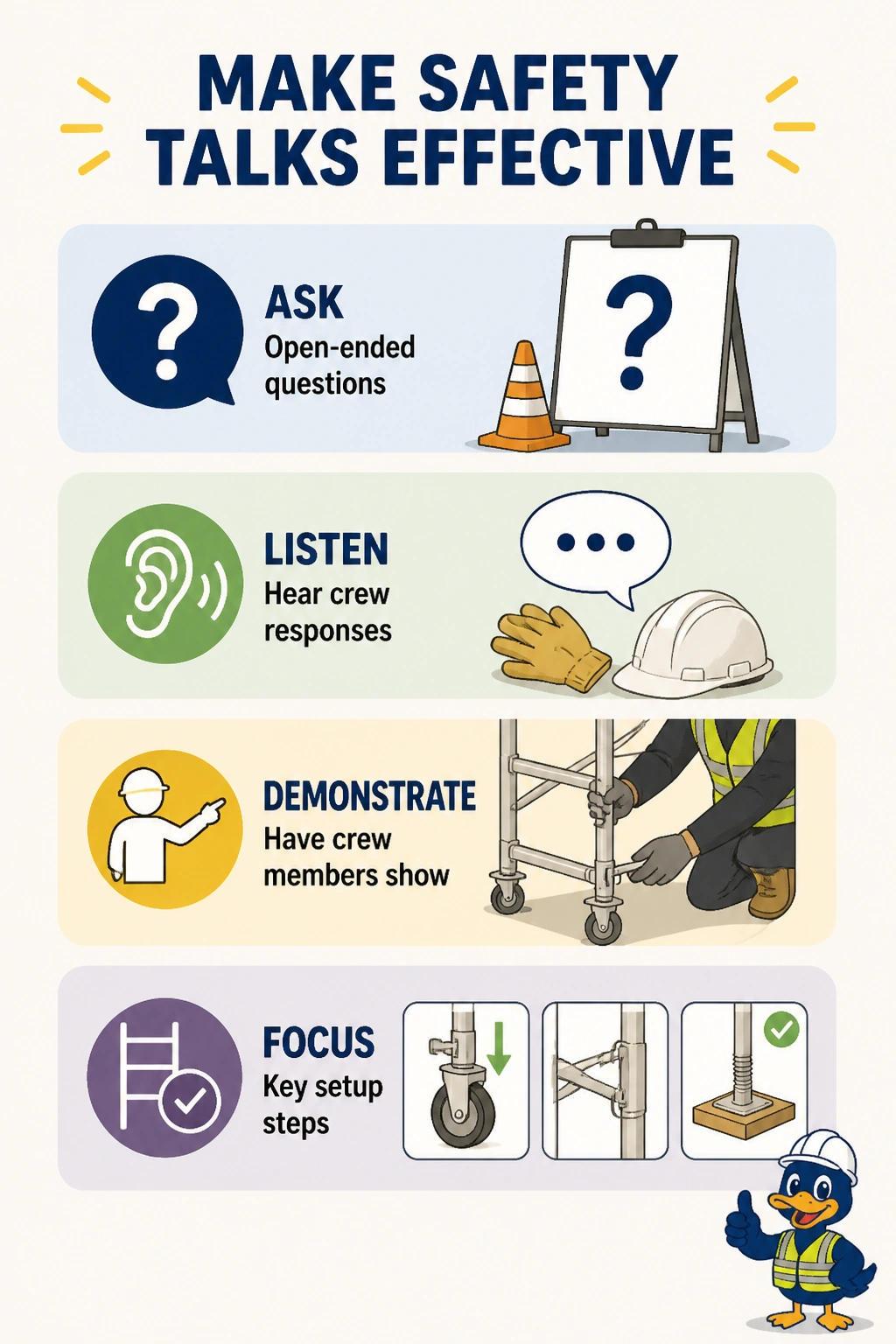
A room full of nodding heads doesn’t mean your crew knows how to clamp a guardrail. Effective safety communication is two-way: you invite workers to talk and demonstrate, not just listen. Don’t mistake a lecture or attendance signatures for real comprehension.
Full Explanation
Active, two-way communication confirms comprehension before workers face hazards, so asking open-ended questions and having crew members demonstrate key setup steps is the best coaching advice. When workers explain hazards in their own words and physically show how to install clamps, you catch misunderstandings that silent nodding hides. Having the superintendent lecture straight through the five minutes and treat silent nodding as proof the crew can set the clamps fails because one-way lecturing does not verify skill transfer and mistakes compliance for comprehension. Collecting attendance signatures before distributing the daily work task packets proves physical presence, but a signature never guarantees that a worker understood the briefing. Posting laminated hazard warnings inside the jobsite trailer near the timeclock provides passive reminders away from the work area rather than interactive verification at the task. One leadership caveat is to keep pre-task huddles brief, focused on that shift’s highest-risk steps, and free of embarrassment when someone needs a correction. As a practical check, have the foreman spot-check the first guardrail bay installed after the huddle and give immediate feedback on clamp torque and spacing.
Prefer to study offline? Printable PDF study book + test engine ($7.50, unofficial). These questions stay free here.