
During wood-frame wall assembly on a commercial apartment project, a carpenter using a pneumatic framing nailer accidentally double-fires a nail into an adjacent stud after the gun recoils off a knot. Which equipment control best prevents unintended bump-fire discharges?
Select an answer to reveal the explanation.
Short Explanation
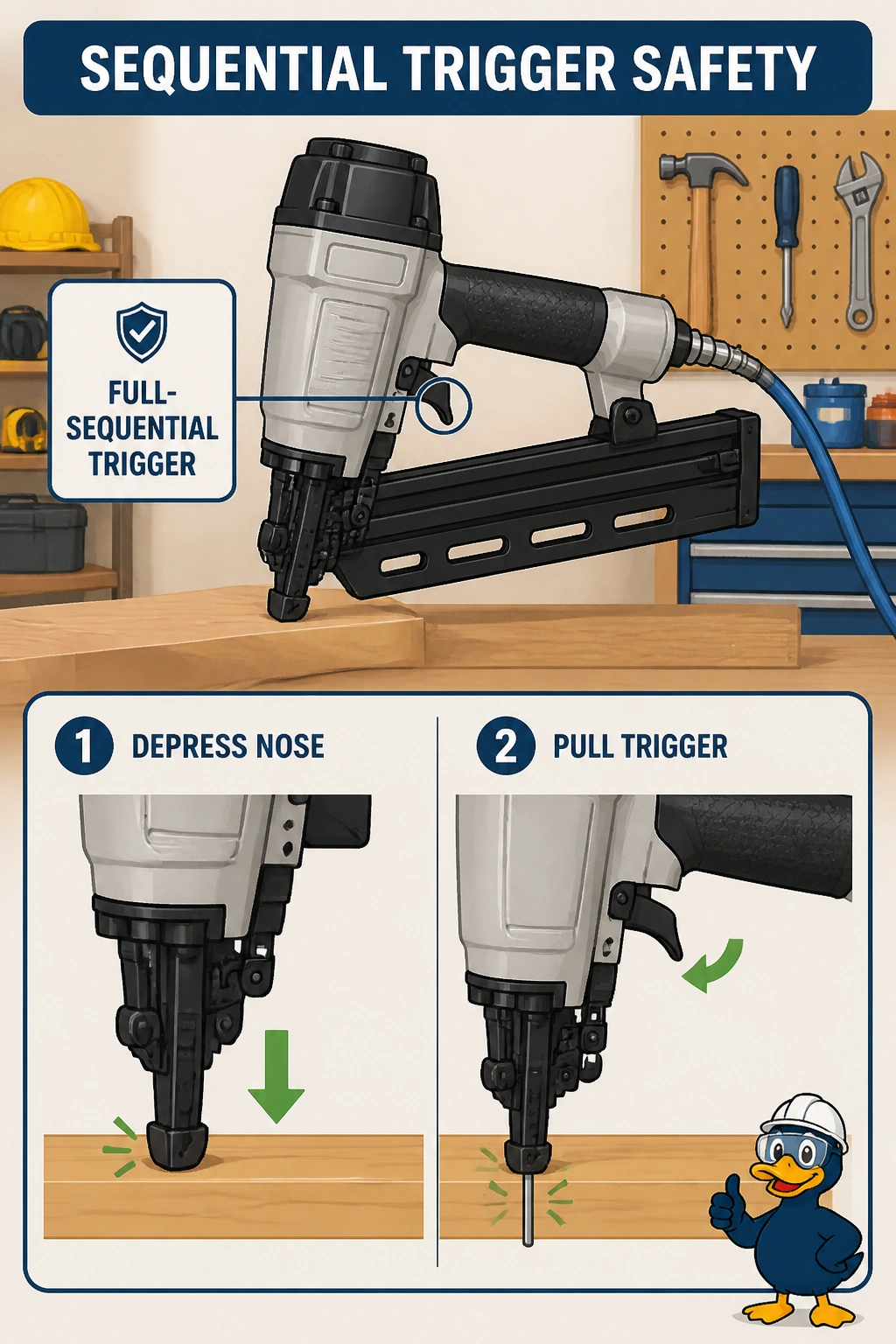
You can prevent bump-fire discharges by switching to a full-sequential trigger, which requires the nose to press against the wood before you pull the trigger. Holding down a contact-trip trigger lets the nailer fire when it bumps something, while higher air pressure or removing the nose safety does not solve the problem.
Full Explanation
A full-sequential trigger that requires the nose to depress before you pull the trigger is the best equipment control for preventing unintended bump-fire discharges. The required sequence makes the nailer fire only after the nose is pressed against the workpiece and the trigger is pulled, preventing a recoil bounce from causing another nail to fire while the trigger remains held. Keeping a contact-trip trigger and instructing carpenters to hold it down while bump-nailing studs preserves the condition that allows the tool to fire again when its nose contacts a surface. Increasing the air compressor regulator pressure does not control the firing sequence and may worsen recoil, overdrive nails, or exceed the tool’s rated pressure. Removing the workpiece contact safety element defeats a built-in safeguard and can allow the nailer to discharge without the nose being pressed against the workpiece. Exam caveat: a full-sequential trigger reduces unintended discharges but cannot prevent a nail from deflecting off a knot or metal hanger, so keep your free hand clear of the line of fire. Practical check: during morning tool checks, confirm that full-sequential triggers are installed and that the nose contact safeties move freely without binding.
Prefer to study offline? Printable PDF study book + test engine ($7.50, unofficial). These questions stay free here.