
Painters applying an epoxy coating inside a mechanical room wear tight-fitting half-mask air-purifying respirators with organic vapor cartridges that lack an end-of-service-life indicator. How must the employer ensure workers do not inhale breakthrough vapors when the cartridges saturate?
Select an answer to reveal the explanation.
Short Explanation
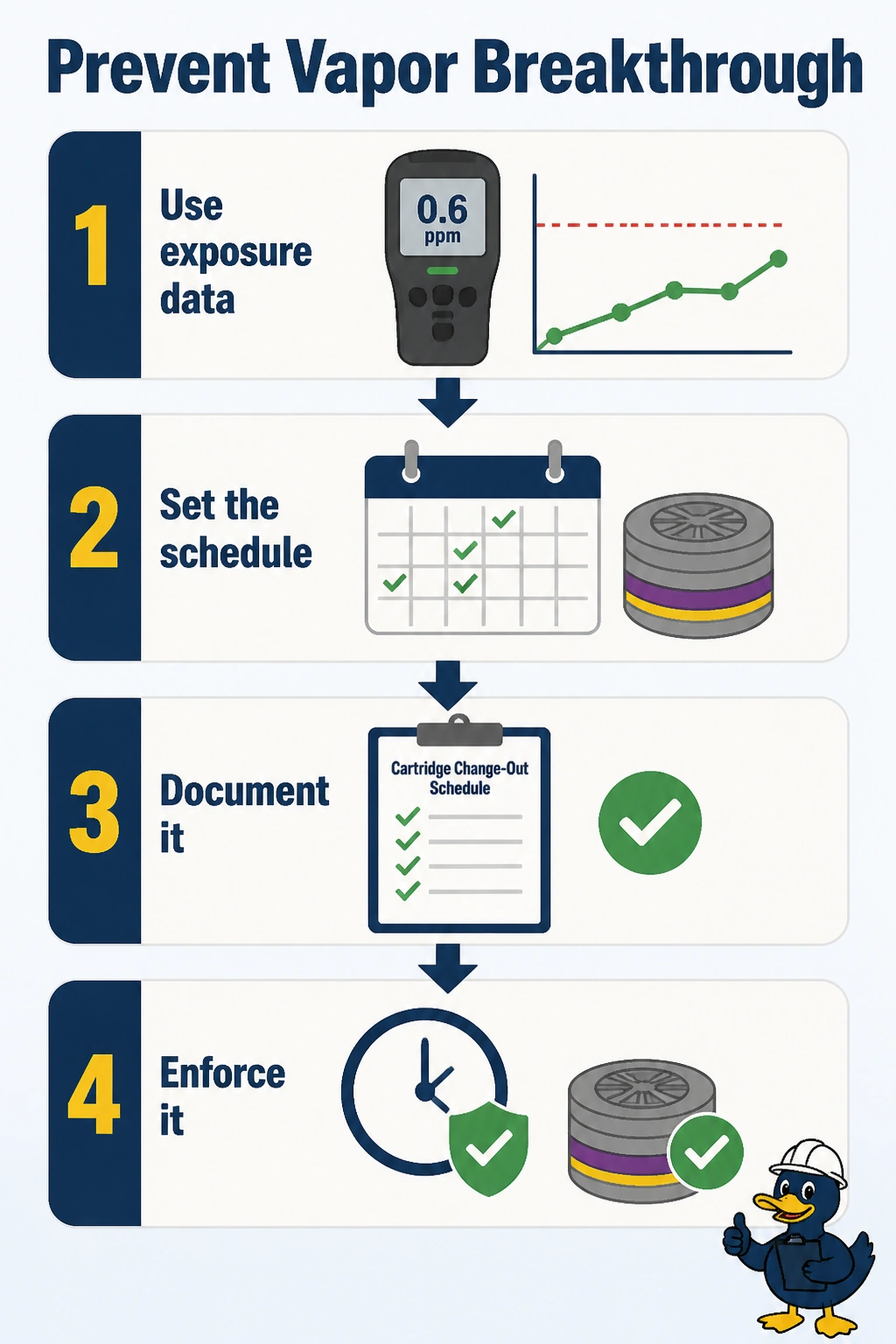
You protect painters by replacing cartridges before vapors break through, not by waiting for a warning sign. When cartridges lack an end-of-service-life indicator, OSHA requires a documented change-out schedule based on objective exposure data. Odor or taste, increased breathing resistance, and overnight bagging do not ensure protection.
Full Explanation
Under OSHA 29 CFR 1910.134, when gas or vapor cartridges lack an end-of-service-life indicator, the employer must implement a change schedule based on objective information or data that ensures cartridges are replaced before breakthrough occurs. Enforce a documented cartridge change-out schedule based on objective exposure data, tailored to airborne concentration, humidity, and work rate. Instructing painters to swap cartridges only when they begin to smell or taste solvent vapors is unsafe: odor thresholds vary widely, olfactory fatigue occurs quickly, and detecting a chemical means breakthrough has already happened. Allowing painters to reuse the same organic vapor cartridges until breathing resistance increases confuses particulate filter loading with chemical vapor saturation; vapor saturation does not noticeably restrict airflow. Requiring painters to store used cartridges in sealed plastic bags overnight to regenerate charcoal is also ineffective: activated carbon does not regenerate in a bag, and trapped vapors can migrate through the media. As an exam caveat, high temperature and heavy exertion shorten cartridge service life. For a practical check, post the written change-out interval at the containment entry and have workers log cartridge swap times.
Prefer to study offline? Printable PDF study book + test engine ($7.50, unofficial). These questions stay free here.