
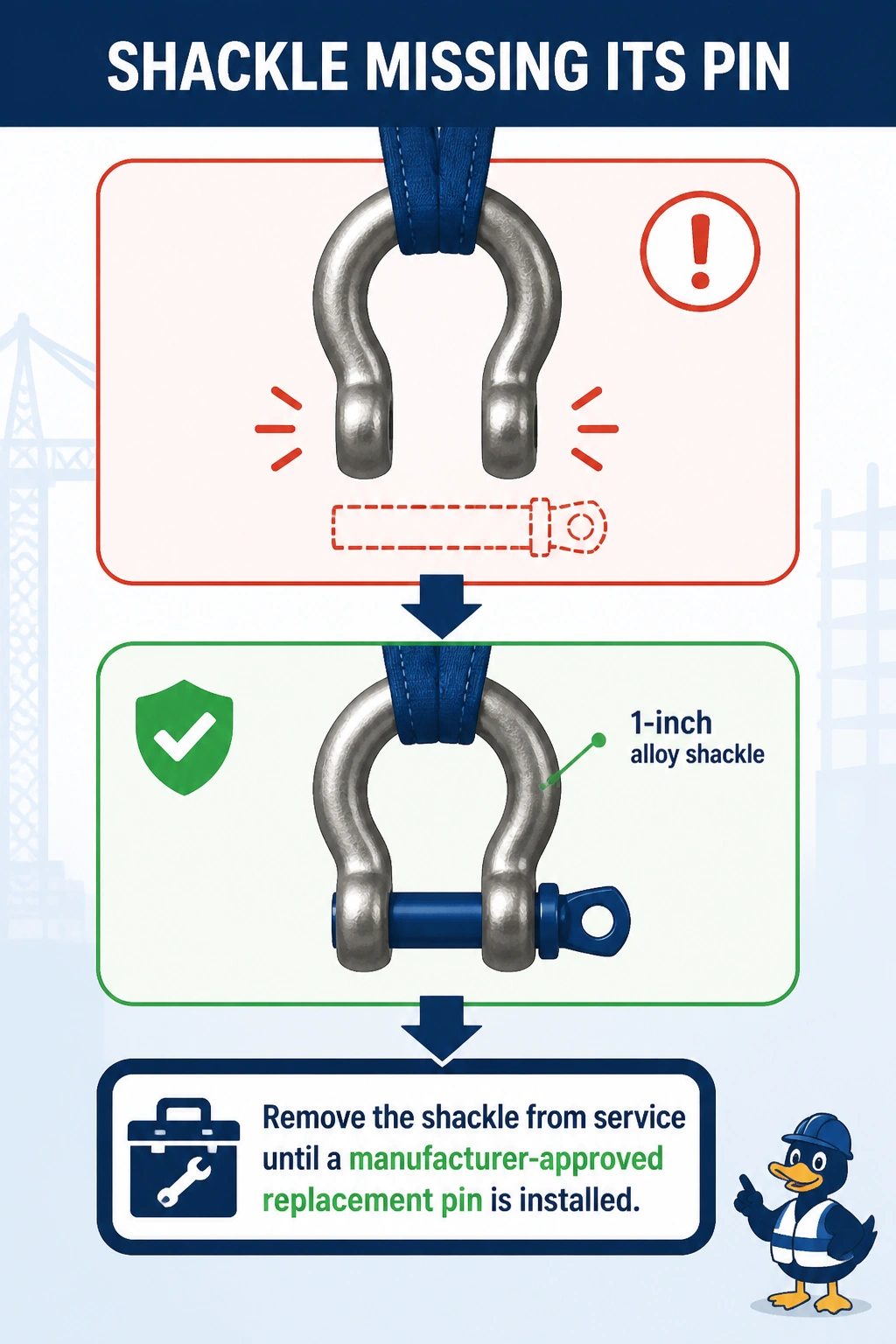
While rigging a steel beam for a crane pick, a rigger discovers that a 1-inch alloy shackle is missing its threaded pin and suggests inserting a matching Grade 8 hex bolt from the gang box. What must the safety technician require?
Select an answer to reveal the explanation.
Short Explanation
A Grade 8 bolt from a gang box might look tough, but it is not engineered for crane rigging loads. Your trap is letting a crew improvise hardware to save five minutes, when the only safe move is pulling that shackle out of service.
Full Explanation
Under OSHA 29 CFR 1926.251 and rigging hardware standards, every shackle is engineered as a matched assembly with a specific alloy pin rated for shear and side-loading forces. You must remove the shackle from service until a manufacturer-approved replacement pin is installed, because hardware-store bolts lack verified rigging load ratings, proper shoulder fit, and ductility under shock loads. Choosing to allow the Grade 8 bolt for a single light lift as long as a locknut is tightened onto the threads still introduces unverified shear strength and improper bearing contact inside the shackle eyes. Trying to use the bolt only if the rigger wraps the threads with duct tape to prevent the nut from backing off adds a makeshift fix that fails under vibration or sling rotation. Attempting to flip the shackle upside down so the load rests on the bow rather than on the substituted bolt does not remove tension from the pin, because both the bow and the pin carry the full suspended load. As a caveat, even a manufacturer replacement pin must match the exact shackle brand, size, and working load limit before returning to service. As an operational check, inspect rigging gang boxes weekly for missing pins, deformed shackles, or unapproved hardware.
Prefer to study offline? Printable PDF study book + test engine ($7.50, unofficial). These questions stay free here.