
During a pre-shift gear check on a commercial steel erection job, an ironworker pulls a full-body harness from a gang box and notices frayed webbing and heat-damaged stitching near the dorsal D-ring. What must the safety technician require?
Select an answer to reveal the explanation.
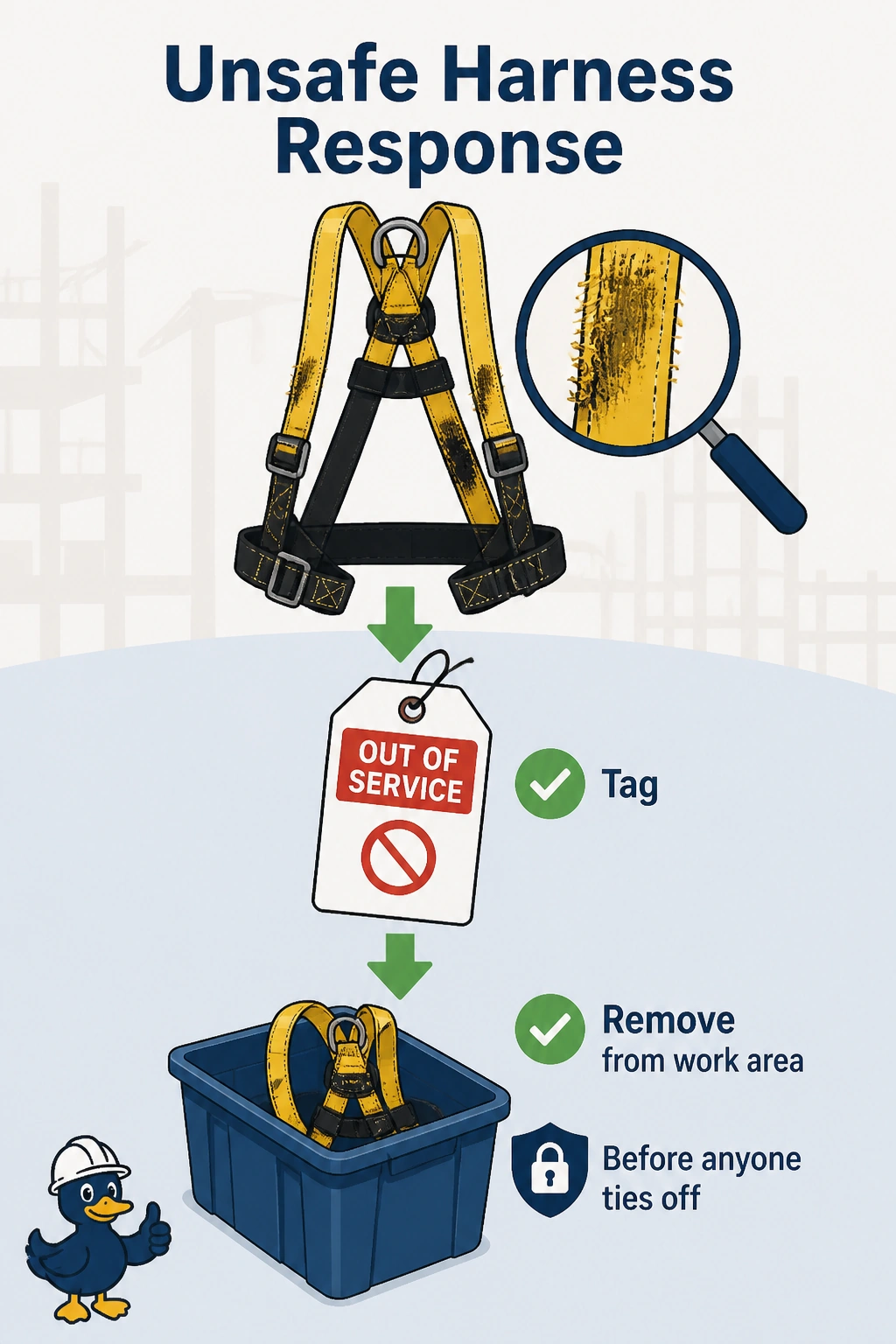
Short Explanation
A damaged fall-arrest harness is like a parachute with a torn seam—it might look mostly intact until the one moment your life depends on it. The trap is patching frayed webbing or adding a second lanyard instead of pulling defective gear out of service immediately.
Full Explanation
Under OSHA 29 CFR 1926.502, personal fall arrest systems must be inspected prior to each use for wear, damage, and other deterioration, and defective components must be removed from service immediately. Because frayed webbing and heat-damaged stitching compromise the rated strength of the harness under arrest loads, the technician must Immediately tag the harness out of service and remove it from the work area before anyone ties off. You cannot Allow the worker to use the harness for one shift if a second lanyard is clipped in, because a second lanyard does not restore the torn webbing or stitching of the harness itself. You also cannot Wrap electrical tape over the frayed webbing to stop further unraveling until Friday, because tape hides the defect without repairing load-bearing fibers. Nor can you Keep the harness in service as long as the metal D-ring shows no visible cracks, because failure of either textile webbing or stitching will cause the entire harness to fail during a fall. As a caveat, removing a harness from service means physically locking it up or destroying it so another worker cannot accidentally grab it later. As an operational check, inspect the harness webbing, stitching, buckles, and legible labels before each shift and log any removed gear in the equipment register.
Prefer to study offline? Printable PDF study book + test engine ($7.50, unofficial). These questions stay free here.