
A welder preparing to work inside an enclosed steel tank complains that the interior feels stuffy and asks to crack open an oxygen cylinder valve to freshen the air while waiting for a blower. What must the safety technician require immediately?
Select an answer to reveal the explanation.
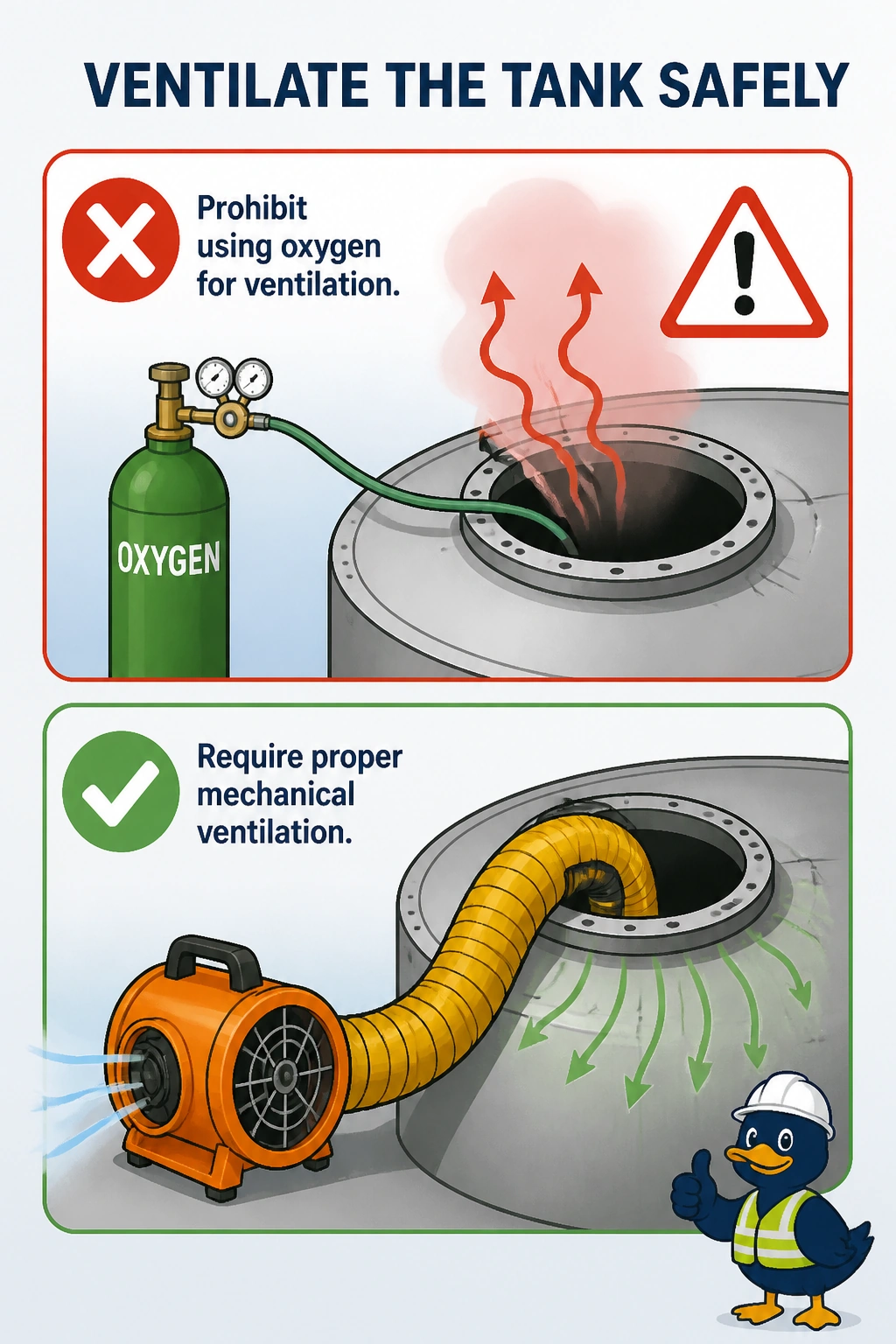
Short Explanation
Cracking an oxygen bottle to cool off or freshen a tank turns a worker's clothes into a fuse waiting for a spark. You must prohibit using oxygen for ventilation and require proper mechanical air movement before any work begins. The trap is thinking a short purge or aiming the hose at the floor keeps an oxygen-enriched fire from happening.
Full Explanation
Oxygen itself is not flammable, but enriching air above normal ambient levels dramatically lowers ignition energy and causes clothing, hair, and grease to burn with explosive speed. Under 29 CFR 1926.353, the technician must Prohibit using oxygen for ventilation and require proper mechanical ventilation using clean, breathable outside air. Choosing to Allow a brief five-minute oxygen purge as long as the welder keeps the torch outside still creates a trapped pocket of oxygen-enriched gas inside the tank that any static spark or grinder can ignite. Deciding to Permit the oxygen flow only if a fire watch stands outside with a water extinguisher fails because a fire watch cannot prevent a flash fire inside an oxygen-rich atmosphere. Likewise, trying to Instruct the welder to aim the oxygen hose at the floor rather than toward clothing does not stop oxygen from mixing throughout the enclosed space. As a caveat, always test the space with a calibrated multi-gas monitor to confirm normal oxygen levels before entry and during hot work. As an operational check, inspect compressed gas manifolds and hoses to verify oxygen lines are used strictly for cutting or welding torches.
Prefer to study offline? Printable PDF study book + test engine ($7.50, unofficial). These questions stay free here.