
A flooring crew will apply a strong aromatic solvent adhesive for four hours inside a mechanical room, and the foreman hands out standard disposable latex exam gloves from the first-aid cabinet. What must the safety technician require for hand protection?
Select an answer to reveal the explanation.
Short Explanation
Aromatic solvents eat right through thin latex exam gloves in minutes, turning a false sense of protection into prolonged skin exposure. The trap is thinking thicker leather or double-layered latex can substitute for chemical compatibility. Check the product's Safety Data Sheet and match your glove polymer to the exact solvent.
Full Explanation
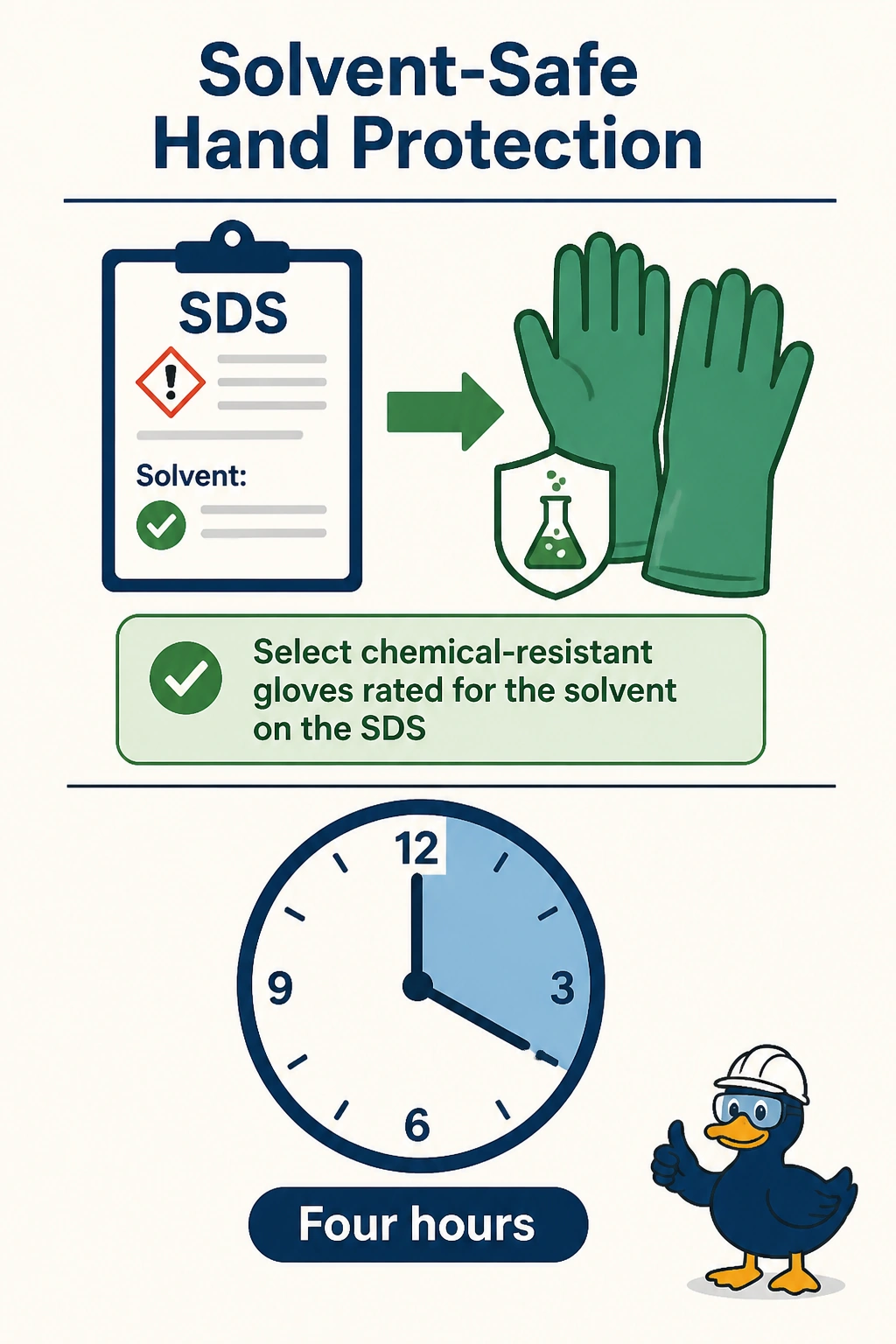
Under 29 CFR 1926.95, personal protective equipment must be selected to protect against the specific hazards encountered, so you must Select chemical-resistant gloves rated for the solvent on the SDS. Different glove polymers such as nitrile, butyl, or neoprene have vastly different breakthrough and permeation times depending on the chemical family, and thin medical latex degrades rapidly in aromatic solvents. Choosing to Double-layer two pairs of disposable latex gloves for extra barrier thickness fails because the same incompatible polymer still swells, softens, and allows rapid chemical permeation. Deciding to Switch to heavy-duty split-leather work gloves to resist abrasion and tearing is dangerous because porous leather absorbs liquid solvents and holds them directly against the skin. Trying to Wear knitted cotton jersey gloves under disposable latex gloves to absorb sweat creates a wick that traps solvent inside the glove once breakthrough occurs. Caveat: even chemically rated gloves have finite breakthrough times and must be replaced at manufacturer-specified intervals or immediately if torn or swollen. Operational check: compare the glove manufacturer's chemical resistance chart against Section 8 of the adhesive SDS before issuing PPE.
Prefer to study offline? Printable PDF study book + test engine ($7.50, unofficial). These questions stay free here.