
While pulling low-voltage cable above a drop-ceiling grid, an electrician stands with both feet on the very top cap of an eight-foot fiberglass stepladder to reach a J-hook. What must the safety technician require under OSHA 29 CFR 1926.1053(b)(13)?
Select an answer to reveal the explanation.
Short Explanation
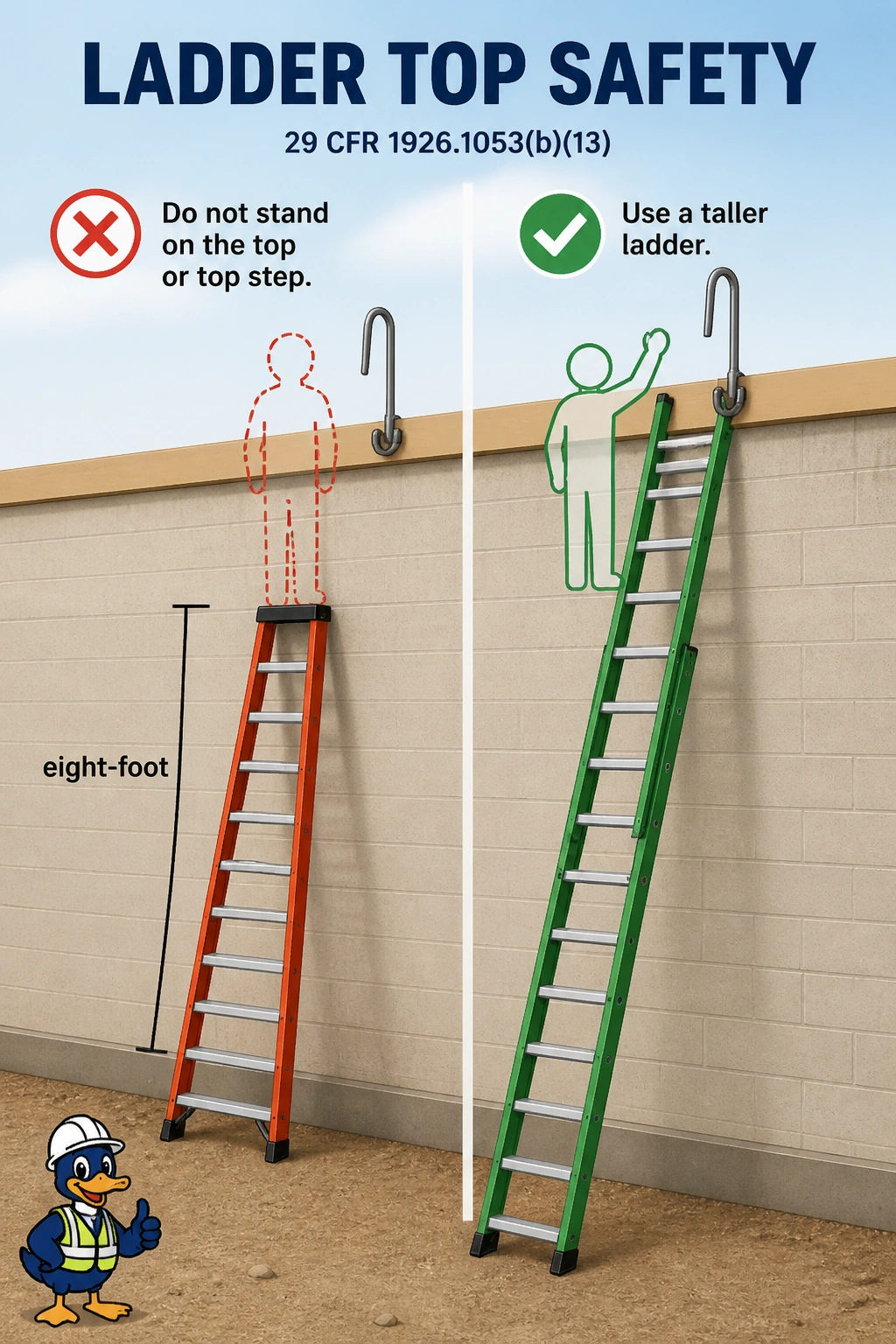
You’re right to stop anyone from standing on the top cap or top step: neither is a safe standing surface, so you need a taller ladder. A coworker holding the base or a shoulder against the wall doesn’t make that prohibited position safe.
Full Explanation
Under OSHA 29 CFR 1926.1053(b)(13), you must not use the top or top step of a stepladder as a step. The safety technician must prohibit standing on the top cap or top step and provide a taller ladder. Standing at the very top raises your center of gravity above the ladder’s stability envelope and removes the upper rails you need for balance, increasing the risk of a sideways tip-over. A coworker holding the ladder base steady does not override the federal prohibition or prevent you from losing balance at the apex. Leaning a shoulder against the wall while standing on the top step is also unsafe: the lateral push can kick the ladder out from beneath you. Tying a full-body harness to the ceiling grid does not make standing on the top cap compliant, and light-gauge ceiling suspension wire is not rated as a fall-arrest anchor. Caveat: if overhead obstructions or narrow aisles prevent safe use of a taller stepladder, consider a compliant rolling platform ladder or scissor lift. Practical check: at the start of overhead rough-in phases, audit ladder inventory and verify that 10-foot or 12-foot stepladders are staged near high-bay work areas.
Prefer to study offline? Printable PDF study book + test engine ($7.50, unofficial). These questions stay free here.