
An electrician rolls a 10-foot mobile welded-frame scaffold into position on a smooth concrete warehouse floor to install overhead conduit. What must be done before the worker climbs onto the platform to begin work?
Select an answer to reveal the explanation.
Short Explanation
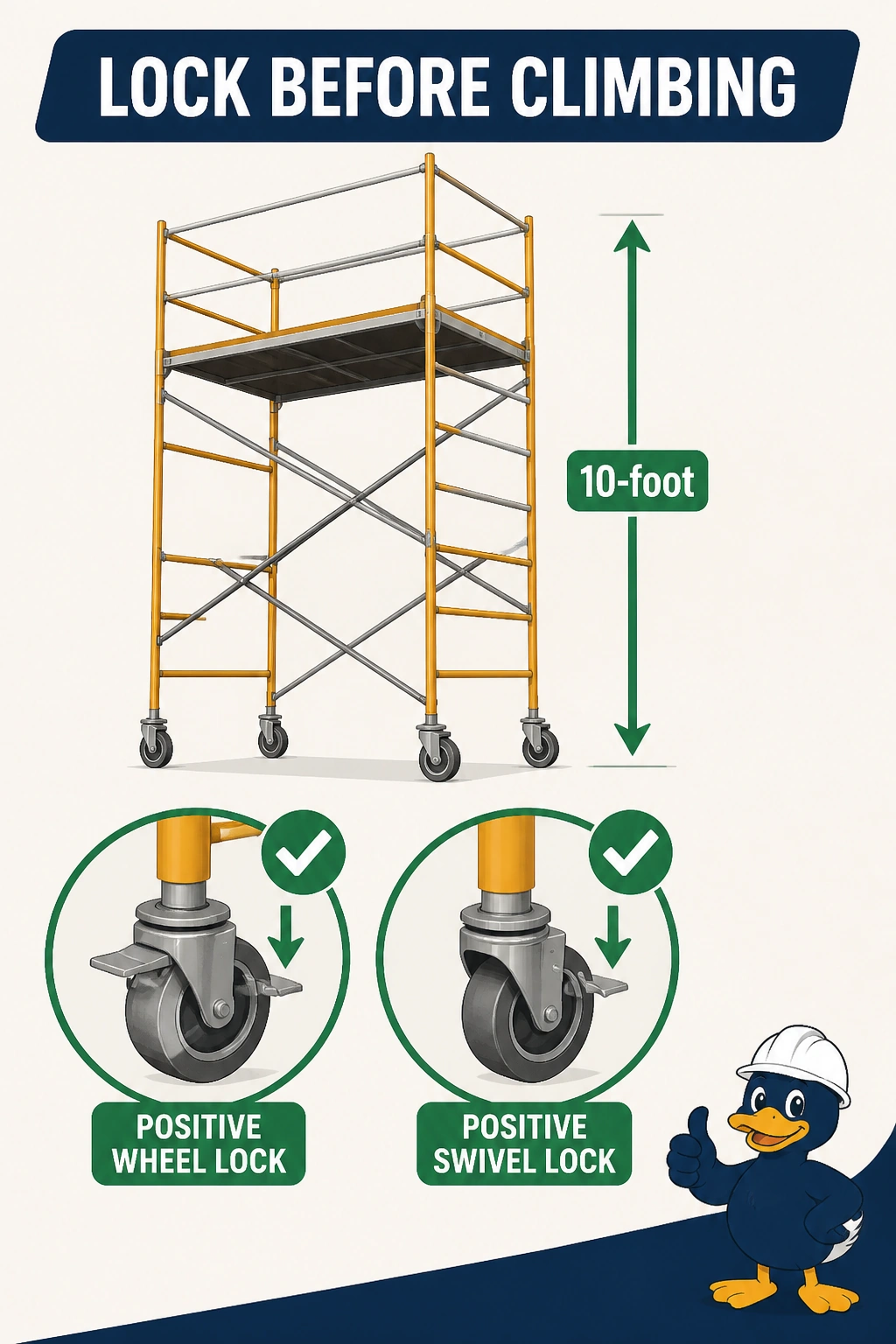
A rolling scaffold on smooth concrete turns into a giant skateboard the moment you push against an overhead conduit box. Before you climb, lock down every wheel completely rather than trusting a quick wedge or someone holding the frame.
Full Explanation
Under OSHA 29 CFR 1926.452(w)(2), scaffold casters and wheels must be locked with positive wheel and/or wheel and swivel locks, or equivalent means, to prevent movement while the scaffold is used in a stationary manner. Engaging positive wheel and swivel locks on all scaffold casters keeps the base rigid against lateral forces created when a worker pulls wire or tightens fittings overhead. Tying the top guardrail to an adjacent ceiling sprinkler pipe before climbing is unsafe because sprinkler piping is not rated as a structural anchor and can rupture under load. Chocking two diagonal wheels with scrap lumber wedges while leaving others free fails to prevent rolling or swiveling across smooth concrete. Having a helper hold the lower frame steady while the worker finishes overhead relies on manual grip instead of positive mechanical locking and leaves the scaffold free to shift if the helper steps away. As a caveat, even locked casters do not permit riding a mobile scaffold unless all strict conditions in 29 CFR 1926.452(w)(6) are met. For an operational check, physically test each caster brake lever with your foot and nudge the base frame before anyone climbs the access ladder.
Prefer to study offline? Printable PDF study book + test engine ($7.50, unofficial). These questions stay free here.