
A rigging crew is guiding a 30-foot prefabricated steel stair flight into a tight building core using a tower crane in a light afternoon breeze. What work practice should the safety technician require to control load swing without placing workers in a crush zone?
Select an answer to reveal the explanation.
Short Explanation
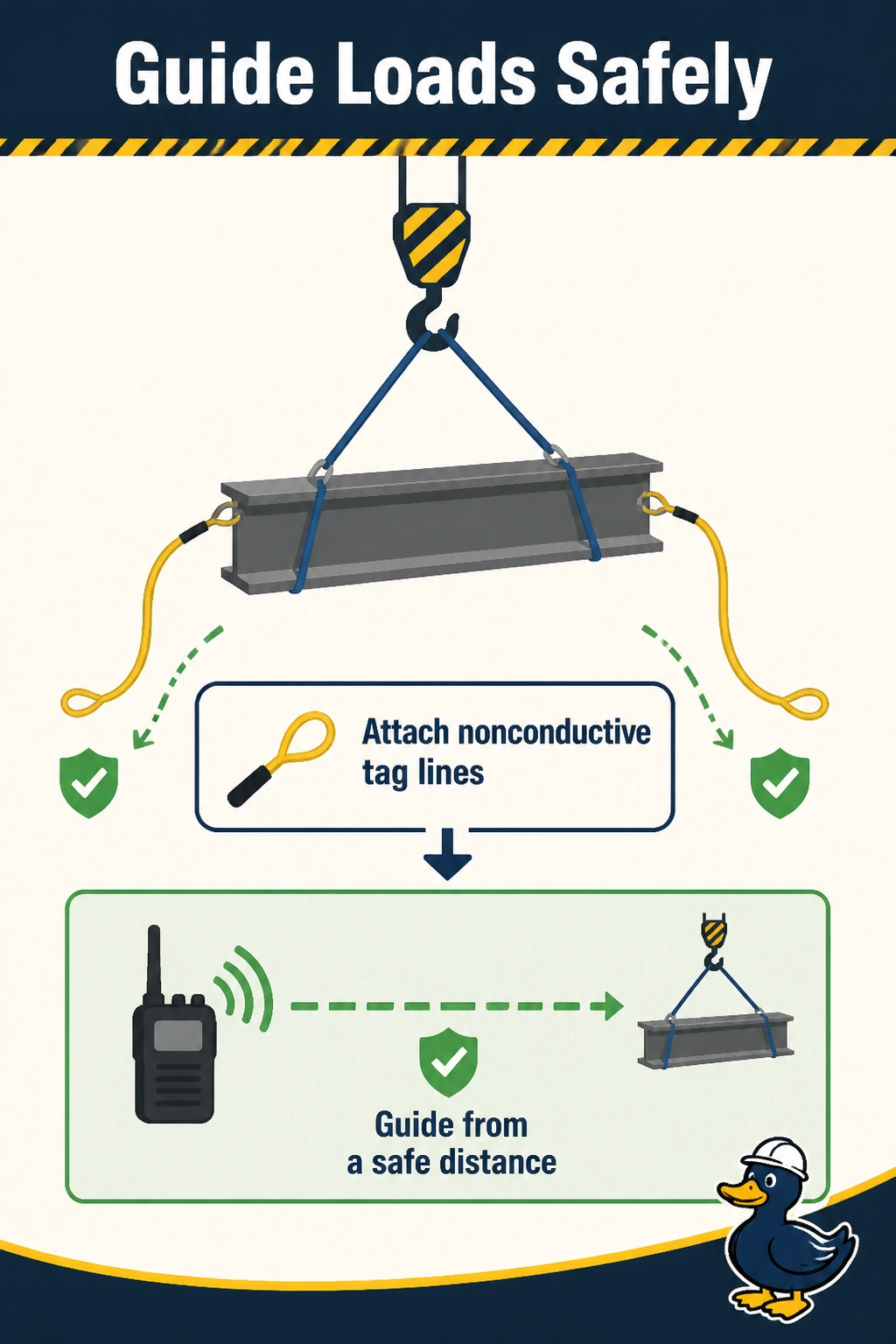
Controlling a swinging steel load by hand is like trying to steer a moving freight car with your bare shoulders. You want tag lines keeping your crew well clear of the pinch zone, because the trap is letting workers grab heavy suspended steel directly.
Full Explanation
Requiring crews to "Attach nonconductive tag lines so riggers can guide the load from a safe distance" keeps workers outside the fall shadow and pinch points while giving them leverage to prevent wind-driven rotation. Nonconductive rope also reduces electrical shock risk if work occurs near energized equipment or power lines. Having crews "Have two ironworkers push directly on the steel stair stringers by hand" places hands, feet, and torsos directly between a multi-ton suspended load and surrounding steel columns. Attempting to "Speed up the crane swing so momentum carries the stairs into the core" increases dynamic side-loading on the boom and makes sudden stops hazardous for everyone on the deck. Instructing the crew to "Ask workers to stand directly beneath the load to steady both ends" violates fundamental crane safety rules prohibiting personnel under suspended loads. As a caveat, tag lines must never be wrapped around a worker's hand or wrist, and riggers should watch for snag hazards on lower levels. For an operational check, inspect tag lines for fraying before the pick, confirm sufficient length for safe standoff distance, and verify clear communication with the signal person.
Prefer to study offline? Printable PDF study book + test engine ($7.50, unofficial). These questions stay free here.