
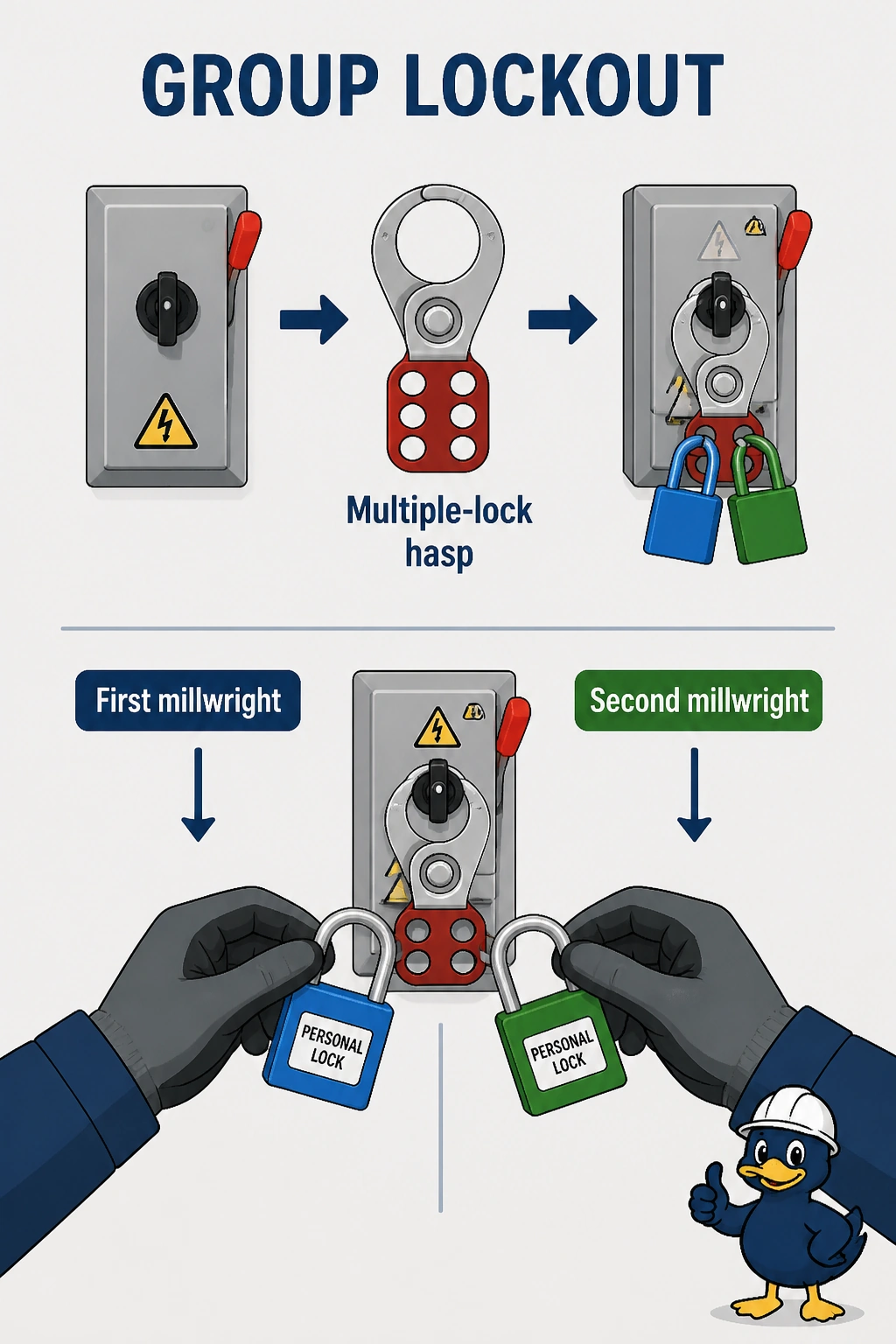
Two millwrights and an electrician are repairing a concrete batch plant mixer, and the foreman places one padlock on the main disconnect and pockets the key for the group. What must the safety technician require instead?
Select an answer to reveal the explanation.
Short Explanation
Sharing one lock on a crew repair is like sharing one parachute—only the person holding the key controls when the power comes back on. Don't fall for letting one worker hold a single key with a sign-in log or swapping the lock for a warning tag. You must require a multiple-lock hasp so every worker applies their own personal lock.
Full Explanation
This mixer repair is concrete equipment. 29 CFR 1926.702(j) requires potentially hazardous energy on concrete and masonry equipment, including mixers, to be locked out and tagged before maintenance. A multi-lock hasp with a personal lock for each exposed worker is how the crew keeps that isolation under each person's control. 29 CFR 1910.147(a)(1)(ii)(A) excludes construction, so do not cite 1910.147 as a binding construction rule. 1926.417 requires electrical controls to be deactivated and tagged and deenergized circuits to be rendered inoperative and tagged; it does not require a group hasp or a try-start. Each worker testing the start controls is recognized practice, not a 1926.417 command. Choosing to "Have the electrician hold the single key while the millwrights sign a group log" leaves the millwrights dependent on someone else to keep the disconnect closed. Opting to "Replace the single padlock with a warning tag and post a spotter near the panel" trades positive lockout for warning only where a lockable disconnect is available. Trying to "Allow only the foreman to verify zero energy after all repairs finish" withholds personal verification from each exposed worker before entering the hazard zone.
Prefer to study offline? Printable PDF study book + test engine ($7.50, unofficial). These questions stay free here.