
A bridge deck crew is tying rebar in freezing rain and 25-mile-per-hour winds during a January cold snap. Which combination of controls best protects workers from hypothermia and cold injury?
Select an answer to reveal the explanation.
Short Explanation
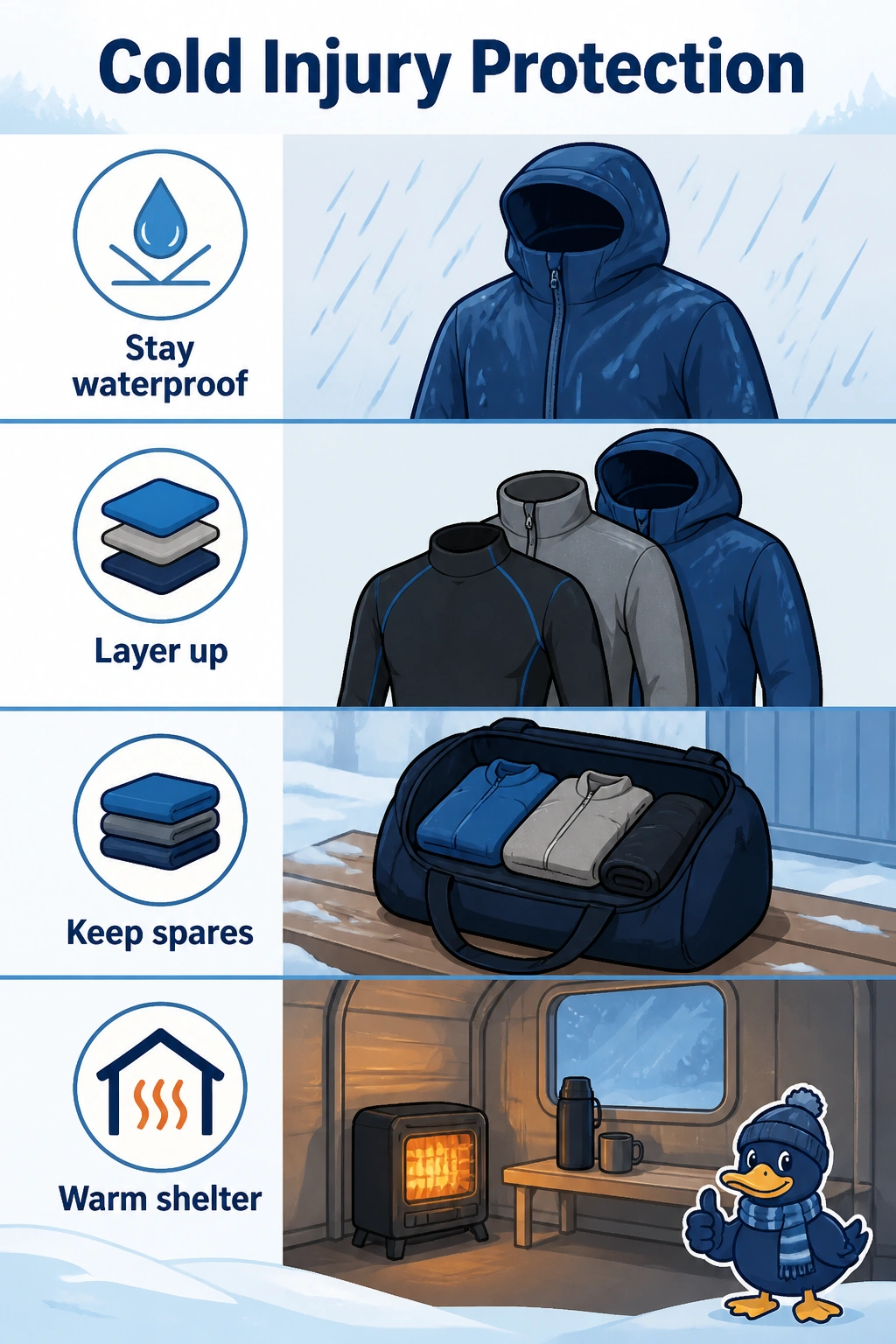
Freezing rain and strong wind strip body heat quickly, making this shift a serious cold-injury hazard. Protect your crew with waterproof layers, dry spare clothing, and warm shelter; cotton that gets wet and tight boots can leave workers cold, while fast work can cause sweat that chills them.
Full Explanation
In wet, windy, freezing conditions, windchill and moisture accelerate convective and evaporative heat loss, making waterproof layered clothing, dry spares, and warm shelter the best listed protection against hypothermia, frostbite, and trench foot. A moisture-wicking base layer, insulating middle layer, and windproof, waterproof outer shell help preserve body heat; dry spare gloves and socks let workers replace wet gear in warm shelter. Single heavy cotton sweatshirts with tight rubber boots fail because wet cotton loses insulating value and holds cold water against the skin, while tight boots restrict blood flow to the toes. Hot caffeinated coffee breaks every four hours on the deck are inadequate: four hours is too long in freezing rain, and caffeine may increase fluid loss rather than provide true rewarming in shelter. Continuous fast-paced work without scheduled rest periods can cause heavy sweating under outer gear, which rapidly chills workers when they pause. Exam caveat: cold stress can impair judgment and dexterity before workers notice shivering, so watch for slurred speech or fumbling hands. Practical check: before the shift, verify that workers have waterproof layers, dry spare PPE, and access to warm shelter.
Prefer to study offline? Printable PDF study book + test engine ($7.50, unofficial). These questions stay free here.