
A utility crew is excavating a 5-foot-deep trench adjacent to a former gasoline service station where fuel odors are noticeable in the soil. Under 29 CFR 1926.651(g), what must happen before any worker enters the trench?
Select an answer to reveal the explanation.
Short Explanation
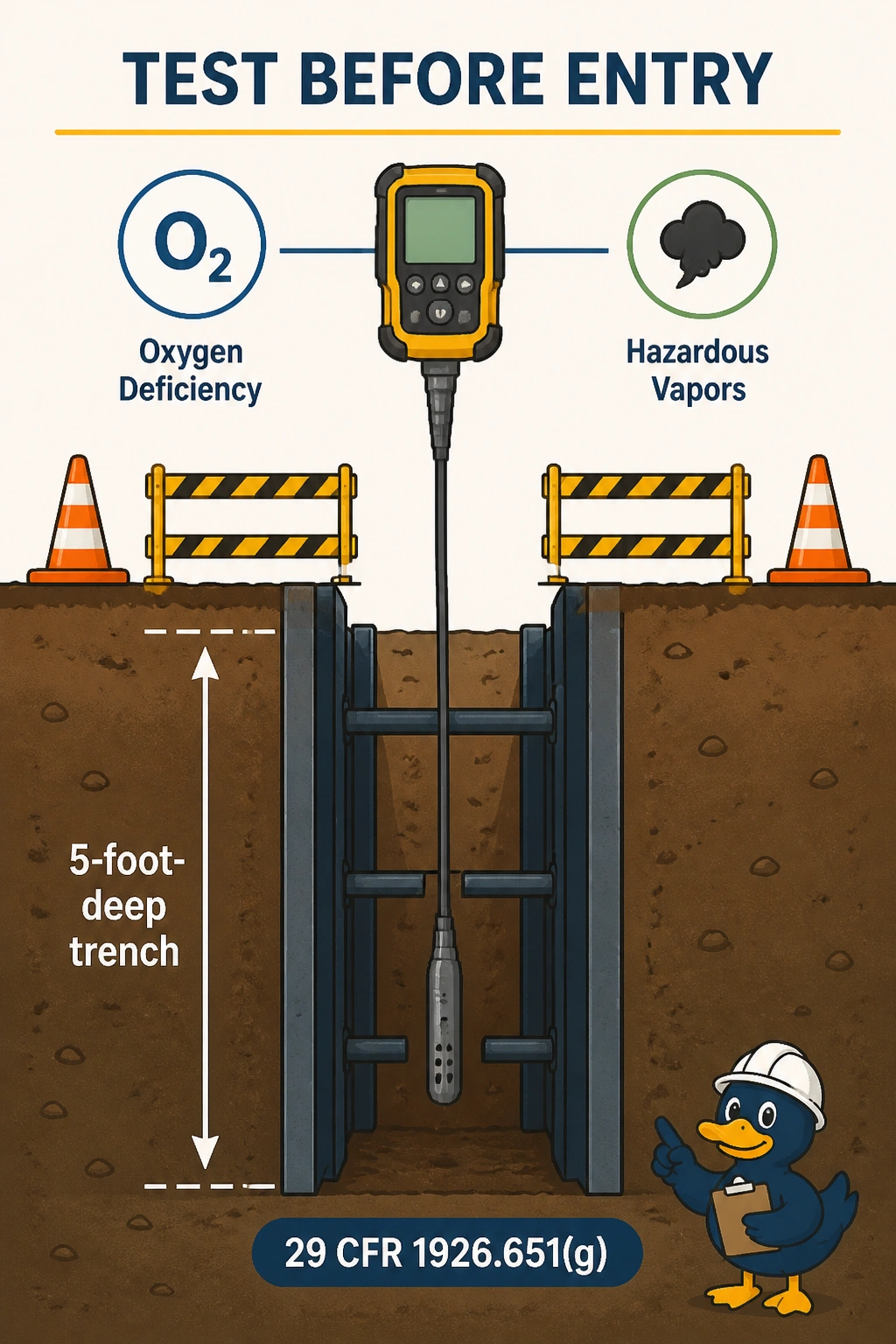
Near a former gas station, fuel vapors can collect in a 5-foot trench and displace oxygen where you breathe. Before you enter, test the atmosphere; a dust mask won’t protect you from gases or low oxygen.
Full Explanation
Under 29 CFR 1926.651(g), an excavation deeper than 4 feet must be tested before entry when an oxygen-deficient or hazardous atmosphere exists or could reasonably be expected. Fuel-contaminated soil near a former service station makes that hazard reasonably foreseeable. Hydrocarbon vapors from former underground storage tanks can be heavier than air and accumulate at the trench bottom, creating toxic inhalation, oxygen-displacement, and flammability hazards. Testing the trench atmosphere for oxygen deficiency and hazardous vapors is therefore the required action before anyone enters. Filtering facepiece dust masks do not protect against gases, vapors, or low oxygen, so providing them to block fuel odors does not address the danger. Installing a wooden access ladder only after pipe installation begins does not address the immediate atmospheric hazard and fails to provide required egress before entry. Sloping the trench walls without checking air quality addresses cave-in stability, but leaves workers exposed to possible asphyxiation or ignition. One exam caveat: the duty to test applies when a hazardous atmosphere exists or could reasonably be expected, not only after a worker reports symptoms or odors. As a practical check, bump-test a calibrated multi-gas meter with a sample pump, then probe the trench bottom before authorizing entry.
Prefer to study offline? Printable PDF study book + test engine ($7.50, unofficial). These questions stay free here.