
A mechanical contractor unloads twenty-foot lengths of 12-inch ductile iron pipe onto timber dunnage in an active laydown yard. Under 29 CFR 1926.250(b)(9), what must the crew do to store the pipe safely?
Select an answer to reveal the explanation.
Short Explanation
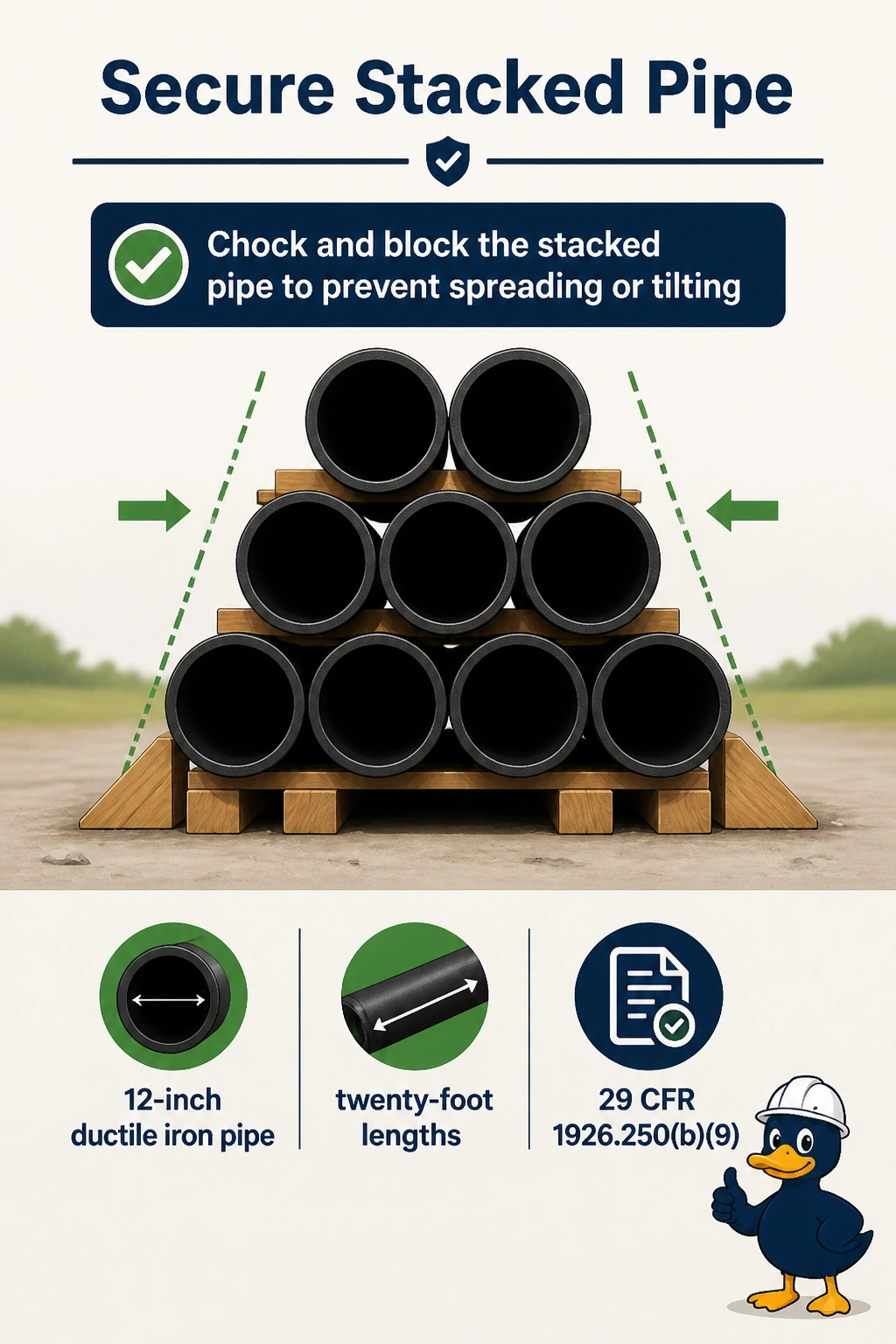
Round pipe can roll, and a shifting stack of 12-inch iron can crush someone before you hear it move. Under 29 CFR 1926.250, you must chock and block the pipe so the stack cannot spread or tilt; caution tape and a temporary chain-link fence do not physically restrain it.
Full Explanation
Under 29 CFR 1926.250(b)(9), pipe and other cylindrical materials must be stacked and blocked to prevent spreading or tilting. For the twenty-foot ductile iron pipe, chock and block the stacked pieces; heavy wooden wedges or timber chocks secured to the dunnage resist outward force and stabilize the tiers. Stacking the pipe ten tiers high against a temporary chain-link fence is unsafe because the fence is not designed to bear the lateral load and could collapse. Leaning pipe vertically against a storage trailer creates a tip-over and struck-by hazard if wind, vibration, or trailer movement dislodges it. Wrapping caution tape around the perimeter without blocking the ends provides a visual warning but cannot stop heavy pipe from rolling into traffic lanes or toward workers. Exam caveat: even a chocked stack can shift if workers pull pipe from the bottom or middle tier rather than removing it from the top down. As a practical check, inspect the laydown dunnage after deliveries and heavy rain to confirm the chocks remain tight and the ground support has not settled.
Prefer to study offline? Printable PDF study book + test engine ($7.50, unofficial). These questions stay free here.