
During a midday walk on a commercial framing site, a safety technician sees piles of stripped formwork lumber with exposed nails scattered across a main stairwell landing and corridor. What must the technician require under OSHA housekeeping rules?
Select an answer to reveal the explanation.
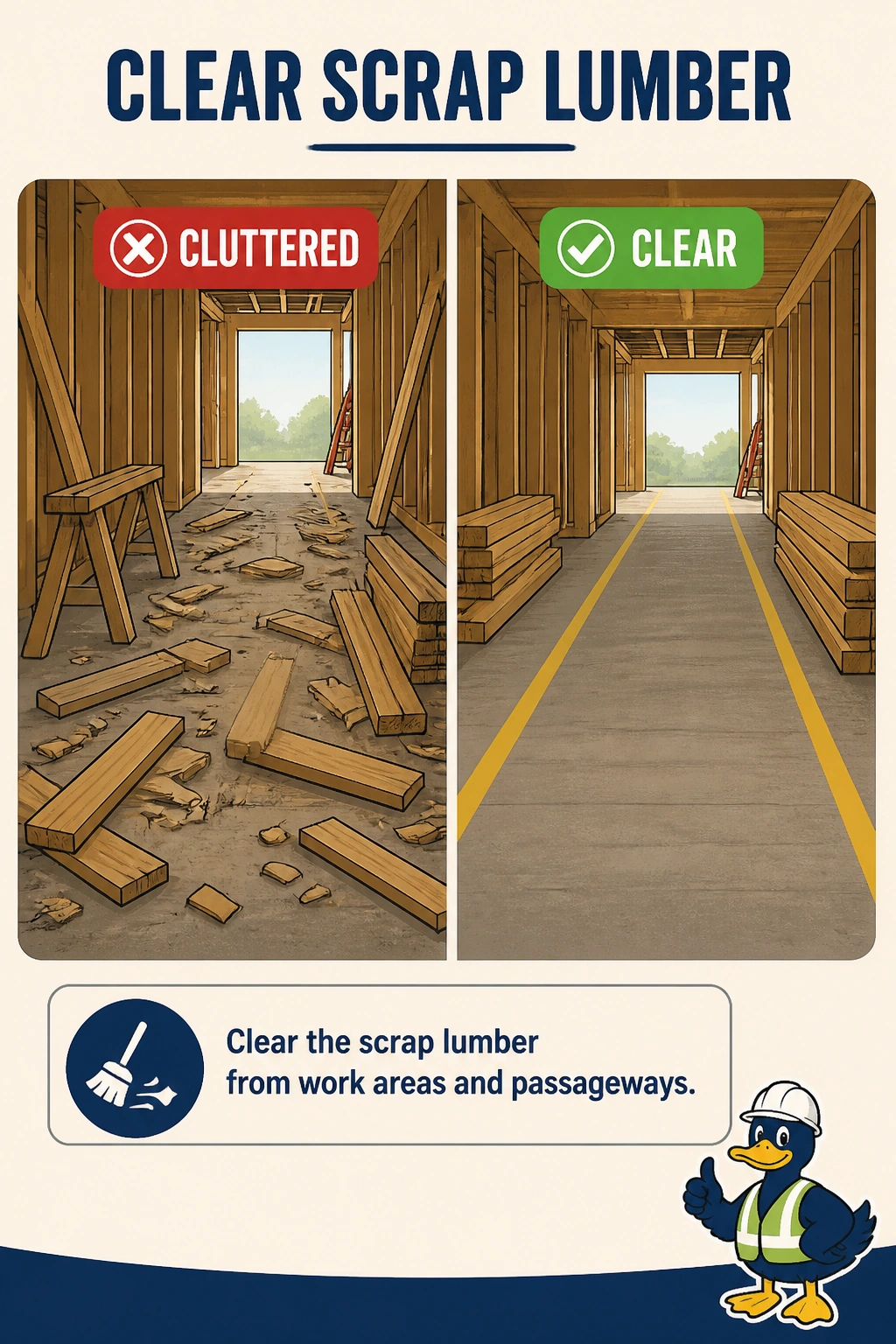
Short Explanation
You’re right to treat nail-studded lumber in a busy hallway as a serious puncture and trip hazard, especially when people are carrying materials. Under OSHA housekeeping rules, you need to remove it from work areas and passageways; bright paint, neat stacking, or steel-toed boots do not make the obstruction safe.
Full Explanation
Under 29 CFR 1926.25, form and scrap lumber with protruding nails and other debris must be kept cleared from work areas, passageways, and stairs during construction. You should require crews to clear the scrap lumber from work areas and passageways so workers carrying materials do not trip or suffer puncture wounds. Spray-painting the protruding nail heads bright orange may make them easier to see, but a visual warning does not remove the impalement or tripping hazard from a high-traffic path. Stacking the scrap lumber neatly along the corridor wall still leaves exposed nails and may narrow an active passageway or egress route. Requiring workers to wear steel-toed boots on the stairwell landing also misses the point: toe caps protect against impact to the toes, not upward nail punctures to the soles, and protective footwear does not replace housekeeping. As an exam caveat, if scrap lumber is temporarily staged in a designated disposal area away from walkways, protruding nails should still be bent over or pulled to prevent handling injuries. As a practical check, inspect active stairwells and corridors before shift changes to confirm debris bins are emptied and egress paths remain unobstructed.
Prefer to study offline? Printable PDF study book + test engine ($7.50, unofficial). These questions stay free here.