
A project superintendent wants to strip shoring and formwork beneath an elevated concrete slab 72 hours after the pour to keep the schedule moving, even though cold weather slowed curing. What must happen before formwork is removed under 29 CFR 1926.703(e)(1)?
Select an answer to reveal the explanation.
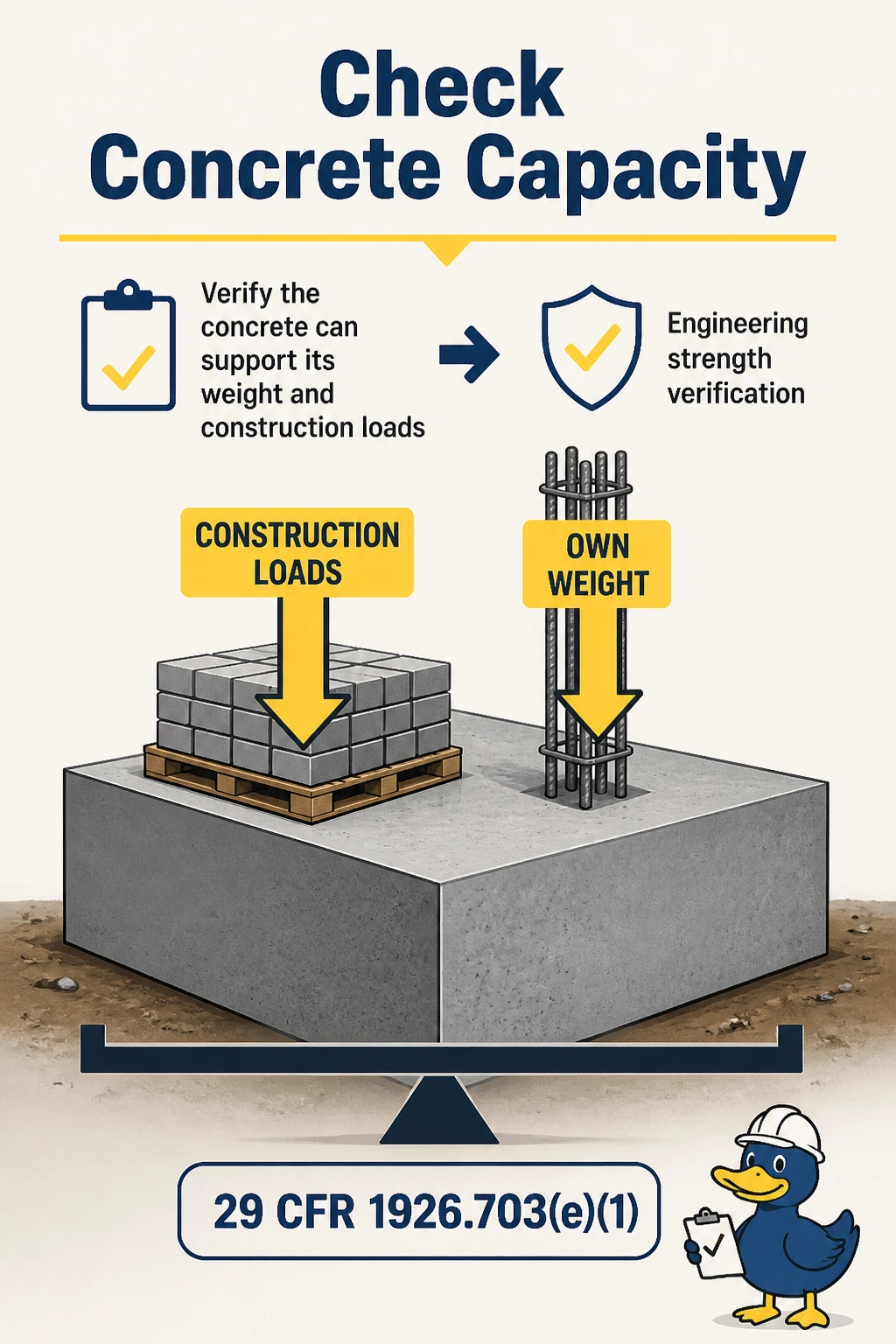
Short Explanation
Concrete gains strength through a chemical process, not simply with time, and cold weather slows that process. Before stripping shoring and formwork, you need verified strength showing the slab can support its own weight and imposed loads—not just a fixed day count.
Full Explanation
Premature formwork removal is a leading cause of catastrophic structural collapses during concrete construction. Verify the concrete can support its weight and loads because 29 CFR 1926.703(e)(1) prohibits removing formwork and shoring until the employer determines that the concrete has gained sufficient strength to support its own weight and superimposed loads, based on engineer plans or ASTM-compliant strength testing. Checking that the surface feels dry to the touch does not measure internal compressive strength, especially in cool temperatures. Waiting a standard three-day calendar period is unreliable because curing rates vary dramatically with mix design, ambient temperature, and slab thickness. Removing every second shore first to test deflection is dangerous: partially stripping support beneath green concrete can trigger sudden progressive collapse. As an exam caveat, even after initial stripping, reshoring may still be required by the structural engineer if upper floors will impose construction loads. For a practical check, review field-cured cylinder break results or maturity meter logs and obtain written engineer sign-off before releasing any shoring crew.
Prefer to study offline? Printable PDF study book + test engine ($7.50, unofficial). These questions stay free here.