
An electrical crew is running portable corded drills from temporary 120-volt, 15-ampere receptacle outlets on a damp commercial jobsite that does not use an assured equipment grounding conductor program. What electrical protection is required for those outlets?
Select an answer to reveal the explanation.
Short Explanation
Damp concrete and 120-volt temporary power are a classic recipe for a shock hazard on your jobsite. The trap is relying on heavy-duty cords or breaker sizes, when you need fast-acting GFCI protection whenever an assured grounding program is not in place.
Full Explanation
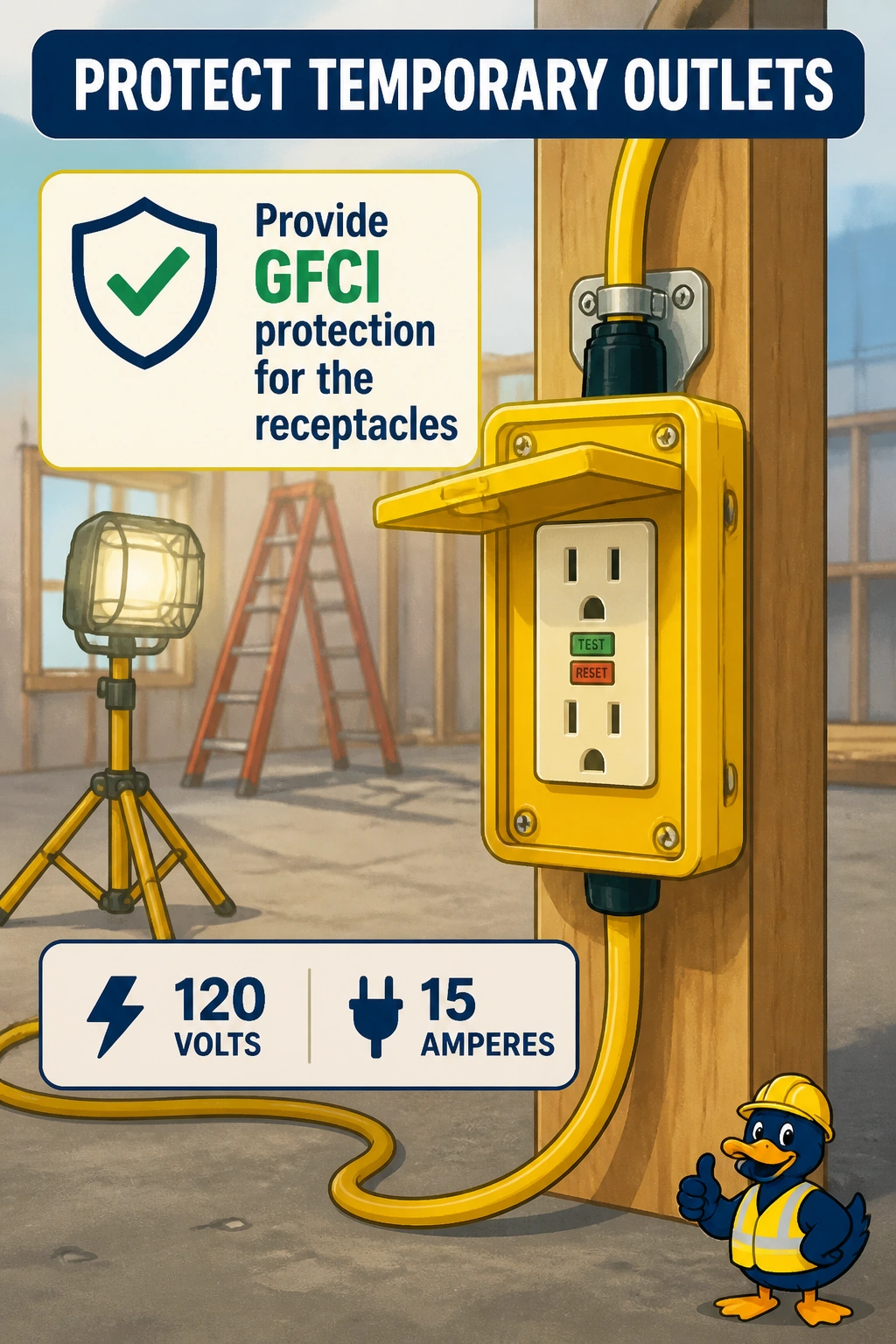
Under OSHA 29 CFR 1926.404, employers without an assured equipment grounding conductor program must Provide ground-fault circuit-interrupter protection for the receptacles on all 120-volt, single-phase, 15- and 20-ampere temporary outlets. A GFCI monitors current balance between hot and neutral conductors and trips in milliseconds if leakage current seeks a path through a worker's body. Choosing to Install double-insulated extension cords rated for outdoor industrial service describes tool construction rather than extension cord ratings and does not replace required GFCI protection on temporary receptacles. Choosing to Connect all portable tools to an ungrounded isolation transformer at the panel does not satisfy OSHA's temporary wiring ground-fault rule for standard 120-volt receptacles. Choosing to Verify that the panelboard main breaker is rated for at least 200 amperes addresses overcurrent capacity for the feeder, not milliamp-level shock protection for personnel. Caveat: even when GFCI protection is installed, damaged cords with exposed conductors still pose arc and contact hazards and must be removed from service. Operational check: press the test and reset buttons on each temporary GFCI receptacle or inline spider box before connecting tools, and confirm the circuit de-energizes cleanly.
Prefer to study offline? Printable PDF study book + test engine ($7.50, unofficial). These questions stay free here.