
A masonry crew is dry-cutting concrete pavers inside an enclosed parking structure, generating thick clouds of respirable crystalline silica dust. Applying the hierarchy of controls, which measure provides the highest level of worker protection among the choices?
Select an answer to reveal the explanation.
Short Explanation
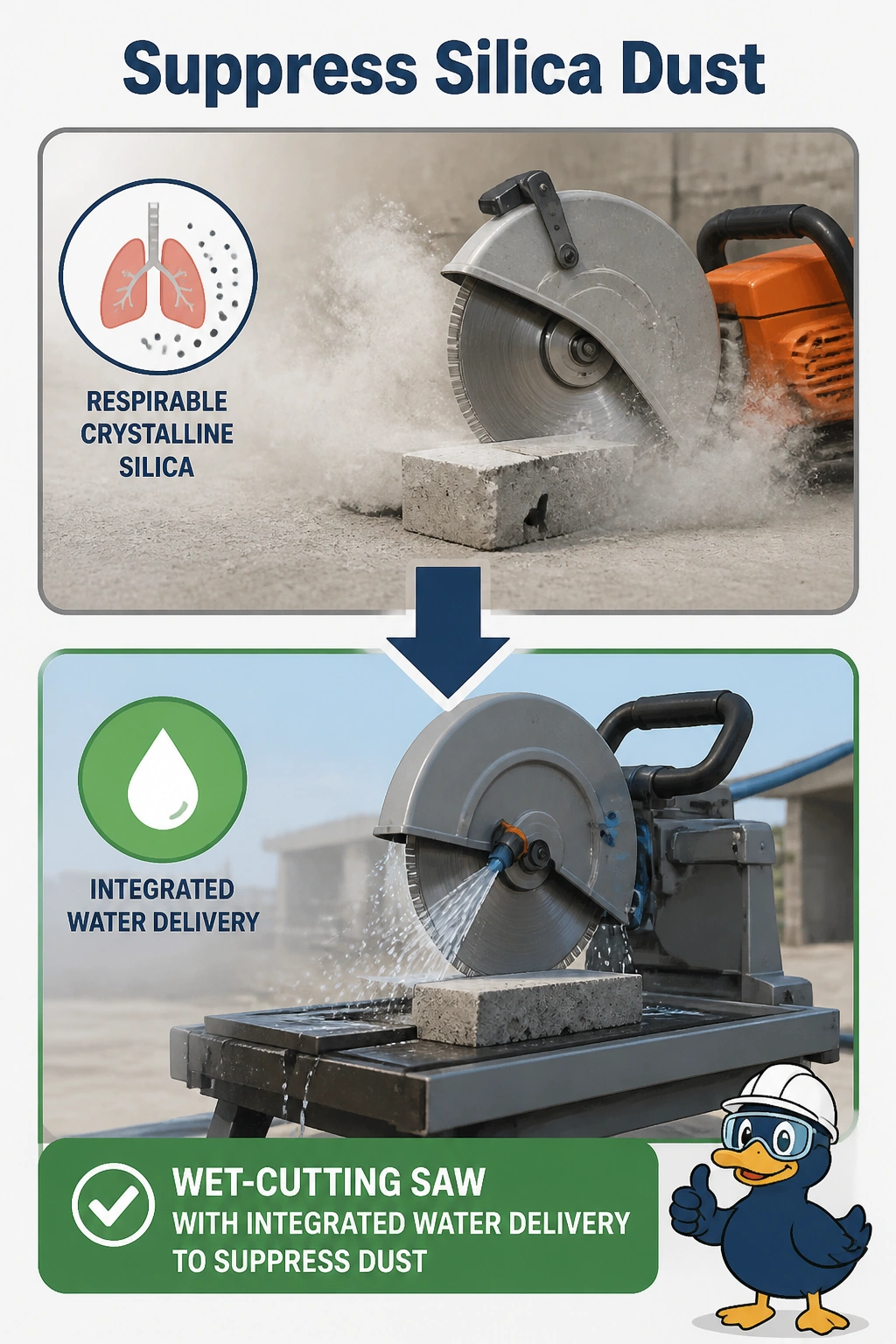
When dust fills the air, handing out masks can feel fast, but you want to climb higher in the hierarchy of controls. Respirators and job rotation don’t stop dust at its source; wet cutting suppresses the silica cloud before anyone breathes it.
Full Explanation
In the NIOSH/OSHA hierarchy of controls, engineering controls rank above administrative controls and PPE because they suppress or isolate a hazard at its source. Switching to a wet-cutting saw with integrated water delivery suppresses silica dust before it becomes airborne, protecting the operator and nearby trades without relying on each worker’s behavior. Issuing half-mask elastomeric respirators with P100 filters places protection at the PPE level, where fit, seal checks, and consistent use can fail. Rotating concrete saw operators every two hours is an administrative control: it limits each operator’s time but spreads the hazard across more workers without reducing dust generation. Posting respiratory hazard signs at the room entrance is also administrative; it warns nearby trades but does not lower airborne silica concentration. Exam caveat: under 29 CFR 1926.1153 Table 1, indoor wet-cutting tasks may still require supplemental ventilation or respiratory protection depending on duration and enclosure. Practical check: verify that the saw’s water-feed nozzles provide a continuous flow before cutting, contain slurry runoff, and monitor air movement in the enclosed area.
Prefer to study offline? Printable PDF study book + test engine ($7.50, unofficial). These questions stay free here.