
A carpenter slips on wet formwork and lands hard on an outstretched arm, leaving the forearm visibly angulated and swollen without breaking the skin. While waiting for paramedics, what immediate first-aid care should the trained responder provide?
Select an answer to reveal the explanation.
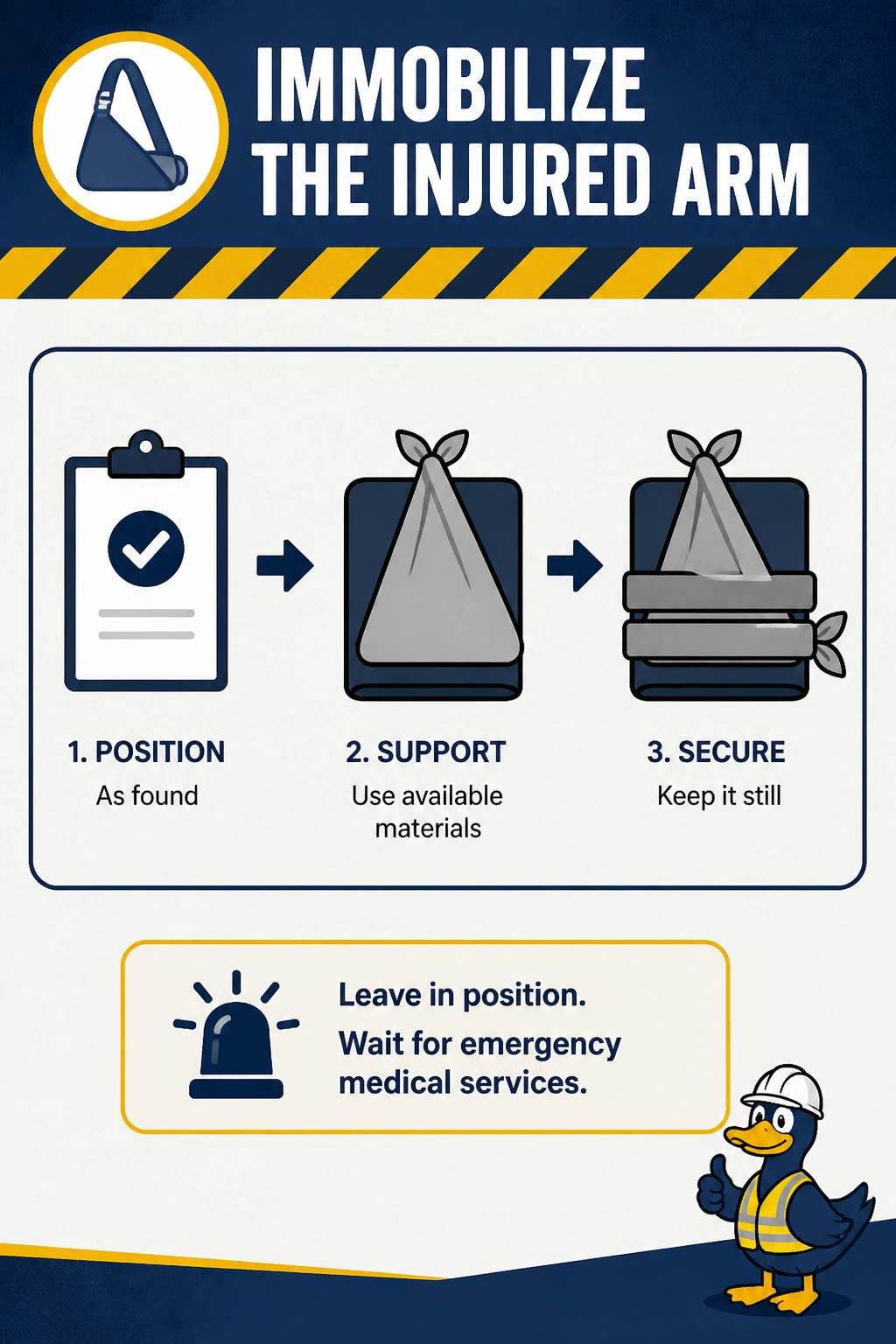
Short Explanation
When a bone looks crooked after a fall, your first instinct might be to straighten it out, but moving jagged bone ends can slice nerves or blood vessels. The trap is trying to realign a deformed limb on site instead of stabilizing it right where it rests.
Full Explanation
In workplace first aid for a suspected closed fracture, the primary goal is preventing further tissue, nerve, or vascular damage from bone movement until emergency medical personnel take over. The responder should Immobilize the injured arm in the position found while waiting for emergency medical services. You should never Gently pull and straighten the deformed forearm before wrapping it so it fits into a standard splint, because attempting realignment in the field can worsen internal bleeding, sever arteries, or convert a closed fracture into an open one. You also should not Have the worker walk to the site trailer and apply heat packs to reduce muscle spasms and swelling, since heat increases swelling and walking risks a secondary fall while in shock. Nor should you Remove the worker's jacket by pulling the sleeve firmly over the injured wrist and forearm, because tugging clothing over an unstable fracture causes severe pain and shifts bone fragments. As a caveat, if the limb must be splinted before EMS arrives, pad the splint well and immobilize the joints above and below the fracture without forcing movement. As an operational check, check distal pulse, sensation, and capillary refill in the fingers before and after supporting the arm, and keep the worker calm and warm.
Prefer to study offline? Printable PDF study book + test engine ($7.50, unofficial). These questions stay free here.