
A sheet metal worker suffers a clean finger amputation on a brake press, and a trained first-aid responder has already controlled bleeding at the hand with sterile gauze and direct pressure. How should the responder preserve the severed finger for EMS transport?
Select an answer to reveal the explanation.
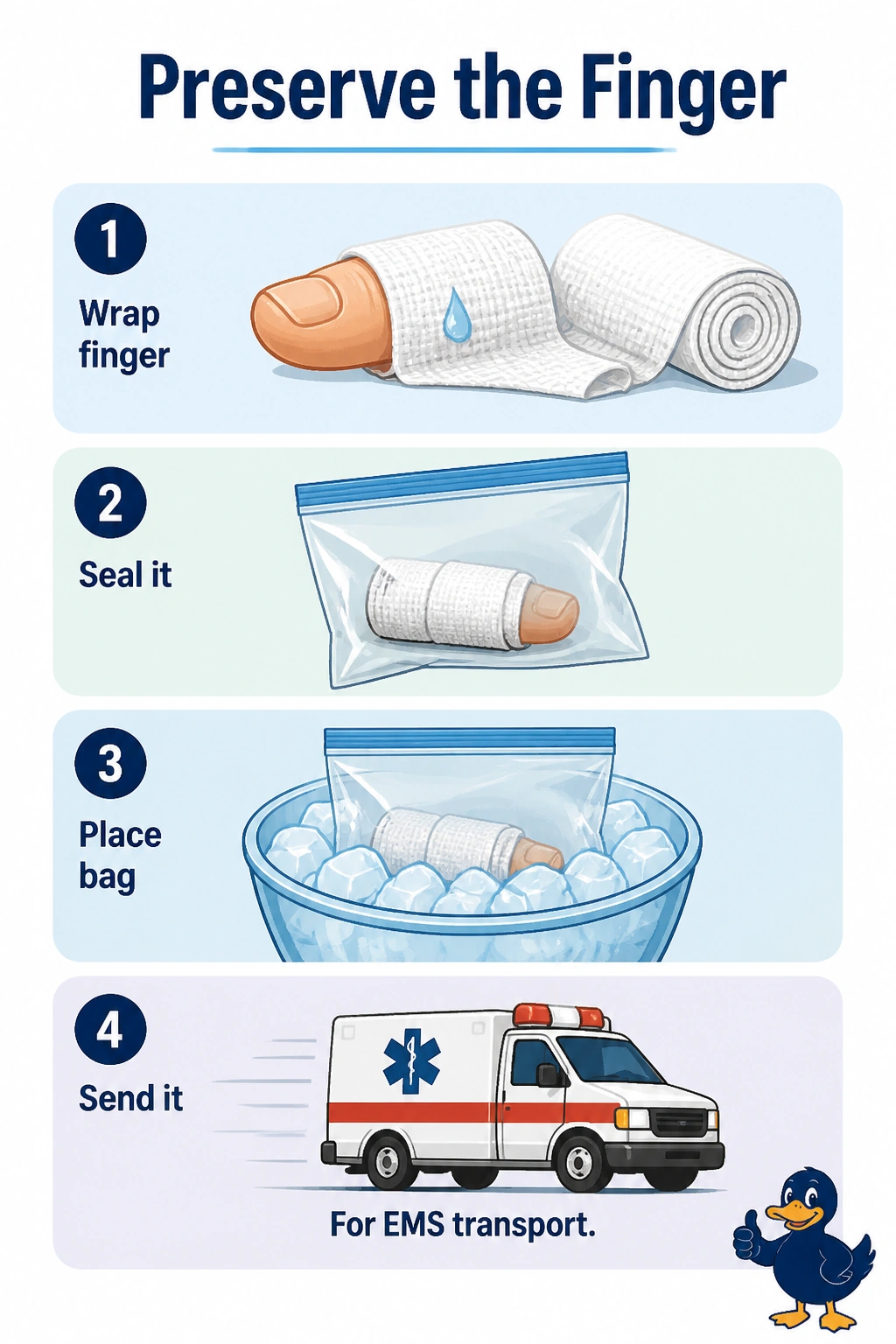
Short Explanation
Saving an amputated finger for reattachment is a delicate balance: you want it cool, not frozen solid or waterlogged. The common mistake is tossing the part straight onto ice, which causes frostbite that destroys delicate tissue. Wrap it in moistened sterile gauze inside a sealed bag on ice so EMS can hand surgeons viable tissue.
Full Explanation
Standard emergency first-aid protocols for an amputated digit require keeping the tissue cool, clean, and moist without freezing or soaking it, so you should Wrap the finger in damp sterile gauze, seal it in a plastic bag, and set the bag on ice. Cooling slows cellular metabolism to extend the window for surgical replantation, while the sealed bag prevents melted ice water from damaging the tissue. Choosing to Place the severed finger directly onto loose crushed ice inside a cooler causes localized frostbite and ice-crystal damage that can make reattachment impossible. Deciding to Submerge the severed finger in a clean cup of cold tap water until EMS arrives waterlogs the cells and introduces contaminants that compromise surgical outcomes. Attempting to Pack the severed finger in dry cotton balls inside a warm first-aid kit pouch accelerates tissue necrosis by leaving the part warm and allowing loose fibers to stick to the wound. Caveat: always prioritize controlling life-threatening bleeding on the injured worker and activating EMS before searching for or packaging the severed part. Operational check: verify that jobsite trauma kits include sterile saline or clean water, sterile gauze, and sealable plastic bags for amputation response.
Prefer to study offline? Printable PDF study book + test engine ($7.50, unofficial). These questions stay free here.