
After a carpenter's severe leg laceration is controlled with a sterile pressure dressing, the worker becomes pale, dizzy, and clammy with rapid shallow breathing while awaiting paramedics. What immediate first-aid care should the responder provide for suspected shock?
Select an answer to reveal the explanation.
Short Explanation
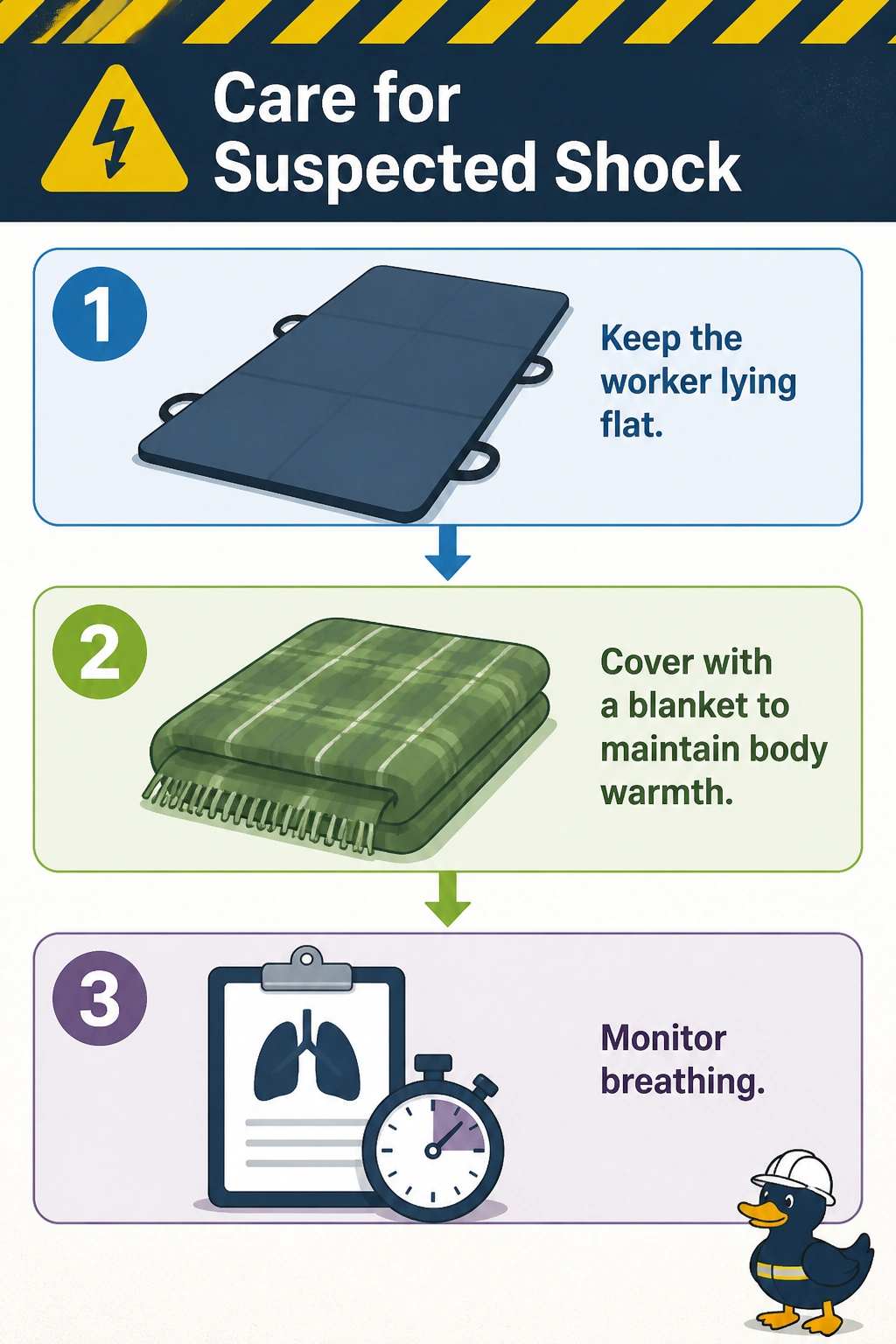
You’ve controlled the bleeding, but pale, clammy skin, dizziness, and rapid breathing can signal shock. Keep the worker lying flat, warm, and monitored while paramedics are on the way; giving fluids, having them walk, or removing the dressing can make things worse.
Full Explanation
Pale, clammy skin, dizziness, and rapid shallow breathing after blood loss can signal hypovolemic shock, in which vital organs may not receive enough oxygenated blood. Keep the worker lying flat, cover them with a blanket to maintain body warmth, and monitor their breathing while paramedics are on the way. Giving cold water to restore blood volume quickly is unsafe: the worker could lose consciousness, vomit, or aspirate the fluid, and may need emergency surgery. Having the worker stand and walk to improve leg circulation can worsen blood pooling away from the brain, increase strain on the heart, and lead to fainting or reopening the wound. Removing the pressure dressing to check whether bleeding has stopped can disrupt clot formation and restart life-threatening hemorrhage; if blood soaks through, reinforce the dressing with additional sterile pads rather than removing it. As an exam caveat, do not elevate the legs if a fracture or spinal injury is suspected, or if movement causes pain. For a practical check, make sure the trauma kit has a thermal blanket and responders know how to keep a suspected shock victim warm and monitor breathing.
Prefer to study offline? Printable PDF study book + test engine ($7.50, unofficial). These questions stay free here.