
A safety technician is designating outdoor emergency assembly points for a chemical plant expansion where crews handle flammable solvents and heavy equipment. Which location best meets Emergency Action Plan criteria for worker accountability?
Select an answer to reveal the explanation.
Short Explanation
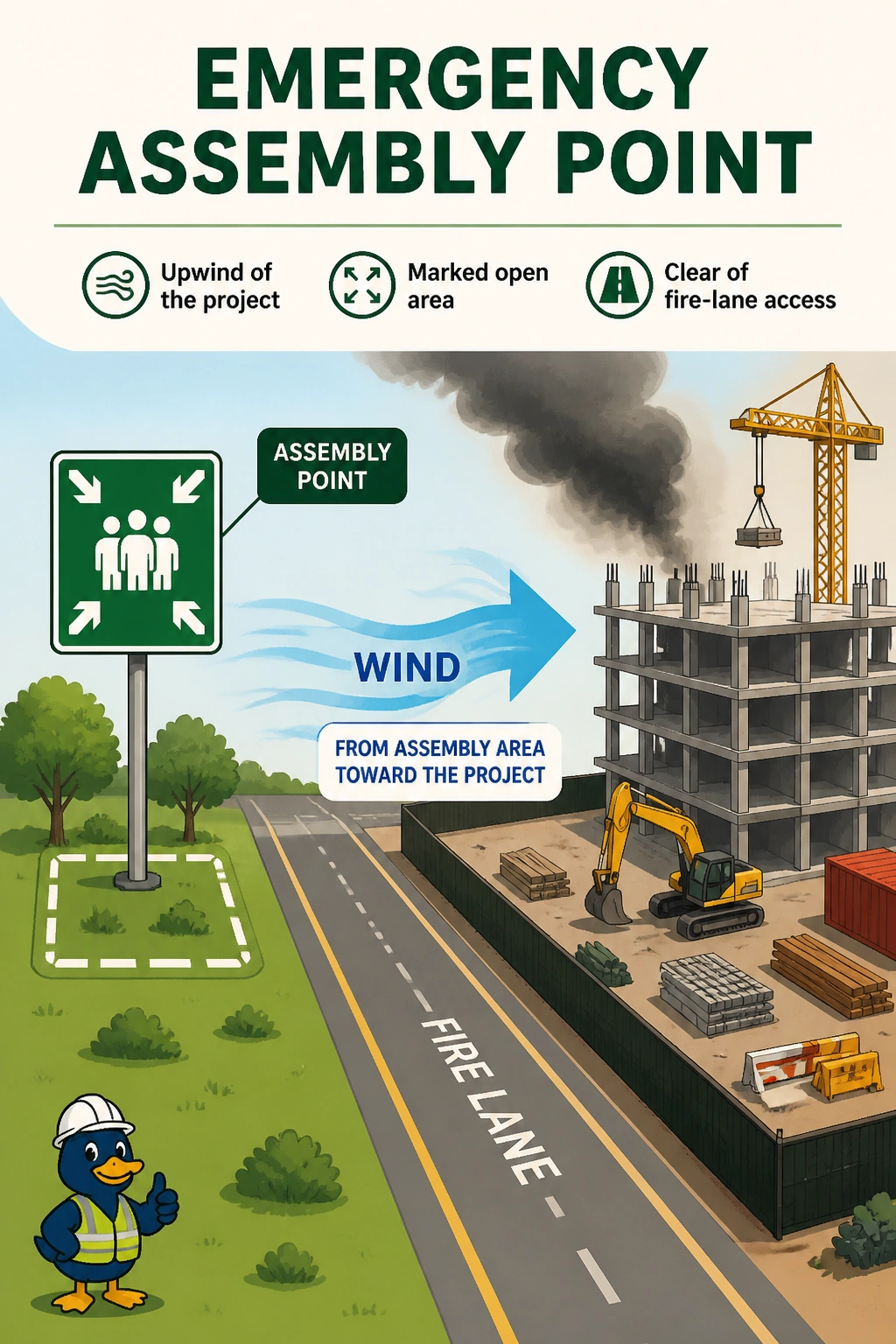
You want a muster point that keeps your crew safe and makes roll call easy: choose an upwind, marked open area clear of fire-lane access. A tool crib trailer, the primary gate, or a downwind spot behind the fuel tank can put workers in danger or obstruct responders, so keep the assembly area open and away from hazards.
Full Explanation
An effective Emergency Action Plan under 29 CFR 1926.35 depends on assembly areas that keep evacuated workers safe while enabling rapid headcounts. The marked open area upwind of the project and clear of fire-lane access keeps crews away from drifting smoke or chemical vapors, provides clear visibility for roll call, and preserves unobstructed lanes for fire and medical units. The main tool crib trailer may seem convenient for taking roll out of the weather, but it traps workers inside a structure that may be exposed to fire, blast, or utility hazards. A location directly beside the primary site gate creates congestion and struck-by risks as fire trucks and ambulances enter. A spot downwind behind the bulk fuel storage tank, even if intended to shield workers from site traffic, places them in the path of airborne plumes and potential secondary explosions. One caveat is that projects with shifting prevailing winds should designate a secondary alternate muster point on the opposite side of the site. As a practical check, verify during site orientation and evacuation drills that muster signs are visible and approach routes stay clear of parked vehicles.
Prefer to study offline? Printable PDF study book + test engine ($7.50, unofficial). These questions stay free here.