
Workers installing ductwork in a newly enclosed commercial basement smell a strong rotten-egg odor and hear a hissing sound near a newly pressurized natural gas line. What immediate action should the safety technician direct?
Select an answer to reveal the explanation.
Short Explanation
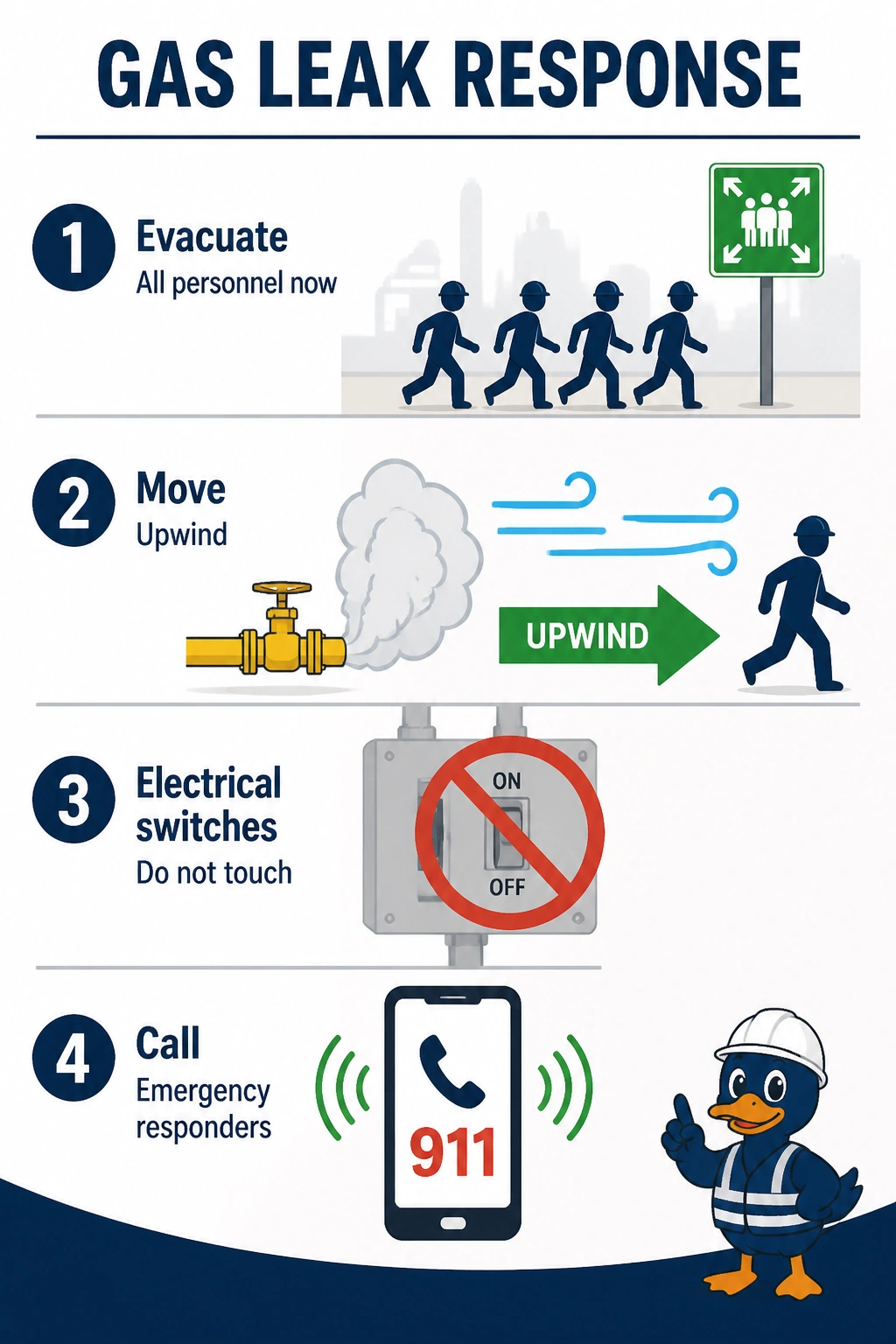
When natural gas fills an enclosed basement, even a tiny spark from a light switch can turn the room into a blast chamber. The trap is rushing to flip off lights or hunt down the leak first, when your only safe priority is getting everyone out without touching switches and calling trained emergency responders.
Full Explanation
Natural gas has a narrow but dangerous explosive range in enclosed spaces, and the mercaptan odorant plus an audible hiss signals an active, potentially explosive release. Choosing to "Evacuate all personnel upwind without touching electrical switches and call emergency responders" removes workers from the blast zone while preventing arc sparks from switches, relays, or radios. "Turn off all temporary basement light switches before evacuating the building" is hazardous because opening or closing a standard non-explosion-proof switch creates a momentary electrical arc that can ignite accumulated gas. "Use a portable electric box fan to push the gas odor toward the stairwell" introduces an unrated electric motor spark source directly into a flammable atmosphere and spreads gas into egress routes. "Send a pipefitter with soapy water and a flashlight to pinpoint the leak before clearing the floor" delays life-saving evacuation and exposes a worker to asphyxiation or explosion inside an unmonitored room. As a caveat, only utility technicians or fire-hazmat responders with intrinsically safe gas meters and shutoff authority should re-enter. As an operational check, perform a headcount at the upwind muster point, block site re-entry, and confirm main valve isolation with the utility crew.
Prefer to study offline? Printable PDF study book + test engine ($7.50, unofficial). These questions stay free here.