
A worker inspecting a permit-required sewer manhole suddenly collapses at the bottom while wearing a harness connected to a tripod winch. What should the trained attendant stationed outside the manhole do first?
Select an answer to reveal the explanation.
Short Explanation
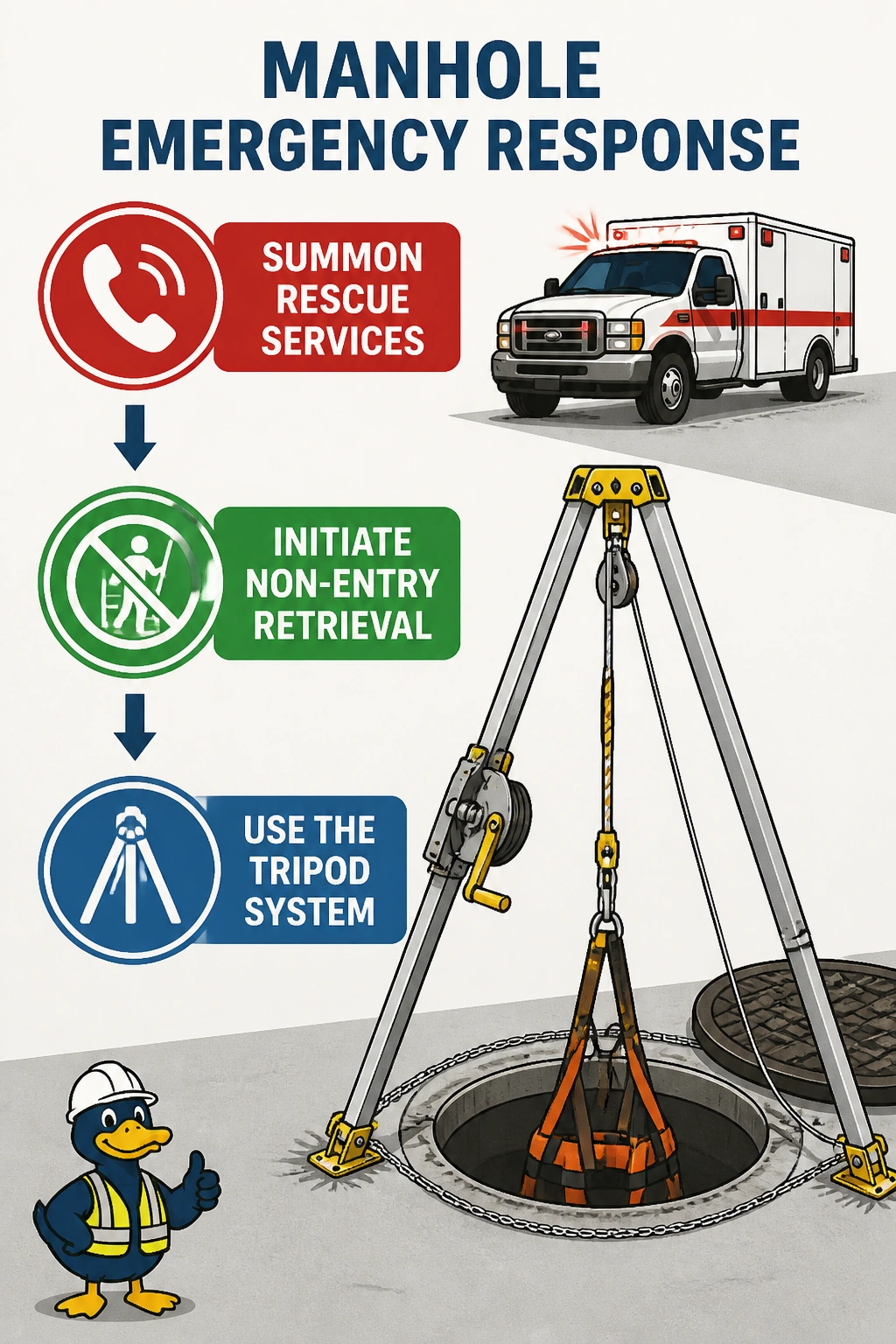
Human instinct screams at you to jump in and grab a fallen teammate, and that exact impulse causes over half of confined space rescue fatalities. A toxic or oxygen-deficient atmosphere is invisible, so climbing in unprotected turns one victim into two. Stay at your post, call for backup, and pull the worker out from topside.
Full Explanation
Under OSHA 29 CFR 1926 Subpart AA, an attendant's primary duty during an emergency is to Summon rescue services and initiate non-entry retrieval using the tripod system. Non-entry retrieval removes the incapacitated entrant from the hazardous atmosphere without exposing a second worker to the same unverified environment. Choosing to Climb down the fixed ladder immediately to check the worker's airway and pulse is a fatal mistake because the attendant lacks rescue breathing apparatus and backup, often resulting in multiple casualties. Choosing to Leave the manhole entrance unattended to run to the site trailer for a spare meter abandons the entrant and violates the requirement to remain at the space until relieved or rescued. Choosing to Lower an unventilated shop fan into the opening before notifying emergency services wastes critical minutes, may stir up flammable vapors with a non-intrinsically safe motor, and delays professional medical care. As a caveat, stop mechanical retrieval immediately if the entrant becomes snagged on an obstruction so the line does not cause injury, and wait for trained entry rescuers. Before any entry begins, verify that the tripod, winch, and radio communication to emergency responders are tested and ready.
Prefer to study offline? Printable PDF study book + test engine ($7.50, unofficial). These questions stay free here.