
A hydraulic hose ruptures on an excavator working near a curb, sending oil flowing toward an open storm drain that discharges into a nearby creek. Once workers are clear of the equipment, what should the safety technician prioritize first?
Select an answer to reveal the explanation.
Short Explanation
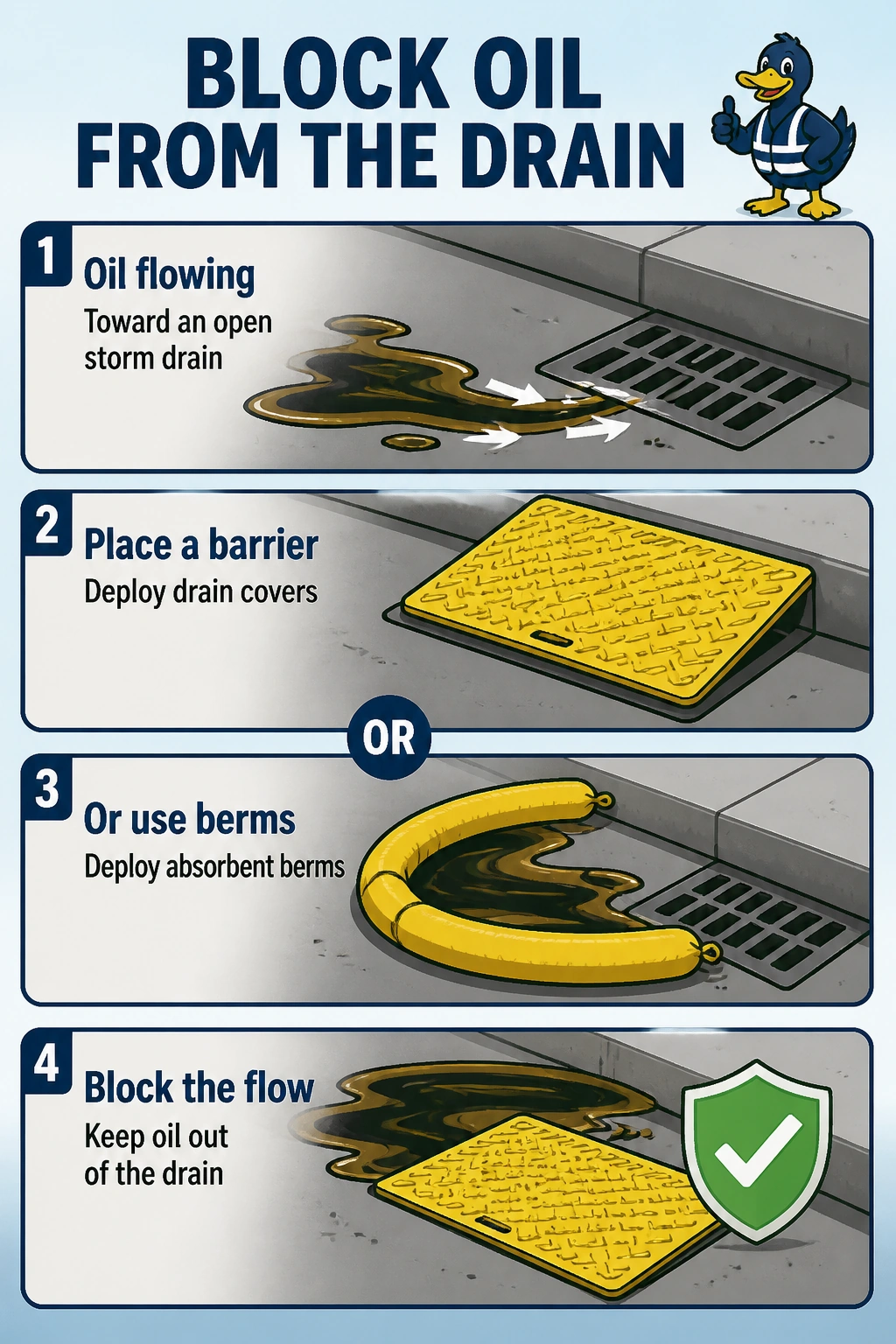
You’re right to prioritize containment once workers are clear: deploy drain covers or absorbent berms to keep oil out of the storm drain and creek. Washing the pavement with high-pressure water could carry oil into the drain, while completing the report or waiting for the mechanic would delay blocking its path.
Full Explanation
Environmental spill response prioritizes stopping the release from reaching surface waters or storm sewers. Once workers are clear, deploy drain covers or absorbent berms to block oil from entering the storm drain; this interrupts the pathway to the creek and keeps the oil on the pavement for cleanup. Washing the pavement with a high-pressure water hose does not safely dilute the oil: it can flush hydrocarbons into the storm system and creek, spreading contamination. Completing the written incident report before disturbing the spill site delays containment while oil can continue flowing toward the drain. Waiting for the equipment rental mechanic to arrive and inspect the hose also leaves the pathway unblocked and does not address the immediate environmental threat. As an exam caveat, if oil has already reached navigable waters or the spill exceeds reportable quantities, immediate agency notification may also be required alongside containment. For a practical check, confirm that drain covers, absorbent berms, and other spill supplies are available near drainage inlets before work begins.
Prefer to study offline? Printable PDF study book + test engine ($7.50, unofficial). These questions stay free here.