
After a site-wide emergency evacuation drill, the safety technician learns that crews on the north wing never heard the air horn and two subcontractors gathered at the wrong muster point. What should the technician do next?
Select an answer to reveal the explanation.
Short Explanation
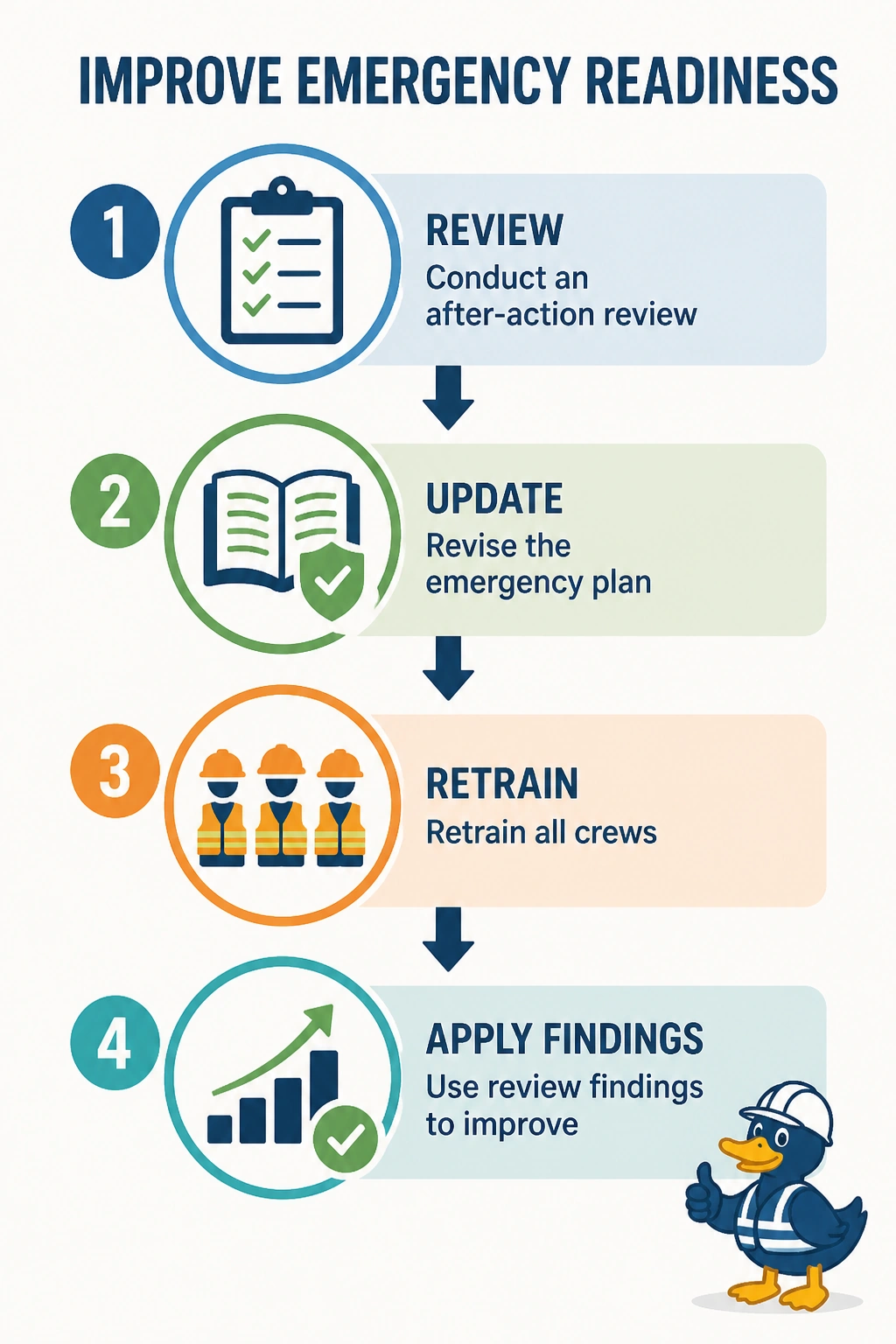
An emergency drill is supposed to expose weak spots while nobody is actually in danger, just like a dress rehearsal before opening night. When alarms cannot be heard and crews scatter to the wrong muster point, you treat those findings as gold—fix the plan and retrain the team. Checking a box or blaming subcontractors leaves the same failure waiting for a real emergency.
Full Explanation
The purpose of an emergency exercise is to test communication, notification, and accountability procedures under realistic conditions and close any gaps discovered. The technician should Conduct an after-action review, update the emergency plan, and retrain crews so that alarm coverage extends to the north wing and muster locations are clearly marked and understood. Choosing to File the drill sign-in sheet as complete since most workers exited on time ignores systemic communication failures that could cost lives in a real fire or chemical release. Deciding to Issue written disciplinary warnings to the two subcontractors for using the wrong area punishes workers for what may be unclear signage or inadequate orientation. Opting to Repeat the exact same drill next month without changing the alarm setup guarantees the same blind spots will recur. As a caveat, any revisions to alarm signals or assembly areas must be communicated to newly arriving trade contractors during site orientation. For an operational check, test audible and visual alarms from the farthest work zone and verify posted muster-point maps match the updated Emergency Action Plan.
Prefer to study offline? Printable PDF study book + test engine ($7.50, unofficial). These questions stay free here.