
Moments after a material hoist load drops onto a staging deck, several crew members gather in the break trailer discussing what they think caused the rigging failure. What should the safety technician do to collect reliable witness accounts?
Select an answer to reveal the explanation.
Short Explanation
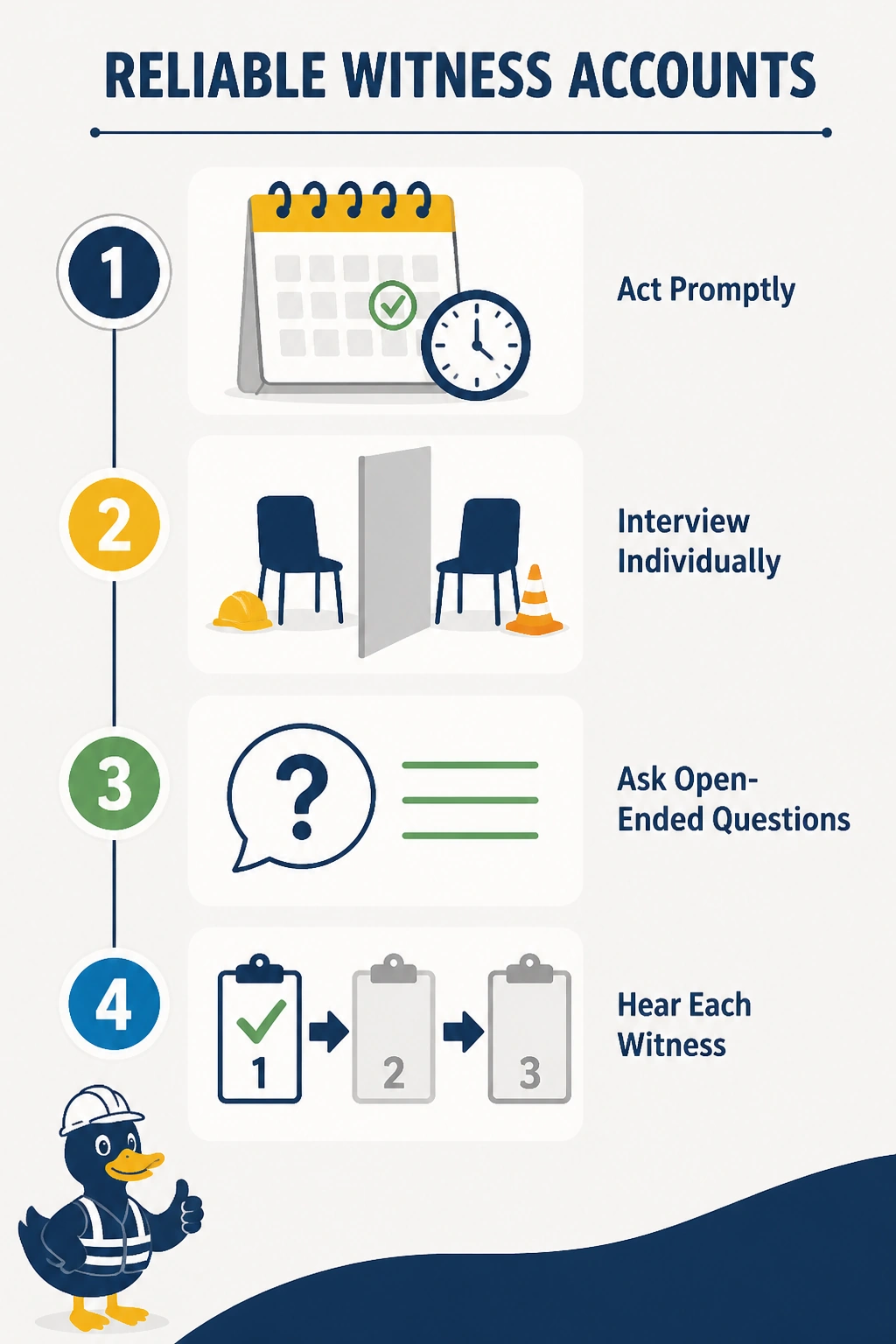
When witnesses swap stories in the break trailer, memories blend together faster than wet concrete sets. To get accurate facts, you need to talk to each person alone right away and let them tell the story. Avoid leading questions or group write-ups that taint recall.
Full Explanation
Preserving independent, fresh recollection is essential to uncovering root causes, so Interview each witness individually and promptly using open-ended questions is the proper investigation practice. Speaking with witnesses separately prevents groupthink, while prompt open-ended prompts capture sensory details before memories fade. Have the entire crew write one shared group summary of the incident together fails because louder or more senior voices can sway others and erase differing observations. Wait one week until emotions cool before asking anyone what they observed allows critical timeline details and physical context to fade from memory. Ask leading questions that confirm the supervisor's initial equipment theory introduces confirmation bias and pressures witnesses to agree with an unverified assumption rather than state what they actually saw. A key investigation caveat is to reassure witnesses that the interview seeks system fixes rather than blame, and to hold interviews in a quiet, private spot after medical and scene-safety needs are met. As an operational check, cross-check individual witness statements against physical evidence like sling tags, hoist logs, and site photos to spot discrepancies.
Prefer to study offline? Printable PDF study book + test engine ($7.50, unofficial). These questions stay free here.