
A concrete restoration crew is mixing muriatic acid in an enclosed mechanical room to etch a slab before applying an epoxy coating. Where must the employer locate emergency eyewash and flushing facilities?
Select an answer to reveal the explanation.
Short Explanation
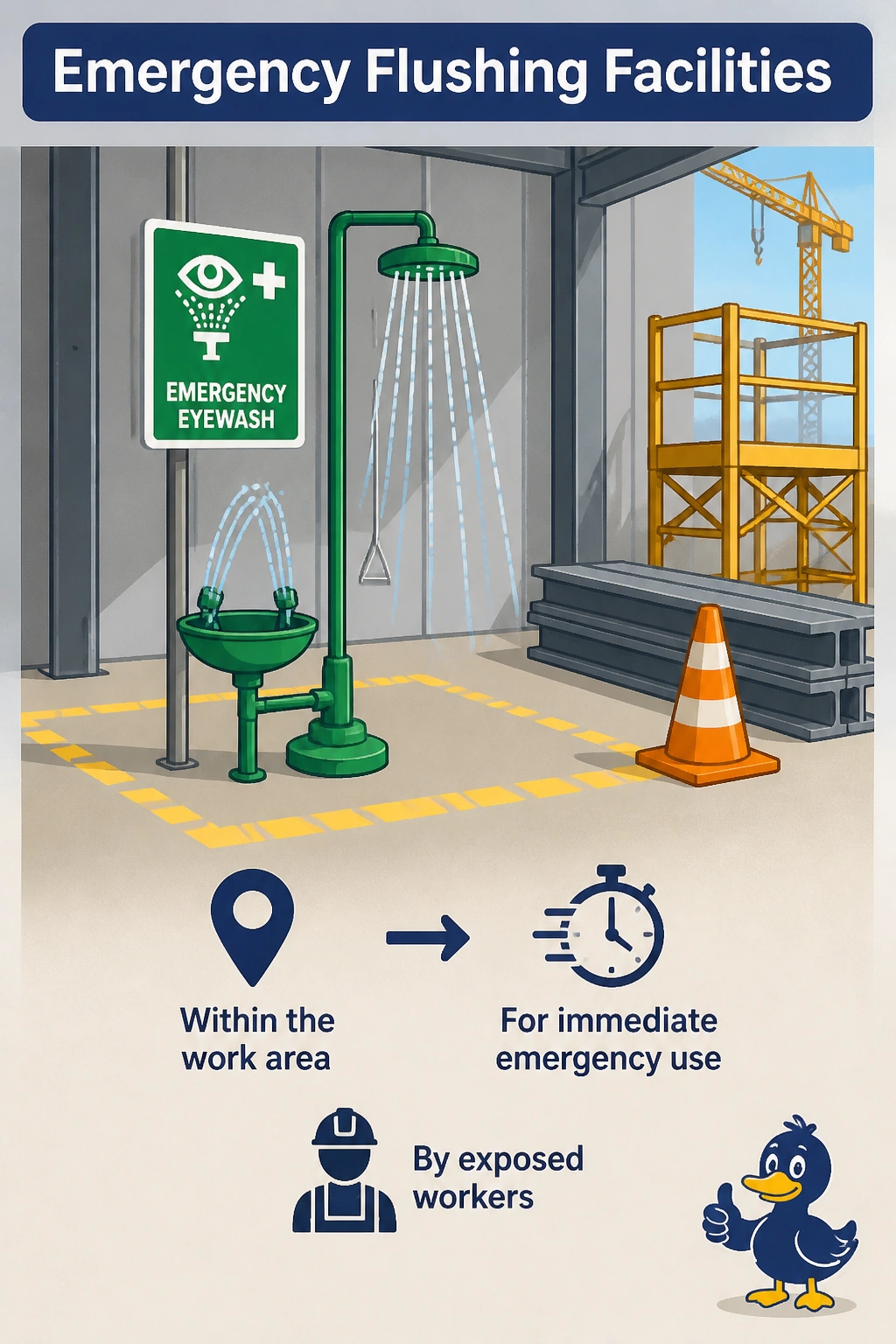
When corrosive acid hits someone's eyes, every second counts and a locked cabinet might as well be miles away. Your trap is placing eyewash stations at a central gate or trailer instead of right where the chemical is mixed. Keep flushing facilities inside the work area for instant access.
Full Explanation
OSHA 29 CFR 1926.50 requires that whenever workers handle injurious corrosive materials, suitable drenching or flushing facilities must be provided Within the work area for immediate emergency use by exposed workers. Immediate access prevents permanent eye damage by allowing a worker with impaired vision to reach the eyewash within seconds without navigating stairs or doors. Storing the unit Inside the site trailer locked in the safety technician's supply cabinet blocks emergency use completely if the technician is away or the trailer is locked. Placing it At the main security gate beside the visitor sign-in and badge station forces an injured worker to travel too far across an active jobsite while the chemical continues burning tissue. Relying on facilities In the nearest municipal fire station located two blocks from the site fails the immediacy standard and leaves the crew unprotected during critical initial seconds. As a caveat, temporary plumbed or self-contained eyewash units on construction sites must be protected from freezing and kept clean. For an operational check, test the eyewash flow and verify an unobstructed path from the acid mixing tub before work starts.
Prefer to study offline? Printable PDF study book + test engine ($7.50, unofficial). These questions stay free here.